






 Portuguese
  Spanish


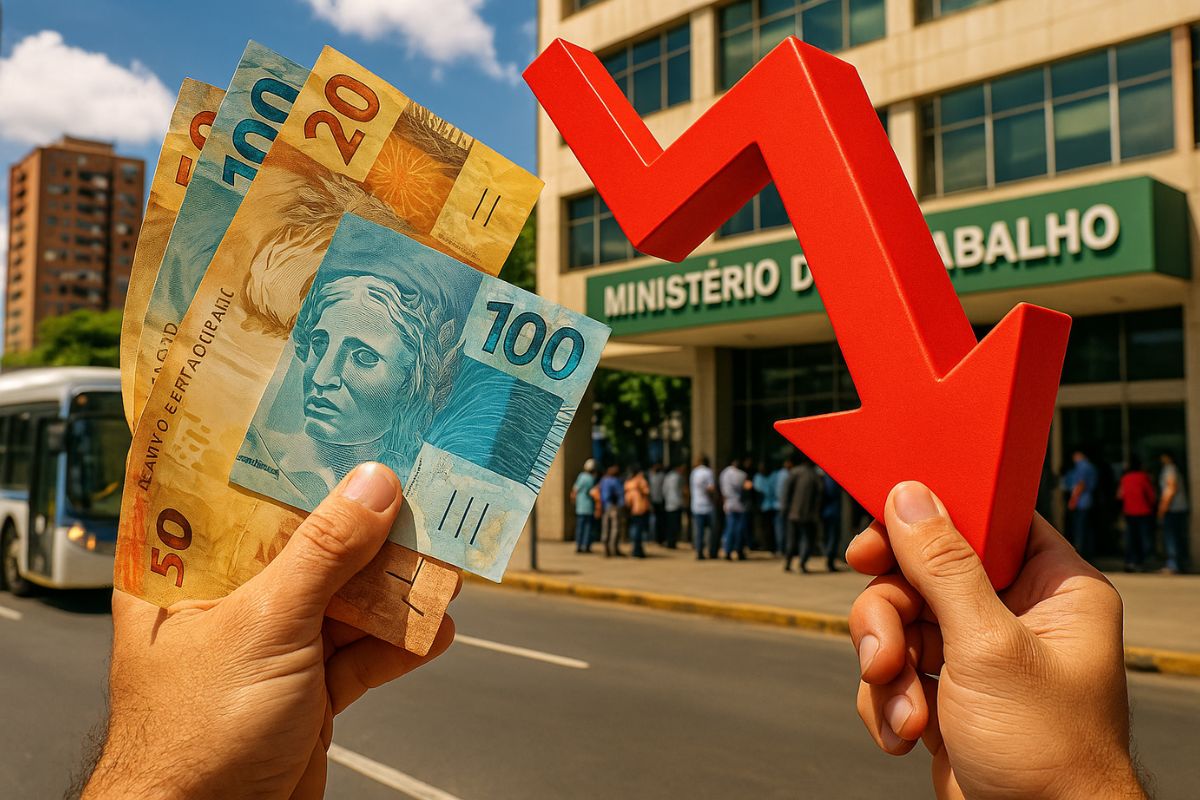


2.5% Ceiling for Federal Spending Increases Directly Impacts the Minimum Wage in 2025
The new minimum wage rule in effect since 2025 changed the calculation method that had been adopted for years in Brazil. With the creation of a ceiling for federal spending growth, even when GDP rises more than expected, the adjustment of the minimum wage faces a new limit.
This change directly affects retirees, pensioners, low-income formal workers, and beneficiaries of social programs like BPC and unemployment insurance. Although the new amount exceeds the official inflation rate for the period, the rule prevents larger increases even with the growing economy.
Understand What Changed in the Minimum Wage Calculation
Until 2024, the calculation for the minimum wage adjustment considered two factors: the INPC (National Consumer Price Index) and the GDP variation from the two previous years. This methodology was seen as a mechanism for real appreciation, as it allowed workers’ earnings to keep up with the evolution of the economy.
-
Brazilian City Makes Remarkable Leap, Becomes 4th Wealthiest in the Country with GDP of R$ 134.1 Billion

-
Controversial 6-day Workweek Elimination in Brazil Faces Economic Criticism Over Productivity Claims

-
Itaú to Refund Customers After 14 Years of Unauthorized Credit Card Charges; Agreement Includes No Interest or Adjustments, Deadline by 2028, with Potential Impact of Up to $6.5 Billion

-
Brazilian Company Grows from Bartering Soap for Food to Producing 30 Million Units Monthly, Challenges Global Giants with $100 Million Revenue and Expands into Premium Cosmetics



With the new policy implemented in 2025, the adjustment now follows a maximum ceiling of 2.5% for federal spending growth. Even if GDP grows more, as occurred with the 3.2% registered in the recent period, that excess is not taken into account in the formula. Additionally, inflation continues to influence the calculation, but also with limitations.
Who Is Impacted by the New Minimum Wage Rule
The minimum wage serves as a basis for various benefits and labor calculations. The main affected groups are:
- Retirees and pensioners of INSS, whose benefits follow the minimum wage amount.
- Beneficiaries of social programs, such as BPC and unemployment insurance.
- Low-income formal workers, who receive salaries close to the minimum and have their labor rights calculated based on this value.
For these individuals, a limited adjustment can mean loss of purchasing power in the face of rising prices for food, housing, and transportation.
Why Did the Government Implement This Ceiling?
The new rule emerged amid an effort for fiscal adjustment. With the increase in social spending and public debt, the government decided to create limits for the growth of mandatory expenses. Given that the minimum wage directly impacts expenditures on Social Security, salary bonuses, and other programs, the appreciation policy had to be revised.
The goal is to control costs without completely eliminating adjustments, seeking a way to maintain balance between fiscal responsibility and the appreciation of labor.
Are There Better Alternatives?
Experts have divided opinions on the effectiveness of the new minimum wage rule. While some argue that spending control is necessary for the health of public finances, others point out that limiting the real gains of the poorest can worsen inequalities.
The two most debated alternatives are:
- Adjustment only by inflation, which ensures maintenance of purchasing power but without real gains.
- Valuation models based on economic growth, which provide benefits when the country grows but increase public spending.
For now, the government opted for a middle ground: limiting fiscal impact without freezing the minimum wage, keeping some degree of update.
Does the Minimum Wage Really Offset Inflation?
Although the new minimum wage for 2025 has exceeded the accumulated INPC, the real inflation experienced by families varies greatly. Expenses with food, energy, and transportation tend to rise more than the official average. Therefore, even with nominal increases, many people may feel that the adjustment “does not reach their pockets”.
This perception pressures public debate and demands from the government continuous monitoring of the adjustment policy, especially in a fragile economic recovery scenario.
Do you think the new minimum wage rule is fair? Does it value the worker or merely limit rights? We want to know how this affects your daily life — comment below and share your real opinion.






ISSO É INJUSTO COM QUEM CONTRIBUIU A VIDA TODA COM O INSS. EU APOSENTEI EM 2005 HOJE GANHO A METADE DO VALOR DA CARTA DE CONSEÇÃO,,ESTE BRASIL NÃO TEM JUSTIÇA E GOVERNO SÉRIO,,SE TIVESSE JUSTIÇA TINHA QUE RECEBER CONFORME A CONSTITUIÇÃO,,O QUE ESPERA DE UM GOVERNO IGUAL ESSE ,,,VOCÊ PASSA A VIDA TODA PAGANDO,,NA HORA DE RECEBER VOCÊ DEPARA COM ISSO ,ESTE AUMENTO DESIGUAL PRÁ QUEM GANHA MÍNIMO E ACIMA MÍNIMO, É OBRA DESTE GOVERNO. NENHUM FEZ NADA PRA NÓS APOSENTADO, MAS ESTE É O CARRASCO DE NÓS APOSENTADO INFELIZMENTE