Portuguese
  Spanish


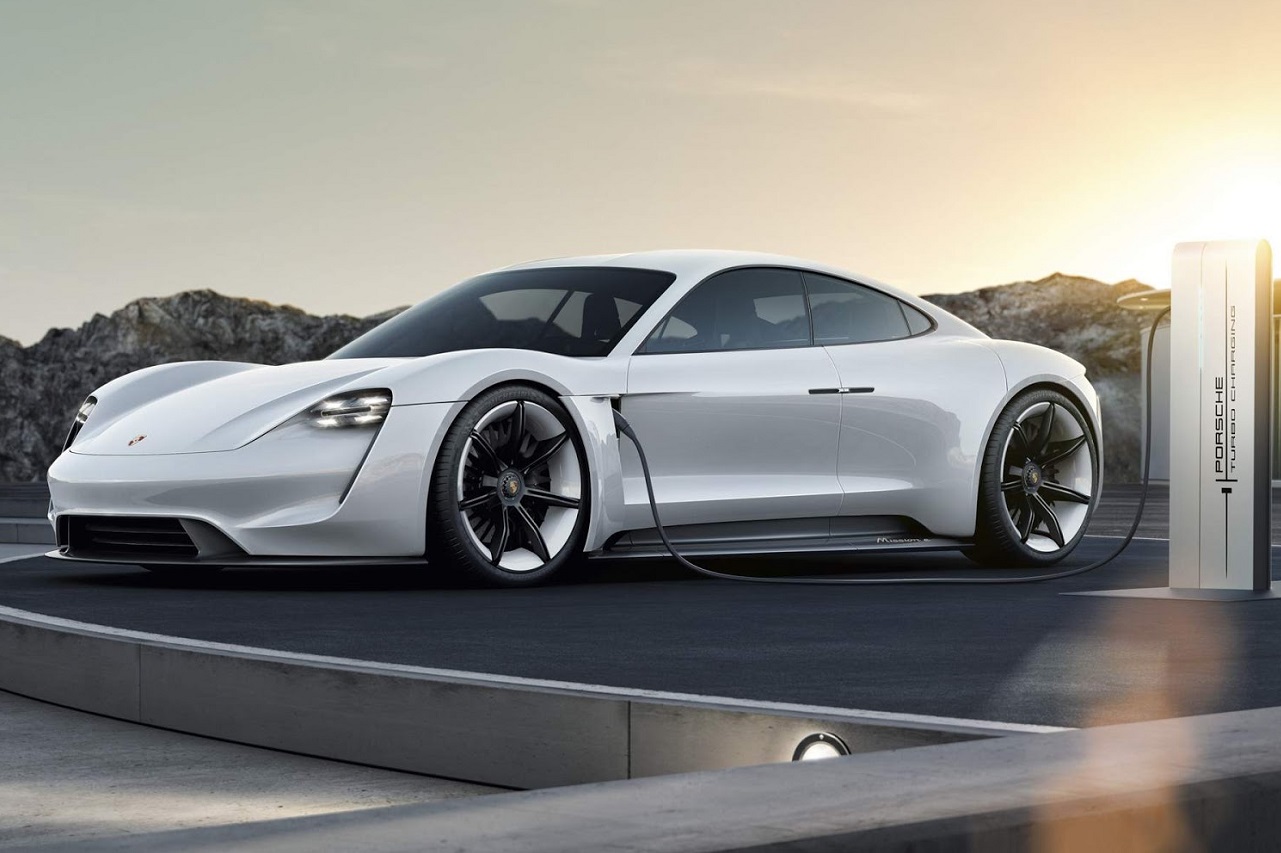

Porsche Aims for Half of Its Production to Be Electric Cars by 2025, and by 2030, the Company Plans to Raise This Index to at Least 80%
Porsche, the German automaker with the highest profits in the world, announced that its new goals are to become a carbon-free company through the manufacturing of electric cars. To achieve this, the company aims for half of its new vehicles produced to be electric by 2025, and by 2030, over 80% of Porsche’s zero-kilometer vehicles to be electric.
About Porsche
During 2021, Porsche was one of the most profitable car manufacturers in the world. Porsche is a manufacturer of sports car models from Germany and holds the historical record in operating profit and sales revenue. Last year, sales amounted to €33.1 billion, with a growth of 15% compared to 2020, when sales were €28.7 billion. The company’s operating profit in 2020 was €5.3 billion, an increase of 27% from the previous year.
According to the magazine Exame, the automaker also announced this Thursday that last year the operating return generated on sales was 16%, and the net cash flow increased from €2.2 to €3.7 billion, with a difference of €1.5 billion from 2020 to 2021. The chairman of Porsche’s executive board, Oliver Blume, stated that the company’s positive commercial result reflects Porsche’s innovative, bold, and futuristic decisions.
-
Fiat Strada Becomes Top Seller in June, Surpassing Onix, Polo, Hilux, and T-Cross with 107 HP Engine and 732 km Range.

-
Suitcase-sized hydrogen engine spins at 25,000 rpm, nearly doubling the efficiency of conventional cars and replacing exhaust smoke with water vapor

-
1983 Chevrolet Runs Over 100,000 km Without Gasoline, Powered by Wood Chips, Reaches 125 km/h in Airport Test

-
Workshop Converts Giant Tractor Tire Tricycle into a Three-Wheel Drive Hybrid with 36,000-Watt Electric Motor Capable of Climbing Hills




Porsche’s Electrification Plans
Porsche announced in its press conference this Thursday its new goals to become a company exclusively producing electric cars. By 2025, Porsche aims for 50% of its new vehicles produced to be electric, and by 2030, this number is expected to rise to at least 80%. In this way, the company will become carbon-free.
According to Blume, Porsche is likely undergoing the biggest transformation in its history. The vice president of Porsche’s executive board, Lutz Meschke, added that the company is resolutely driving investments in sustainability, electrification, and digitalization.
To ensure its goal of having 80% of its fleet comprised of electric cars by 2030, Porsche is investing in premium electric car charging stations along with its partners, as well as in its own charging infrastructure. Additionally, other investments in essential technologies, such as battery module and system production, are ongoing. High-performance battery cells are also being developed, which are expected to begin mass production by 2024.
Last year, the best-selling car models from Porsche were the Macan and the Cayenne. The Taycan, the first electric car produced by Porsche, saw its delivery numbers more than double in 2021. The new electric car surpassed the sales of the 911 car, which also set a new record.
The production of electric cars does not stop with the Taycan. The president of Porsche stated that the company is ramping up its electric offensive with another electric car model: Approximately by 2025, the company will offer a new Porsche 718 electric sports car with a central motor exclusively in a fully electric form.
In 2021, nearly 40% of the total cars delivered in Europe by Porsche were already hybrids (partially electric).
What Is the Cost of Maintaining an Electric Car in Brazil in 2022?
One of the most significant points to highlight is the cost of recharges. Electric cars use battery-powered motors; therefore, the batteries need to be recharged.
In this sense, we will start from the fact that the price of gasoline is approximately R$ 6 per liter. Thus, for a person to fill their vehicle’s tank, they would have to pay around R$ 300. Now, when we talk about a person who owns an electric car, we are talking about a value of approximately R$ 23 to fully recharge the battery. To learn more, check out this article in full by clicking here.