Portuguese
  Spanish


In Brazil, One of the Oldest Cities in the Americas Will Be Connected by Modern Train to One of the Largest Logistics Hubs in the Country — in Just 35 Minutes. The Future Is Already on Track
Imagine halving the time between Salvador and Feira de Santana, two of the most important cities in the Northeast, trading hours of congestion for 35 minutes on a comfortable, fast, and sustainable train. It sounds like something out of a European country, but it is about to become a reality in Brazil. An ambitious railway project promises to transform how residents of Bahia travel — and more: it could reposition the entire logistics and economy of the region.
The Road That Became a Bottleneck
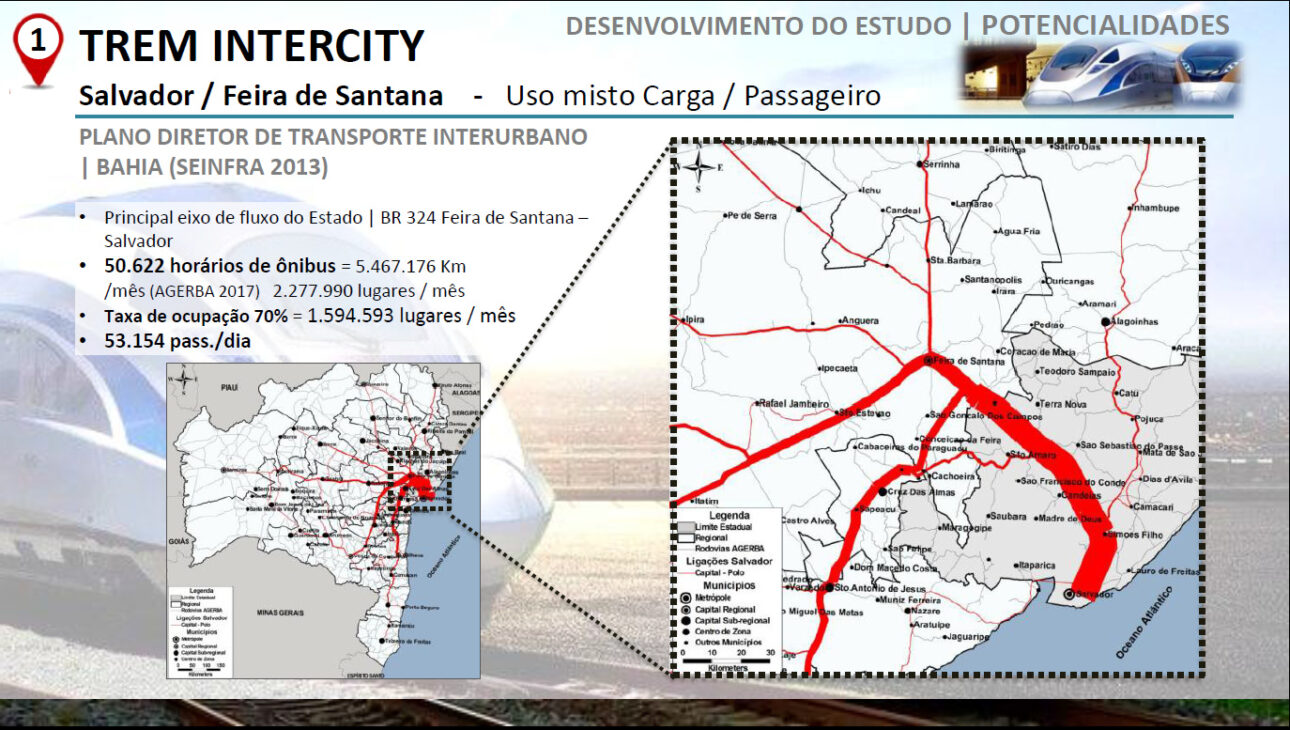
The BR-324, which connects Salvador to Feira de Santana, is one of the busiest and most dangerous highways in the Northeast. More than 40,000 vehicles pass through it daily: cars, buses, cargo trucks, interstate trailers. It’s the typical scenario where traffic crawls, accidents pile up, and transportation costs only rise. And it’s no small matter: Feira de Santana is the largest highway junction in the North/Northeast and is home to over 600,000 inhabitants. Salvador needs no introduction, with nearly 3 million people just in the capital.
Together, these cities form an economic and urban axis of over 4 million people — and they rely on a saturated, old, and inefficient highway.
-
Railway returns to prominence in Brazil after STF approval: a R$ 25.2 billion project promises to save R$ 9 billion in freight, transport 50 million tons per year, and transform Sinop into a logistics powerhouse for agribusiness.

-
Retired trains leave European tracks and become tons of steel, aluminum, and copper in dismantling yards where recycling exceeds 90%, but batteries, composites, and electronics create a new frontier of railway waste.

-
The strategic railway of Santa Catarina will receive R$ 608 million, will undergo historic modernization, and could transform logistics between Mafra and the Port of São Francisco do Sul.
-
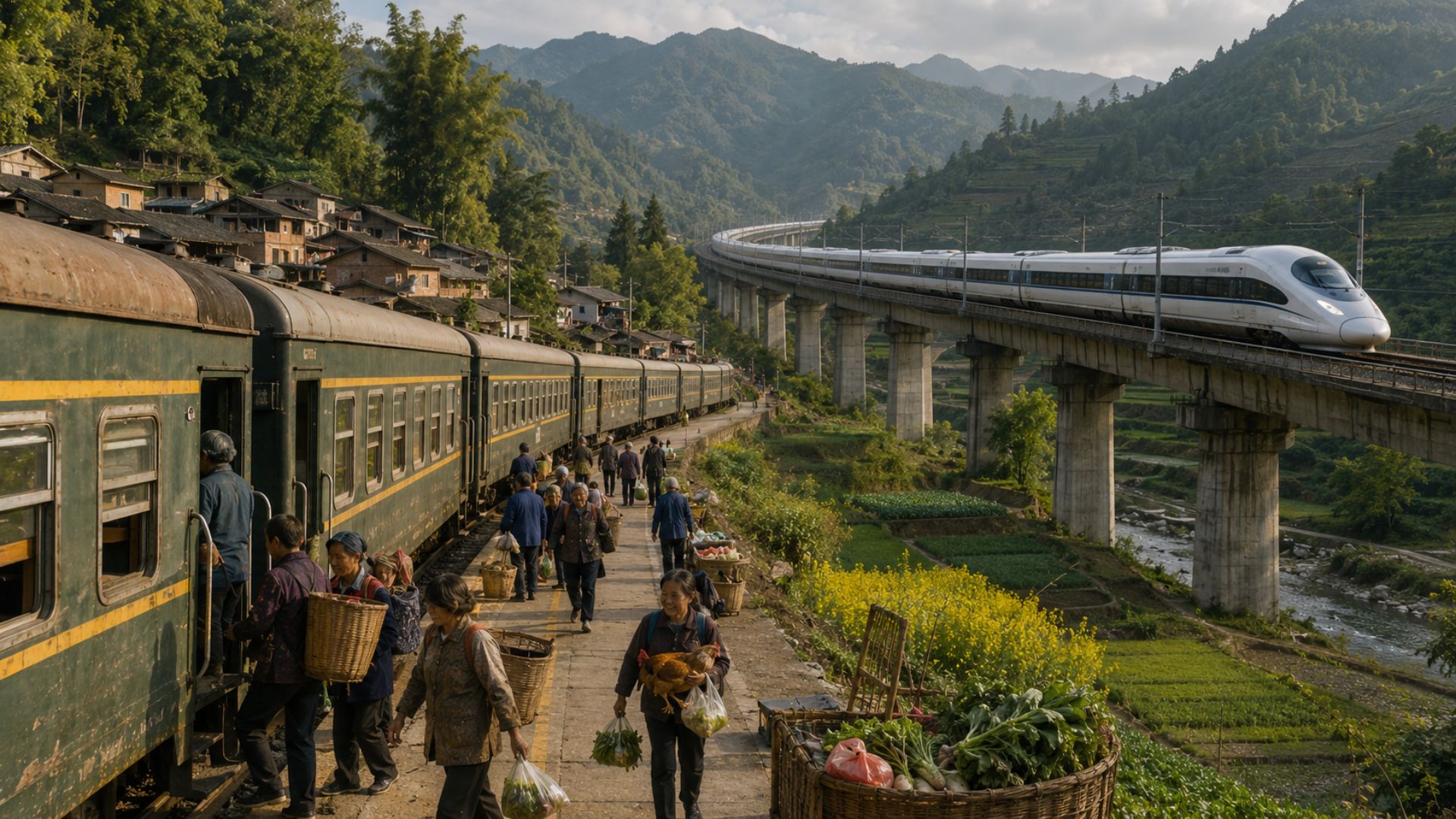
While showcasing bullet trains traveling at over 300 km/h, China maintains about 81 slow train lines that travel at 40 km/h, charge less than R$ 2 for a ticket, and cross remote villages carrying residents, students, and even chickens and vegetables to the market.



The Project That Could Change the Game
Called Cities Train, the project envisions the construction of a 100-kilometer railway connecting Salvador to Feira. And it will not be just any train: the line will be mixed, meaning it will transport passengers and cargo on modern, silent, and fast trains. The journey, which currently can last up to two hours during rush hour, will take 35 minutes.
The planned route should cross municipalities such as Simões Filho, Candeias, Santo Amaro, and Amélia Rodrigues, promoting the growth of urban zones along the way. The railway could also transport industrial and agricultural goods between the port of Salvador and the logistics hub of Feira, reducing transportation costs and alleviating truck traffic on the roads.
Where Did the Idea Come From?
The project began to take shape in 2023 when CCR Metrô Bahia showed initial interest. But the real push came in 2024, with the federal government taking over the planning through the Ministry of Transport. The chosen model is railway authorization, which dispenses with bidding and allows companies with technical capacity to present their projects directly to the National Land Transport Agency (ANTT).
The company TIC Bahia LTDA was the first to submit an official proposal. According to the Ministry, the railway aligns with the national program for expanding the railway network and addresses a critical demand for mobility in the state.
And What’s the Current Status?
Currently, the project is in the phase of technical studies and route definition. Engineers are analyzing variables such as urban density, expropriation costs, and environmental impact. The line is expected to adopt wheel gauge, digital signaling systems, and central control — modern standards that enhance speed and safety.
The construction will be divided into three phases:
- Technical studies and route definition (current phase);
- Legal and environmental feasibility, with funding acquisition and ANTT authorization;
- Construction of the railway, expected to start within two years after final approval.
The mixed traffic model will require adapted compositions, but it has the potential to transport thousands of people daily and tons of cargo per hour.
Real Impacts: More Than Just Transportation
The Cities Train promises to generate thousands of direct and indirect jobs even during the construction phase. Sectors such as civil construction, engineering, services, and even the real estate market are expected to thrive. With the appreciation of land around the stations, cities like Simões Filho, Santo Amaro, and Candeias could transform into more connected and integrated urban hubs.
But the impact goes beyond the economy:
- Social: workers and students who currently waste hours in traffic will enjoy a better quality of life;
- Environmental: the reduction of road traffic implies less CO2 emissions, less wear on roadways, and lower fossil fuel consumption;
- Strategic: the railway positions Bahia as a national model of integrated and sustainable mobility.
The Future Is Already on the Radar
By 2025, it is expected that TIC Bahia will finalize the technical studies and receive the definitive authorization from ANTT. From there, the environmental licensing process and investor outreach will begin. And the plans do not stop there: discussions are already underway about the possibility of extending the railway to Alagoinhas, Cruz das Almas, and even Vitória da Conquista, creating a regional railway corridor.
This project could serve as a model for other states such as Goiás, Pernambuco, and Ceará, which are also exploring railway solutions for passenger transportation. The return of trains in Brazil, once relegated to the past, may be reborn with the latest technology — and Bahia could lead this revival.