






 Portuguese
  Spanish


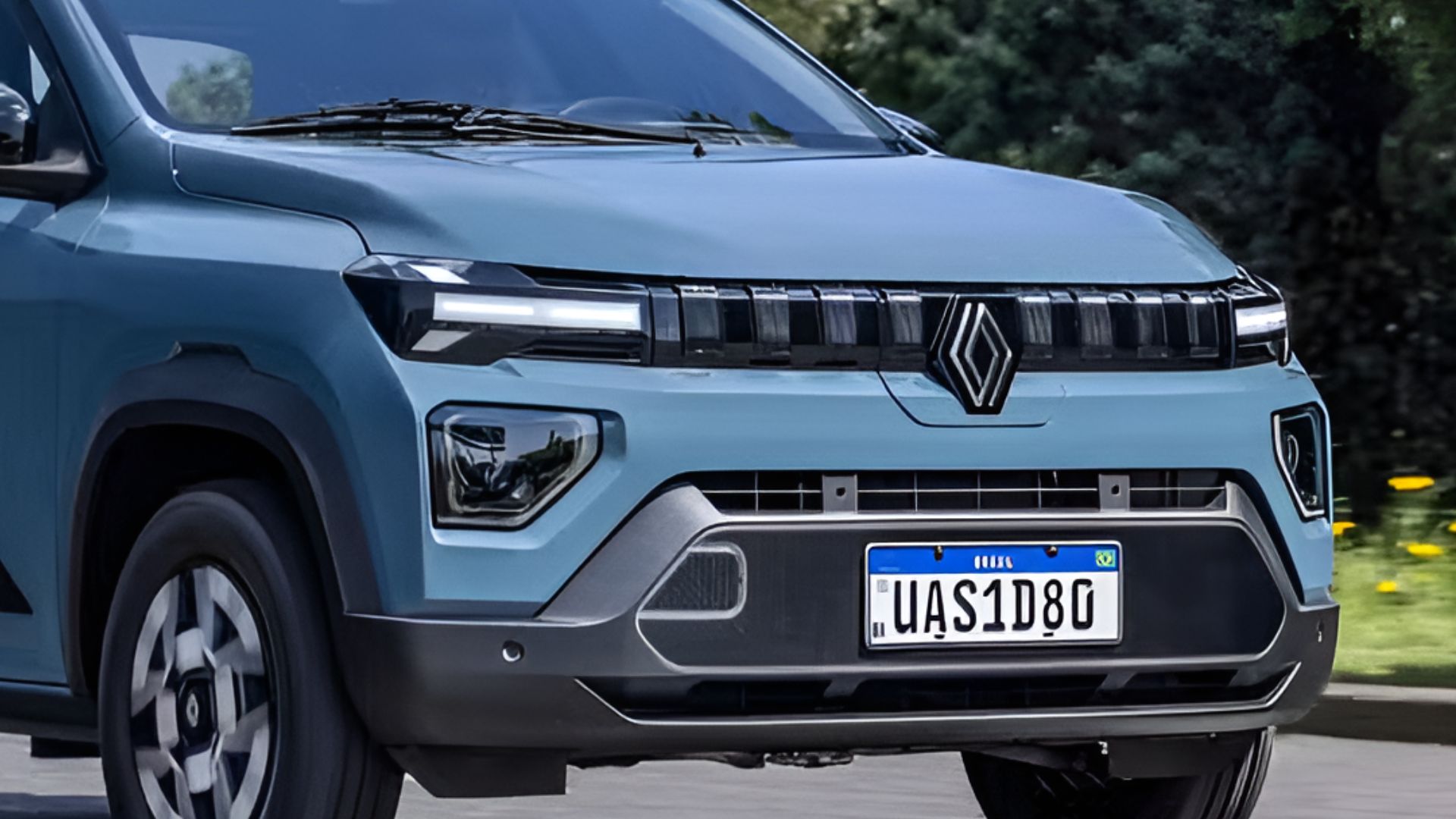


The Updated Kwid Arrives in 2026 with E-Tech Look, Digital Interior, and Profound Structural Changes, Marking the Main Bet of Renault and Geely to Maintain Presence in the Entry Segment of the Brazilian Market.
The new Renault Kwid is under development to hit the Brazilian market by mid-2026, already as the 2027 line, with a redesign considered the most profound since its debut.
The update will include the adoption of the look of the Kwid E-Tech sold in the country, as well as structural changes to the body and interior.
The goal is to keep the subcompact as the most affordable model from the brand in a segment that has shrunk in recent years but remains relevant for manufacturers betting on volume entry.
-
End of an era in Brazil: beloved sedan by Brazilians is discontinued despite having a 2.0 engine with 151 hp, CVT transmission, 466-liter trunk, and up to 650 km of range.

-
New Law Proposal in Brazil Could Heavily Penalize Drivers: Dangerous Overtaking May Become a Serious Offense with Fines Increased Tenfold and a 12-Month License Suspension; Update on 2026 Progress

-
Electric Revolution: Watts W125 Motorcycle Offers 160 km Range, 90 km/h Speed, and Affordable Price Starting at $3,000
-
General Motors Replaces Over a Thousand Workers with 50 Cobots at Electric Vehicle Plant, UAW Union Criticizes Move Amid Industry’s Automation Push


Renault-Geely Investment and Product Plan
The renewal is part of a R$ 3.8 billion investment cycle announced by Renault in partnership with Chinese Geely.
The package calls for four products developed for the Brazilian market: two Geely models based on the modular GEA platform, a completely new project from Renault built on a different architecture of the group, and the new generation of the Kwid.
Sources linked to the development confirmed that the national subcompact will continue with the CMF-A platform, although it will undergo changes that justify its presentation as a second generation.
The factory in São José dos Pinhais, Paraná, will remain responsible for production.
External Changes and Inspiration from the Kwid E-Tech
The redesign will involve stamping changes in parts like the hood, fenders, doors, and trunk lid.

The front set will adopt the identity of the E-Tech, with thinner headlights and a redesigned bumper.
At the rear, the optical set will gain an updated light signature.
Although the monocoque will be maintained, the depth of the changes places the project among the most extensive transformations ever made by the brand in an entry-level vehicle.
Redesigned Interior and Fully Digital Cabin
Inside, the cabin will be completely revamped.
The new dashboard will have more horizontal lines, inspired directly by the imported electric version from China.
The 10-inch multimedia center, with wireless mirroring for Android Auto and Apple CarPlay, will be positioned higher and integrate a renewed interface.
The instrument cluster will be digital, with a 7-inch display, also inherited from the E-Tech.
Components such as multifunction steering wheel, air conditioning controls, and upholstery will be new, replacing the current solution, considered simple by 2025 standards.
Dimensions and Proportions of the Kwid 2027
The dimensions are expected to follow the standard of the electric Kwid, which measures 3.70 meters in length, 1.77 meters in width, and 1.53 meters in height.
This means a slight increase in width and height, accompanied by a slight reduction in overall length.

The wheelbase remains at 2.42 meters, the structural limit of the platform.
The result brings the Kwid closer to proportions seen today in compact SUVs, especially due to the height and width greater than the currently sold model.
Mechanics and Possible Adjustments to the 1.0 SCe Engine
The mechanical set is not expected to undergo profound changes.
The most likely option is to maintain the 1.0 SCe flex three-cylinder, 12-valve engine already used in the Brazilian Kwid.
There is no confirmation yet if the engine will return to using the variable timing that, in previous adjustments, allowed for a higher power output, close to 82 horsepower.
Recent versions deliver up to 71 horsepower with ethanol.
Internally, the brand is evaluating adjustments to improve fuel consumption and emissions, but no official details have been released yet.
Manual Transmission and Improvements in Driveability
The transmission will remain a five-speed manual.
The relevant change will be in the actuation, which should adopt cables instead of the mechanical lever currently used.
This solution tends to reduce vibrations transmitted to the lever and provide more precise shifts, according to technicians involved in the project.
Renault’s Strategy for the Entry Segment
The technological and visual advancement serves a strategic purpose for Renault and its new Chinese partner.
In a market where competitors abandoned the entry category, the group intends to occupy an increasingly underserved space.

The engineering team is betting on a combination of more modern finishes, new equipment in the segment, and an already established engine to keep the Kwid among the best-selling models of the brand in the country.
The decision to align the subcompact with the look of the E-Tech also has a commercial effect.
In addition to strengthening the family image, Renault believes that adopting a digitized interior and a larger central screen will help reposition the Kwid as a more technological product.
This strategy responds to the increase in low-cost Chinese competitors that have arrived in Brazil with more complete electronic packages.
The planned changes for the Kwid 2027 continue the updating process that began with Geely’s arrival as Renault’s partner in Brazil.
The synergy between the groups includes platform sharing, joint development of components, and the adoption of unified industrial processes.
The expectation is that the new products designed in partnership will solidify the French brand in the country with a renewed portfolio by the end of the decade.
With this package of innovations and strategic repositioning, how will the Kwid 2027 be received in a scenario where customers are increasingly seeking technology even in more affordable models?



Porque essas caieras não põe um câmbio automático pra melhorar e sair dessa caixa ultrapassada de 5 marchas parece até Fusca sempre a mesma coisa por isso a marca tá um lixo
Ainda vem com brinde surpresa?
Mesma bomba