






 Portuguese
  Spanish


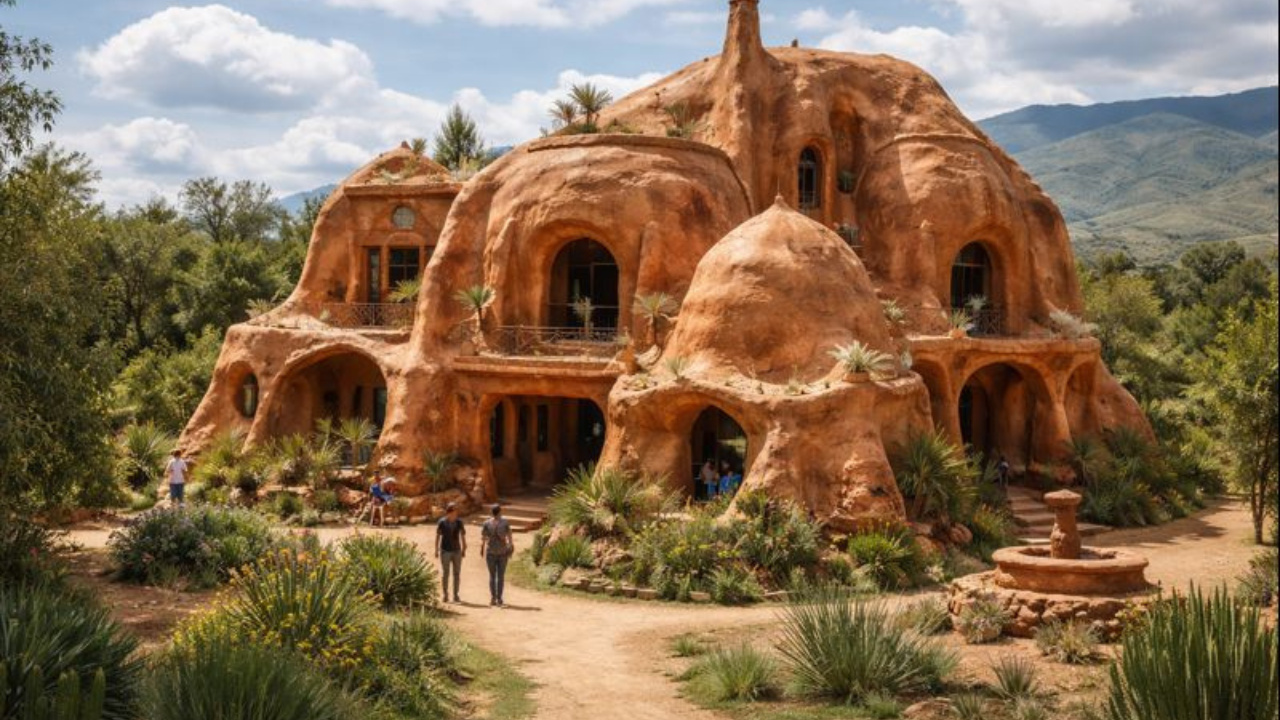
Casa Terracota Colombia Unites Art, Sustainability, and Clay Construction in One of the Most Curious Works in the World.
The largest clay house in the world, known as Casa Terracota Colombia, is a unique construction that draws attention for uniting art, technique, and respect for the environment.
Envisioned by Colombian architect Octavio Mendoza Morales, the work began in the late 1990s, was completed in 2016, and is located in Villa de Leyva, Colombia.
Built entirely by hand, using only local clay and earth, the house has become an international symbol of sustainable architecture and constructive innovation.
-
Chinese Farmer Builds 5-Ton Homemade Submarine Over a Decade, Capable of Diving 8 Meters with Two Passengers

-
Brazilian Woman Transforms Ambulance into Solar-Powered Mobile Home for Remote Work and Travel Adventures

-
Oil Company Robots Discover 3,300-Year-Old Canaanite Shipwreck in the Mediterranean, Proving Ancient Mariners Navigated Open Seas by Stars Long Before Historians Thought

-
Facing high rent costs in Brazil, couple swaps apartment for life on a sailboat, reducing expenses significantly.





The project arose to prove that simple materials can generate durable, functional, and visually striking structures.
Thus, located in one of the best-preserved villages in the country, Casa Terracota quickly gained worldwide recognition.
Today, it attracts tourists, architects, and scholars interested in clay construction and alternative solutions to conventional architecture.
Origin of the Largest Clay House in the World
The story of the largest clay house in the world begins with Octavio Mendoza’s desire to challenge traditional construction standards.
Passionate about ecology and ancestral techniques, the architect decided to create a dwelling that was both shelter and work of art.
Inspired by the organic forms of nature, Mendoza conceived Casa Terracota as a “living sculpture.”
Moreover, the goal was to fully integrate the building into the landscape of Villa de Leyva, Colombia, without breaking with the natural environment around.
Clay Construction and Artisan Technique
The clay construction of Casa Terracota took about 17 years to complete. The entire process occurred without the use of reinforced concrete, steel, or rebar.
The structure, measuring approximately 500 square meters, was shaped entirely by the hands of the builders, who used only clay and earth extracted from the region.
The technique employed resembles the concept of earthbags, a method that uses compacted earth as a structural element.
However, Mendoza adapted this principle, creating a unique and experimental approach focused on sustainable architecture.
How Casa Terracota Was “Cooked”
Furthermore, after shaping, the clay underwent an essential process to ensure strength and durability. The sun and air naturally dried the layers of clay before the builders “cooked” each environment separately.
For this, the architect used coque, a material he considers more eco-friendly than traditional coal. Each room underwent about 30 days of firing, followed by 30 days of cooling, which strengthened the thick walls and made the structure solid.
Integrated Spaces and Organic Design
The builders shaped all the internal elements of Casa Terracota Colombia with the same material as the structure.
Countertops, seating, beds, and bathrooms are part of the architecture itself, creating a continuous and fluid environment.
Thus, the result is a space without rigid straight lines, where organic design prevails. The aesthetic resembles fantasy movie settings, reinforcing the artistic nature of the largest clay house in the world.
From Residence to International Tourist Attraction
Initially planned to be Octavio Mendoza’s residence, the house quickly gained notoriety.
Furthermore, the increased tourist flow in Villa de Leyva, Colombia, combined with international curiosity, transformed the site into a must-see for visitors.
Over time, the tranquility desired by the architect gave way to its cultural and educational function. Today, Casa Terracota operates as a living laboratory for sustainable architecture.
Sustainable Architecture and Solar Energy
In addition to the innovative construction technique, the largest clay house in the world also operates with solar energy, reinforcing its environmental commitment.
The building practically demonstrates how sustainable solutions can be applied without compromising comfort or aesthetics.
More than an architectural curiosity, Casa Terracota represents a real alternative to traditional construction.
Thus, it proves that clay construction can be efficient, durable, and integrated with nature, inspiring new paths for contemporary architecture.








-

-

-

-

-

17 people reacted to this.