






 Portuguese
  Spanish


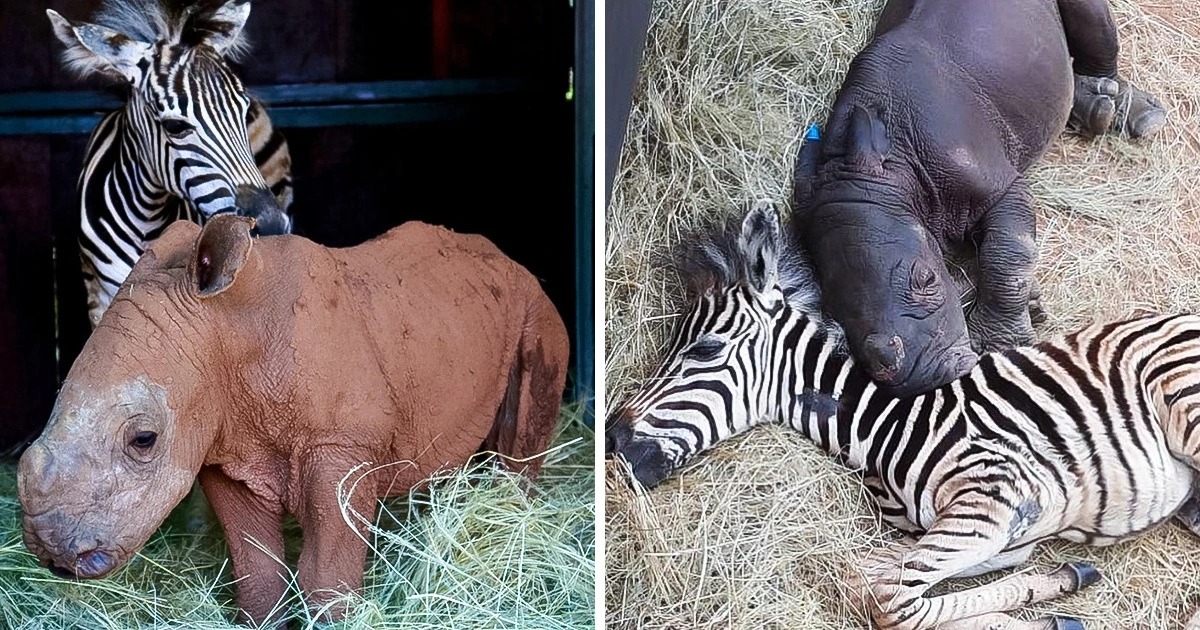


Rescued in South Africa, Daisy and Modjadji Find Comfort in Each Other and Show How Friendship Can Save Wild Lives Even Amid Abandonment
Found alone and in delicate conditions in South Africa, two cubs from different species formed an unlikely bond that has now become essential for their recovery. Daisy, a baby white rhinoceros, and Modjadji, a plains zebra, found in each other the comfort they lost when separated from their mothers.
The story of the two draws attention not only for its tenderness but also for what it reveals about socialization, survival, and wildlife conservation.
Taking advantage of International Zebra Day, celebrated on January 31, National Geographic highlights this unique relationship that was born at Care for Wild Rhino Sanctuary in Mpumalanga, South Africa, considered the largest orphaned rhino sanctuary in the world.
-
Indian Farmers Use 200-Year-Old Bamboo Tube System for Drip Irrigation Without Electricity or Pumps

-
Racing Motorcycles Rescued from Irish Sea Shipwreck, Joey Dunlop Wins Three Isle of Man TT Races Days Later

-
Before Sending Humans to the Moon, the U.S. Considered Detonating a Nuclear Bomb Near the Moon to Dazzle the World
-
In Cape Verde, Ekonatura Recycles 100 kg of Glass and Plastic per Hour into School Bags





A Meeting Marked by Vulnerability
Modjadji was found alone in Kruger National Park after a severe storm. The little zebra was suffering from anemia caused by ticks and was visibly weak.
Her name honors the local rain goddess, a symbol of renewal in the face of adversity.
A few days later, the park rangers located Daisy. The cub was only about 12 hours old, still with the umbilical cord attached, and had an infection. There are strong indications that her mother may have been illegally hunted for her horn.
The Role of the Sanctuary in Rehabilitation
Both were taken to Care for Wild Rhino Sanctuary, where they receive specialized care.
The founder of the place, Petronel Nieuwoudt, closely monitored the development of the duo and was surprised by their immediate connection. “You wouldn’t believe how adorable these two are,” she stated while commenting on the young animals.
According to her, placing them together was a thought-out decision to provide the comfort that would typically come from their mothers. And the result exceeded expectations.
Companionship That Warms and Calms
Whether playing with a ball, running, chasing each other, or simply snuggling at night, Daisy and Modjadji are often inseparable. Nieuwoudt notes that the two particularly enjoy touching each other while they sleep.
“It’s the feeling of ‘Ah, there’s another little breath beside me and another little heartbeat beside me,” describes the founder. This constant contact has helped reduce the stress and insecurity typical of orphaned cubs.
The bond is not limited to emotional comfort. Playful behavior plays a fundamental role in development.
According to Terri Roth, a scientist specializing in rhinoceroses at the Cincinnati Zoo, playing helps cubs develop social skills, learn boundaries, and become physically competent.
She explains that early socialization with another animal makes the individual much more adapted when they become adults. Even though they are different species, Daisy and Modjadji find ways to teach each other.
Similarities Between Zebra and Rhinoceros
In nature, the territories of plains zebras and white rhinoceroses overlap. Both are herbivores and primarily feed on grass. Furthermore, they belong to the group of odd-toed ungulates, herbivores with hooves that include horses and donkeys.
According to Roth, “they are taxonomically closer than any other species,” which may help explain why a rhinoceros can serve as a substitute companion for a zebra.
Threats That Put Species at Risk
The International Union for Conservation of Nature (IUCN) lists plains zebras as near threatened, with a declining population.
Extensive droughts caused by climate change reduce the availability of food and water, while agricultural expansion drives these animals out of their habitat.
White rhinoceroses, which were once considered extinct, are now also classified as near threatened, mainly due to poaching.
Their horns, made of the same material that composes nails, are still used in some cultures for traditional medicine or sculptures, despite laws prohibiting this practice.
Cubs Growing Together but Following Their Own Paths
Although they sleep together, there are skills that each cub can only learn with its own species. Daisy will need to interact with other rhinoceroses to learn how to locate mud wallows and water sources, which are essential for getting rid of flies.
Modjadji, in turn, will need to learn about herd hierarchy with other zebras. These groups are made up of one male, up to six females, and their cubs, who usually travel in a line led by the dominant female.
A Future That Points Towards Freedom
As they grow, Modjadji spends less time with Daisy and more time with other zebras in a protected area.
Still, she sometimes returns to the center for a quick nap beside her friend. Daisy remains at the sanctuary, where they are working to help her grow, now over 450 kg, and to interact with other orphaned rhinoceroses.
Nieuwoudt hopes that one day both can return to the wild, perhaps grazing close to each other.
Stories like this reinforce how human care, combined with animal instinct, can create unlikely bridges and offer a second chance at life.
With information from National Geographic Brazil.


