Portuguese
  Spanish


Bamboo irrigation in Meghalaya carries water from springs and streams to plantations using the force of gravity, avoiding pumps and motors, but requires terrain inclination, available water, and frequent maintenance to keep functioning.
Without an outlet, motor, or pump, farmers in India have maintained for about 200 years a network of bamboo pipes that carry water to plantations. In the hills of Meghalaya, water flows down from springs and streams located at higher points and reaches near the roots in small drops.
Centre for Science and Environment, an Indian public interest research organization, recorded the use of bamboo irrigation by communities in the hills of Meghalaya. The technique takes advantage of a material available in the region and the natural slope of the terrain.
The result seems simple, but it depends on very specific conditions. The water source needs to be above the crop, the bamboo requires care, and the amount of water suits crops that do not need large volumes.
-
At 15, Logan Walter started making TikTok videos at home, discovered he could earn money selling beauty products, dropped out of college at 21, and made his first million through commissions, famous brands, and men’s self-care.

-
Historic 600-Ton Church Relocated 5 km to Avoid Sinking Ground Near Brazilian Mine, Prompting City Reorganization

-
Racing Motorcycles Rescued from Irish Sea Shipwreck, Joey Dunlop Wins Three Isle of Man TT Races Days Later

-
Before Sending Humans to the Moon, the U.S. Considered Detonating a Nuclear Bomb Near the Moon to Dazzle the World




How bamboo pipes carry water to the plants
Bamboo irrigation starts where there is a spring or stream in an elevated area. The water enters the first pipes and follows the slope until it reaches the cultivated part.
Larger bamboo pieces help conduct the flow at the beginning. Smaller parts distribute the water near the plants, where small holes release drops near the roots.
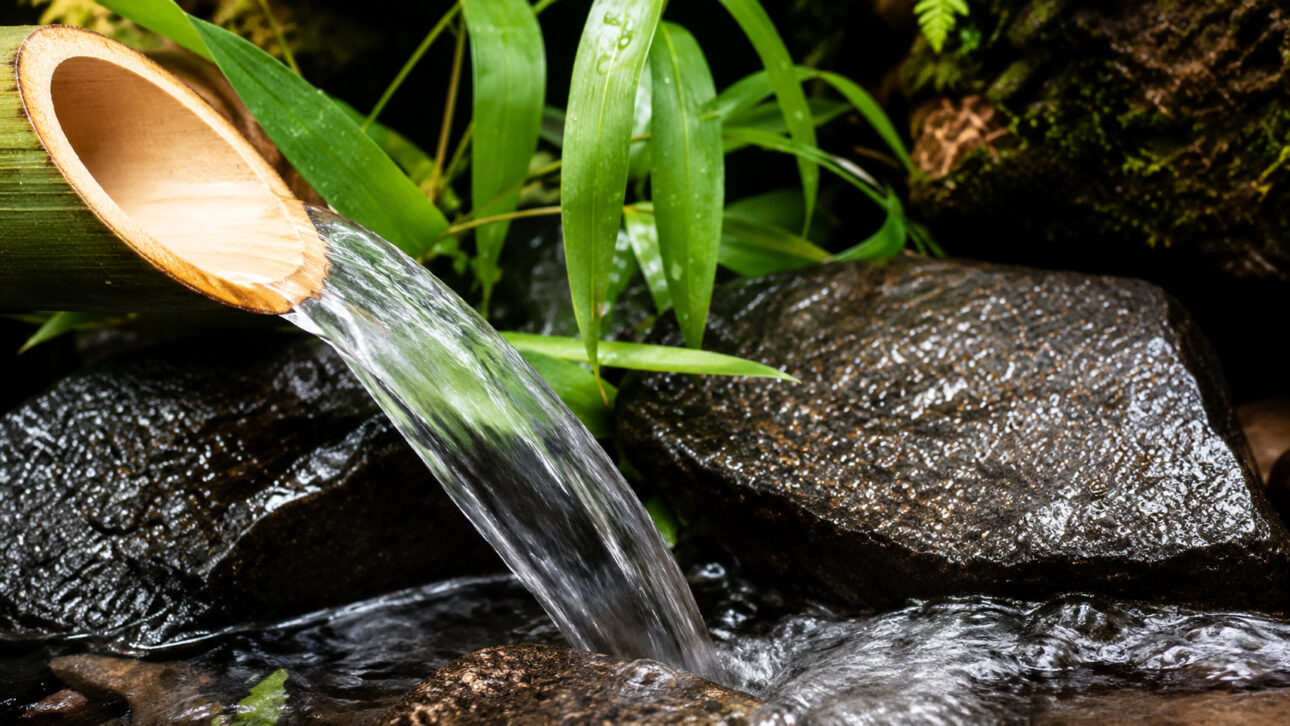
This path needs to follow the slope of the terrain. Gravity pushes the water down and keeps the flow without needing electrical energy.
The water does not arrive all at once in large quantities. It is divided along the network, making the system similar to a simple form of microirrigation, a method that waters near the root with little water.
Gravity does the work that pumps would do
Pumps are usually used when water needs to be pulled or pushed. In Meghalaya, the height of the spring in relation to the plantation allows the terrain’s descent to do this work.
This is the most important point of the technique. Without height difference, the water does not travel the path by itself through the bamboo tubes.
The slope also helps control where the water will exit. The farmer sets up the channels so that the dripping occurs at the closest point to the plants.
The system cuts the use of motor and fuel in the transportation of water. Still, it does not eliminate human work, as the network needs to be assembled, cleaned, and reinforced.
Khasi and Jaintia communities adapted the technique to the hills
The Khasi and Jaintia communities developed this way of carrying water in a region of steep slopes and rocky terrain. In these areas, storing water in the soil is more difficult, and the natural path of water becomes important.
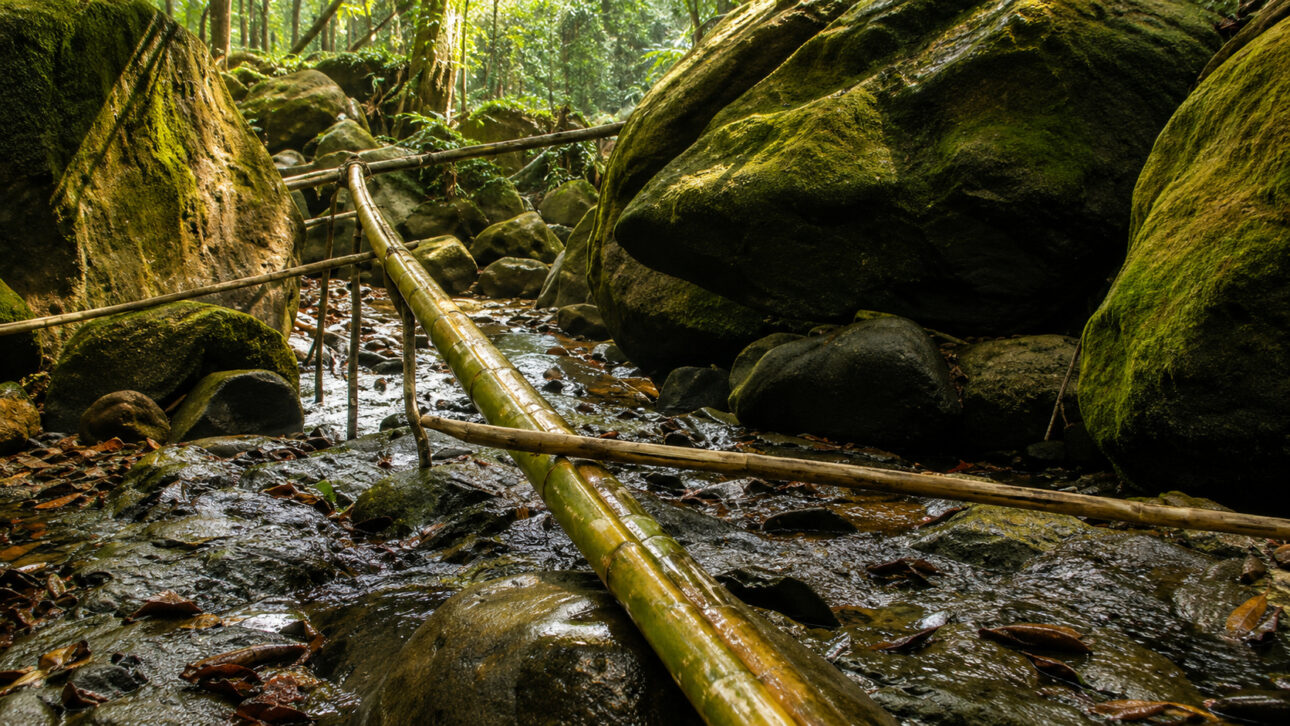
Centre for Science and Environment, an Indian research organization focused on public interest, describes the use of perforated tubes that divert the flow of streams and springs to terrace farming areas.
The technique does not rely on expensive parts. Bamboo, branches used as support, and bindings sustain the channels that descend the slope.
This knowledge combines observation of the terrain, choice of material, and care with water. Bamboo irrigation works because it was adapted to the place, not because any property can replicate the same structure.
Bamboo, cleaning, and flow define the limits of the technique
Bamboo does not last forever. Rain, humidity, and continuous use require cleaning, reinforcement, and replacement of worn parts.
The flow is the amount of water that passes through the tubes in a given time. In this system, it needs to be sufficient to keep the plants without wasting more water than necessary.
Bamboo irrigation was designed to release small amounts of water. Therefore, it suits crops that require less water and is not a one-size-fits-all solution for any plantation.
There also needs to be bamboo available for repairs. Without maintenance and replacement of the material, the channels stop functioning as they should.
What this technique can teach Brazilian rural properties
The Meghalaya technique shows the value of observing the terrain before choosing how to irrigate. In Brazilian rural areas with a water source higher than the crop, gravity can be part of the water path planning.
This does not mean copying bamboo pipes everywhere. The property needs to consider the terrain, available water, and the needs of each crop.
Modern micro-irrigation uses specific equipment to release water near the roots. The Indian model achieves the same goal with bamboo and slope, within very specific local conditions.
The main lesson is practical: bringing water to the plant does not always require the same structure. Before choosing pumps, hoses, or channels, it is necessary to understand where the water comes from and where it can go.
The bamboo irrigation maintained in the hills of Meghalaya for about 200 years shows that gravity, local material, and field experience can form a useful solution for small crops. The technique reduces energy use but does not eliminate the need for daily care.
The method depends on water in an elevated area, sloped terrain, and bamboo for maintenance. These limits help avoid the misconception that a solution created for the mountains of India works the same in any region.
In your region, could a spring in a high area bring water to a crop without a pump? Tell us in the comments and share this post.