Portuguese
  Spanish


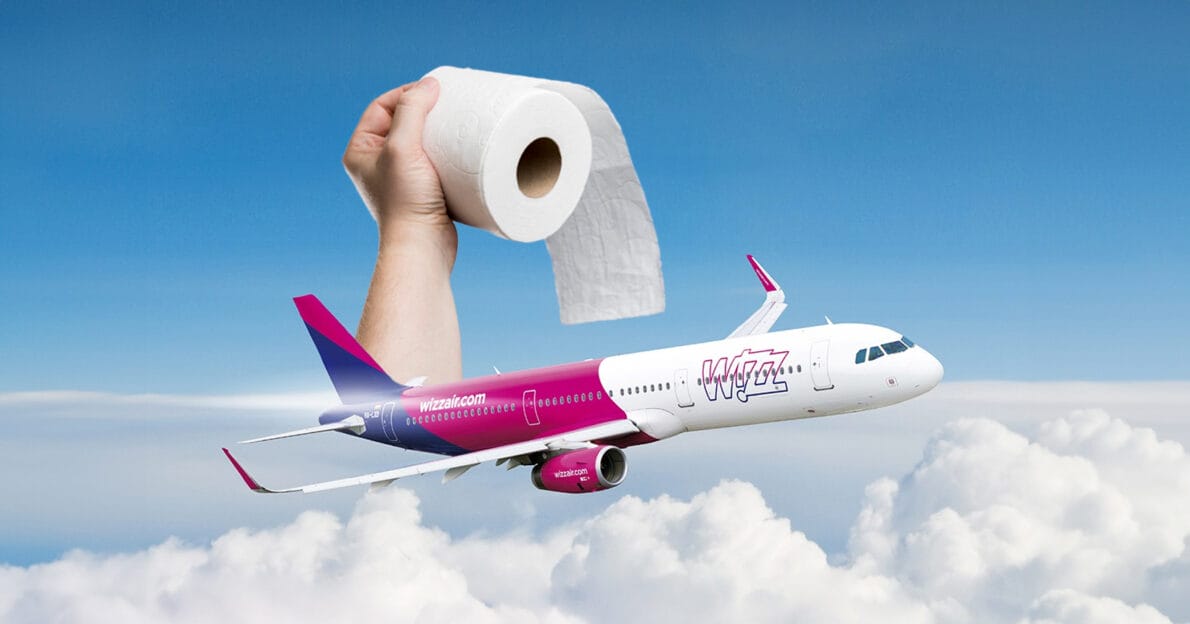

Wizz Air Announces Aviation Fuel Made From Human Feces. We Invite All Readers to Learn About the Sustainable Initiative of This Innovative Airline!
Human feces could become a crucial element for air transport. At least that is what is in the plans of the company Wizz Air, a Hungarian airline, which claims to have reached an agreement with a British company to engage in the production of a new aviation fuel made from human feces. Check out all the details of the new fuel!
New Fuel Made From Feces for Airplanes Is in Approval Phase, According to The Guardian
The biofuel company Firefly Green Fuels has developed a process that will transform sewage waste into sustainable aviation fuel. The company states that it expects to begin supplying the aviation fuel made from human feces, a low-carbon energy source, around 2028, and has reached an agreement with the UK-based Wizz Air subsidiary to supply up to 525,000 tons of fuel over a period of 15 years (that’s a lot of poop).
Firefly will receive samples from a biosolids company, taken from its wastewater treatment process. With this product in hand, scientists can develop the new aircraft fuel based on human feces.
-
Brazil Welcomes Spanish Wamos Air and Nigerian Air Peace, Potentially Transforming International Routes and Increasing Competition

-
Why can the crane operator only obey the correct signalman on the construction site: among dozens of workers, a hand raised by the wrong person can confuse the maneuver and turn a load of tons into an immediate risk.
-
What changes with the new public transportation rules that can reduce pressure on fares and pave the way for zero fare in Brazil?
-
Offshore air transport soars in Brazil, surpasses 2.5 million passengers, and reveals how oil has transformed Rio’s airports into key pieces of national logistics.




The production from this source uses about 70% less carbon than traditional aviation fuel. Traditional fuels will not stop being used, but the Firefly aviation fuel made from human feces can be utilized in a maximum blend of 50% with kerosene, without the need for any modifications to jet engines.
The sustainable fuel is significantly more expensive to produce than conventional aviation fuel; however, the experts behind the process based on human waste are hopeful that the benefits will justify the costs.
Companies Speak Out About the New Fuel
Although Firefly’s CEO, James Hygate, admits in a statement that biosolids are “something disgusting,” he also emphasizes that they are a great resource. According to the executive, the company is turning sewage into a new aircraft fuel.
You can’t think of many things that are more beneficial than this. Paul Hilditch, Firefly’s operations director, says the fuel could help the aviation industry reduce its carbon emissions.
According to the executive, there are enough biosolids in the UK for more than 200,000 tons of sustainable fuel. This is enough to satisfy about half of the mandatory demand in 2030. Hilditch is also hopeful about the future of this aviation fuel made from feces, explaining that it is not just the UK that can use it, as wherever there are people in the world, there are human waste.
Firefly is in the process of obtaining official regulatory approval so that its system can be used to fuel aircraft in the near future.
Understand How the New Fuel Made From Feces Will Help the UK
Wizz Air hopes to fuel at least 10% of its flights with the new aviation fuel by 2030. The use of human waste fuel would please the UK government, as at least 10% of all fuel used by UK airlines must be produced from sustainable raw materials by 2030.
Besides aviation, other sectors are utilizing the same concept. Among the responsible companies is Hyundai, which highlights its proposal for a manure-powered car, an innovative concept that combines sustainability with technological advancement. The project, called Waste to Hydrogen, uses a process to convert organic waste into hydrogen, which is then used to power a hydrogen engine.