Portuguese
  Spanish


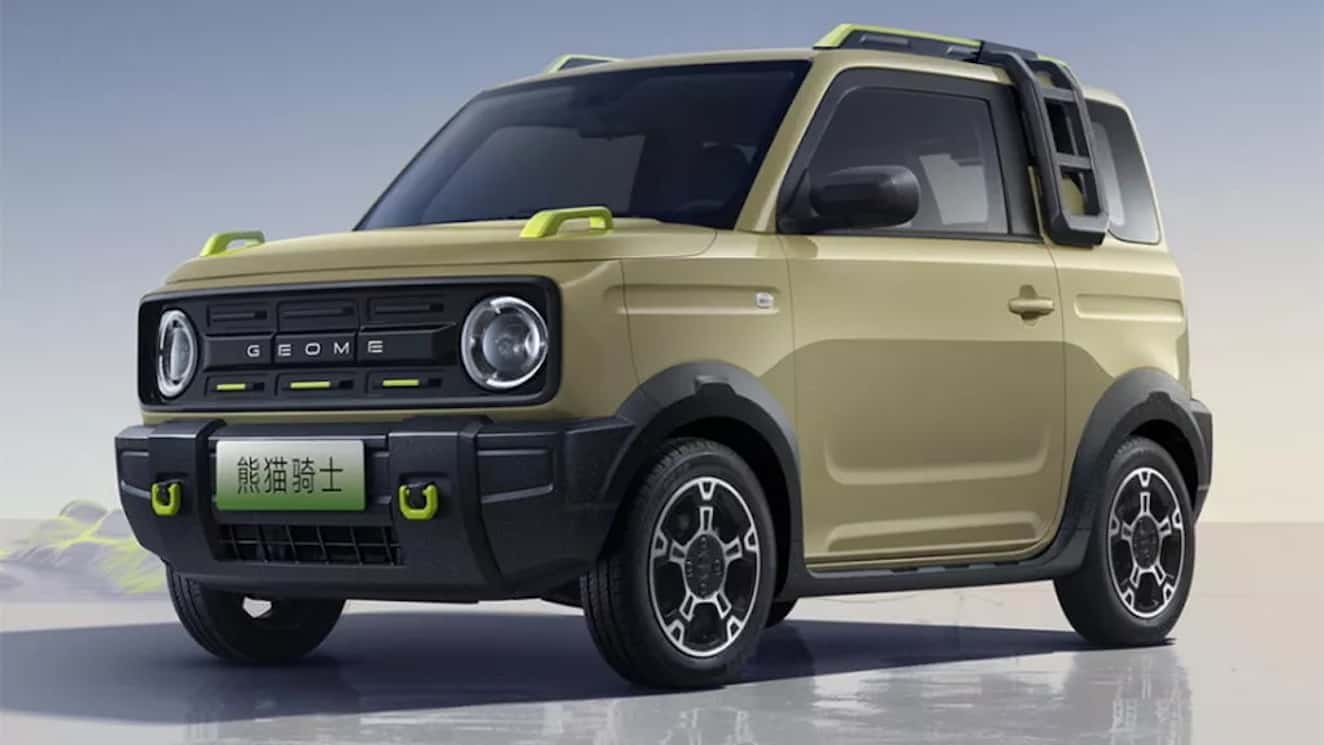


Geely Is Promising to Launch New Models in the Market This Year, One of Them Is the Panda Knight, a Chinese Electric Car That Costs R$ 47 Thousand, Much Less Than the Renault Kwid.
The Chinese Geely, an automaker that owns famous brands in the West like Volvo, recently announced the launch of a new Chinese electric car focusing on cost-effectiveness. Called Panda Knight, the model features a square design reminiscent of the Ford Bronco in a smaller size, managing to deliver a range of up to 200 km and costs almost half of a Renault Kwid E-Tech in Brazil.
Panda Knight Features Compact Design and a Range of 200 km
The Chinese electric car market is very advanced, ranging from very cheap models to highly luxurious options with various brands involved.
Geely is one of them, showcasing the Panda Knight, a compact electric car cheaper than the Renault Kwid. The model is an updated version of another namesake, but with gasoline engine drive.
-
End of an era in Brazil: beloved sedan by Brazilians is discontinued despite having a 2.0 engine with 151 hp, CVT transmission, 466-liter trunk, and up to 650 km of range.

-
New Law Proposal in Brazil Could Heavily Penalize Drivers: Dangerous Overtaking May Become a Serious Offense with Fines Increased Tenfold and a 12-Month License Suspension; Update on 2026 Progress

-
Electric Revolution: Watts W125 Motorcycle Offers 160 km Range, 90 km/h Speed, and Affordable Price Starting at $3,000
-
General Motors Replaces Over a Thousand Workers with 50 Cobots at Electric Vehicle Plant, UAW Union Criticizes Move Amid Industry’s Automation Push






The new Panda Knight has a very square look that even resembles the Suzuki Jimmy, but its front has a grille responsible for its air intake covered. This is a very common design among electric cars that are adapted versions of gasoline-powered models, such as the Volvo XC40.
Inside, the new Chinese electric car has an electric motor in the front axle, generating 70 horsepower and 15.29 kgfm of torque. As it makes clear that it does not generate that much power, its battery is small at 38.7 kWh, and it can sustain acceleration for up to 200 km on a single charge.
Chinese Electric Car Costs Almost Half of a Brazilian Renault Kwid
According to Gizmochina, recharging allows for up to 22 kW input in direct current, allowing half an hour to go from 30% to 80% battery, along with alternating current of only 3.3 kW. The multimedia system features an 8-inch screen, and the digital instrument panel displays content on a 9.2-inch screen.
The Panda Knight will be launched in China starting in September, with a price starting at 69,800 Yuan, which in direct conversion is about R$ 47 thousand not accounting for taxes or fees.
Design changes also altered the vehicle’s dimensions, but nothing too significant. The compact SUV measures 3.13 m in length, 1.56 meters in width, and 1.65 m in height. However, it maintains a 2 m wheelbase and ground clearance. Even compact, the Chinese electric car can offer up to 800 L of trunk space with the rear seats folded down.
Why Buy an Electric Car?
Although they are still more expensive, over time, the reduction in fuel costs and even in IPVA can make the investment worth it. Unlike conventional models, electric cars are powered by electricity.
While conventional models rely on fossil fuels to operate, electric cars run on rechargeable batteries, which provide energy to move the vehicle, as well as power other features like power windows, headlights, and air conditioning.
The main argument in favor of electric cars is that they are less polluting. Compared to conventional models, CO2 generation is reduced by about 33% over the model’s lifetime. When it comes to noise pollution, electric vehicles also have an advantage over their traditional counterparts.
Gasoline-powered engines and other fossil fuels are noisier, generating a much larger impact in cities.