Portuguese
  Spanish



At Lizard Island, Researchers Conducted Breeding and Release of Nearly 10 Million Larvae to Restore Damaged Reefs, Leading to Increased New Corals and Attracting Scientific Attention
The Coral IVF technique is changing the pace of reef restoration by turning a rare ocean event into a large-scale operation. The central idea is simple: capture the natural reproduction of corals, care for the larvae in the first days, and release everything in the right place.
The practical impact is direct. Instead of relying on chance, Coral IVF increases the chances of baby corals settling in degraded areas and growing back as colonies capable of sustaining marine life.
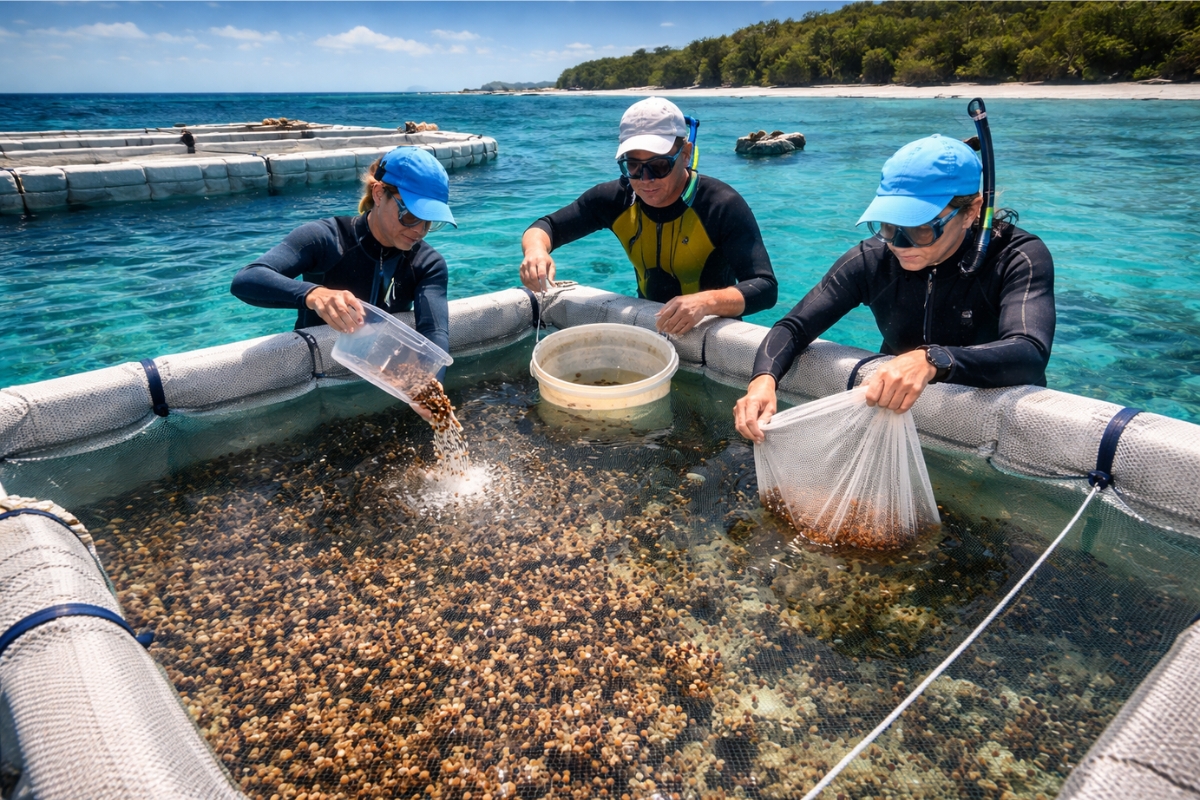
The findings were published by Great Barrier Reef Foundation, an organization dedicated to the conservation of the Great Barrier Reef. The method describes floating pools at sea and a short window for handling the larvae until the moment of release.
-
DNA Analysis Reveals How Five Cattle Survived Over 130 Years on a Deserted Brazilian Island

-
Private Spacecraft Intercepts Another for First Time in History During U.S. Space Force Mission Completed 11 Hours Early with Rocket Launched in Record 16 Hours

-
Scientists Predict Earth’s Habitable Lifespan: 1.8 Billion Years Before Oceans Evaporate and Sun Forces Planet Out of Life Zone
-
LG Unveils XBOOM Stage 501 Portable Speaker with 25-Hour Battery, AI Karaoke, and Sound by will.i.am in Brazil


How Coral IVF Creates Larvae in Floating Pools at Sea and Why It Matters
Coral IVF begins during the spawning season when corals release eggs and sperm into the water. This material is collected and kept under control to increase the chance of fertilization and development.
The most striking step occurs in structures that function as floating pools. They keep the larvae in stable conditions and prevent rapid loss due to dispersion.
This initial care makes a difference because the first days are the bottleneck. It is during this period that most larvae are lost even before they have a chance to settle on the reef.
Why Release Happens About a Week Later and What Changes on the Reef
After fertilization, the larvae go through a development phase until they are ready to settle. The window mentioned for this readiness is around one week.
When the release happens at this point, the chance of settlement increases. The reef receives larvae already prepared to seek a suitable location and start growing.
The goal is to accelerate the return of small corals to damaged areas. This return is the first step towards rebuilding structure, shelter, and diversity in the environment.
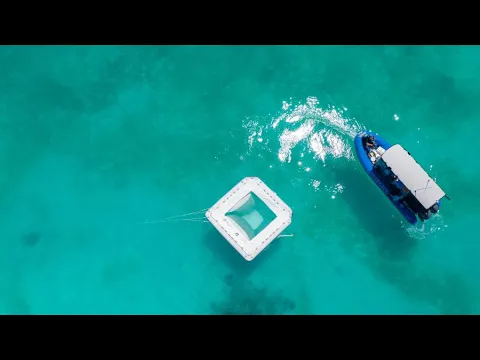

Operation at Lizard Island Released Nearly 10 Million Larvae in 3 Days and Reached 4 Locations
One of the strongest data points linked to the technique involves scale and timing. The operation at Lizard Island released nearly 10 million larvae over 3 days, covering 4 locations around the island.
This field stage was described with different delivery methods for larvae to target areas. The focus was to increase the probability that the larvae would remain long enough near the reef to settle.
Southern Cross University, an Australian university with applied marine research, detailed the evolution of Coral IVF and the deployment tests on damaged reefs. The report highlights the passage of the larvae through the floating pools and the coordinated release at the chosen points.
Seedboxes Tested in 2024 Achieved Up to 56 Times More Settlement and Reinforce Scale
Restoration does not depend solely on releasing larvae. The challenge is to ensure that they stay long enough in the right area and find suitable surfaces to settle.
One of the most discussed advancements involves larvae retention structures known as seedboxes. The proposal is to reduce dispersion and increase contact with the target reef.
CSIRO, Australia’s national science agency, revealed striking results: tests in 2024 indicated up to 56 times more settlement in assessed areas. The number is noteworthy as it indicates an efficiency gain, a crucial point when the objective is scale.
What Changes for Those Monitoring Climate, Ocean, and Conservation in Practice
Coral IVF does not create corals from scratch. It reinforces a natural process, sexual reproduction, and aims to elevate the success rate until corals can settle and grow.
The expected effect is to accelerate the formation of new individuals on the reef, an essential step for any recovery. When the reef loses adult corals, natural replenishment can be too slow to keep pace with heat waves and other stresses.
The real gain of the technique is to provide rhythm and direction. Instead of spreading effort, the process concentrates energy on what usually fails first: the initial survival of the larvae and settlement.
Coral IVF has become one of the most promising approaches to quickly and at scale restore reefs. The numbers of nearly 10 million, 3 days, 4 locations, and up to 56 times illustrate why the topic is entering the radar of those monitoring the future of the oceans.
The reef still depends on favorable environmental conditions to thrive. Even so, the technique increases the chances of recovery where time previously worked against, and delivers a practical pathway to repopulate damaged areas with new corals.