






 Portuguese
  Spanish
  5 min of reading
  0 comments


Study published in Science Advances analyzes proposal to build three mega-dams between Russia and Alaska to try to stabilize the AMOC ocean circulation, considered essential for Europe’s climate, while scientists warn of environmental, geopolitical, social risks and possible irreversible impacts on the global climate system
A high-impact climate proposal has once again drawn the attention of the international scientific community. Researchers analyzed whether a mega-dam between Russia and Alaska could help stem the weakening of the AMOC, an ocean current essential for regulating Europe’s climate.
The idea gained traction in 2024, during a conference in Utrecht, Netherlands. On that occasion, Juliane Weiffenbach presented data on the Middle Pliocene, a period about 3 million years ago, when the current Bering Strait was blocked by a land connection between Asia and North America.
This blockage prevented the exchange of water between the Pacific Ocean and the Arctic. According to the researchers, this configuration coincided with a more intense Atlantic circulation than the current one, which led Jelle Soons to question whether an artificial barrier could replicate part of that effect.
-
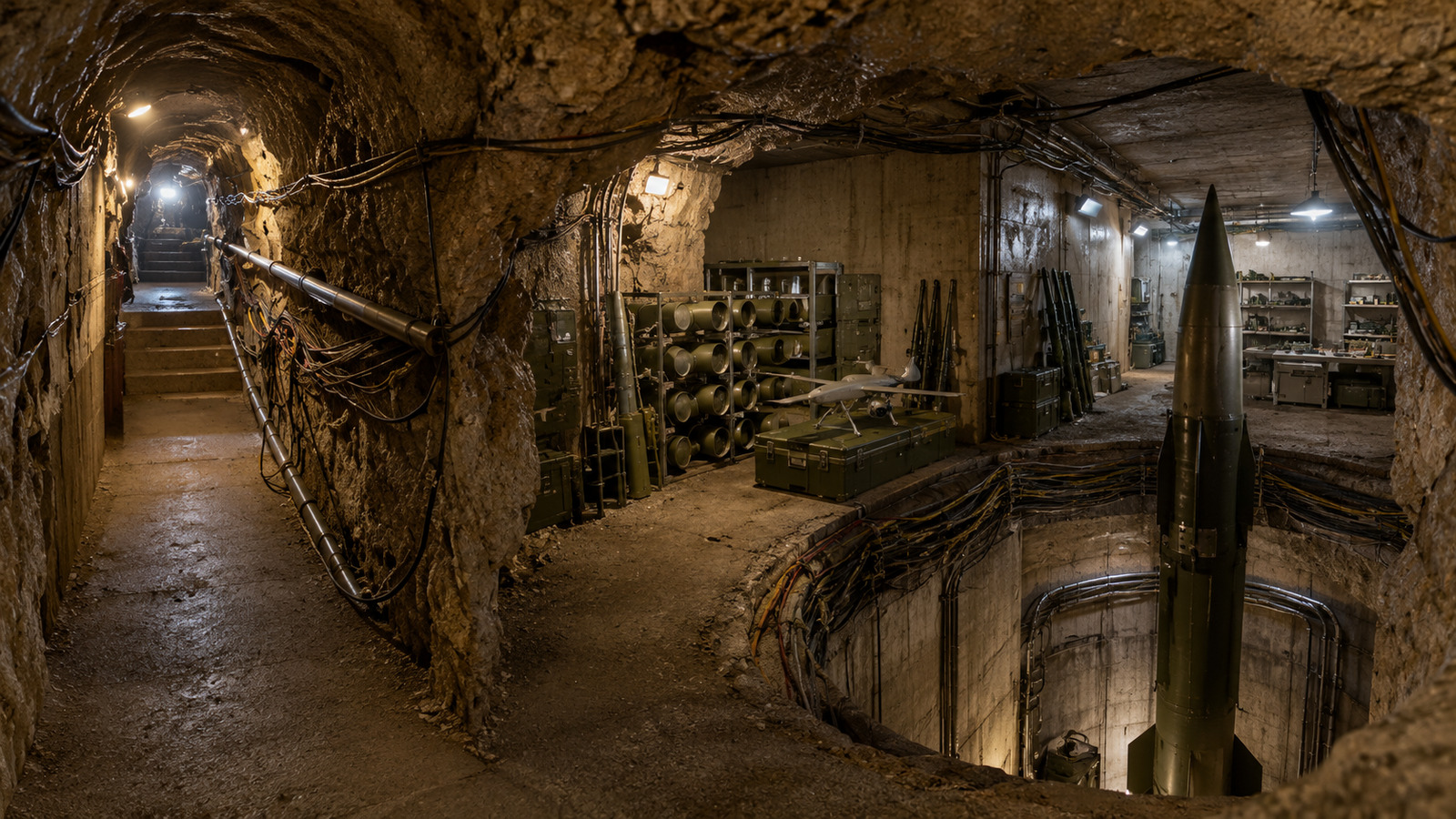
Israel finds Hezbollah militarized tunnel over 200 meters long under village, with 4 missile launch shafts, 12 chambers, anti-tank missiles, drones, and weapons depots at a depth of 25 meters.

-
Ukraine launches largest drone attack on Moscow since 2022, Russia claims to have intercepted nearly 200 aircraft near the capital, Kapotnya refinery targeted again, and offensive reignites alert about war reaching the Russian energy heart just a few kilometers from the Kremlin.

-
Truck drivers, freight, and fines from 2022 take center stage in politics: Chamber approves MP with amnesty, mandatory tracking by CIOT, million-dollar penalties, and new minimum wage for those who spend more than 24 hours on the road.

-
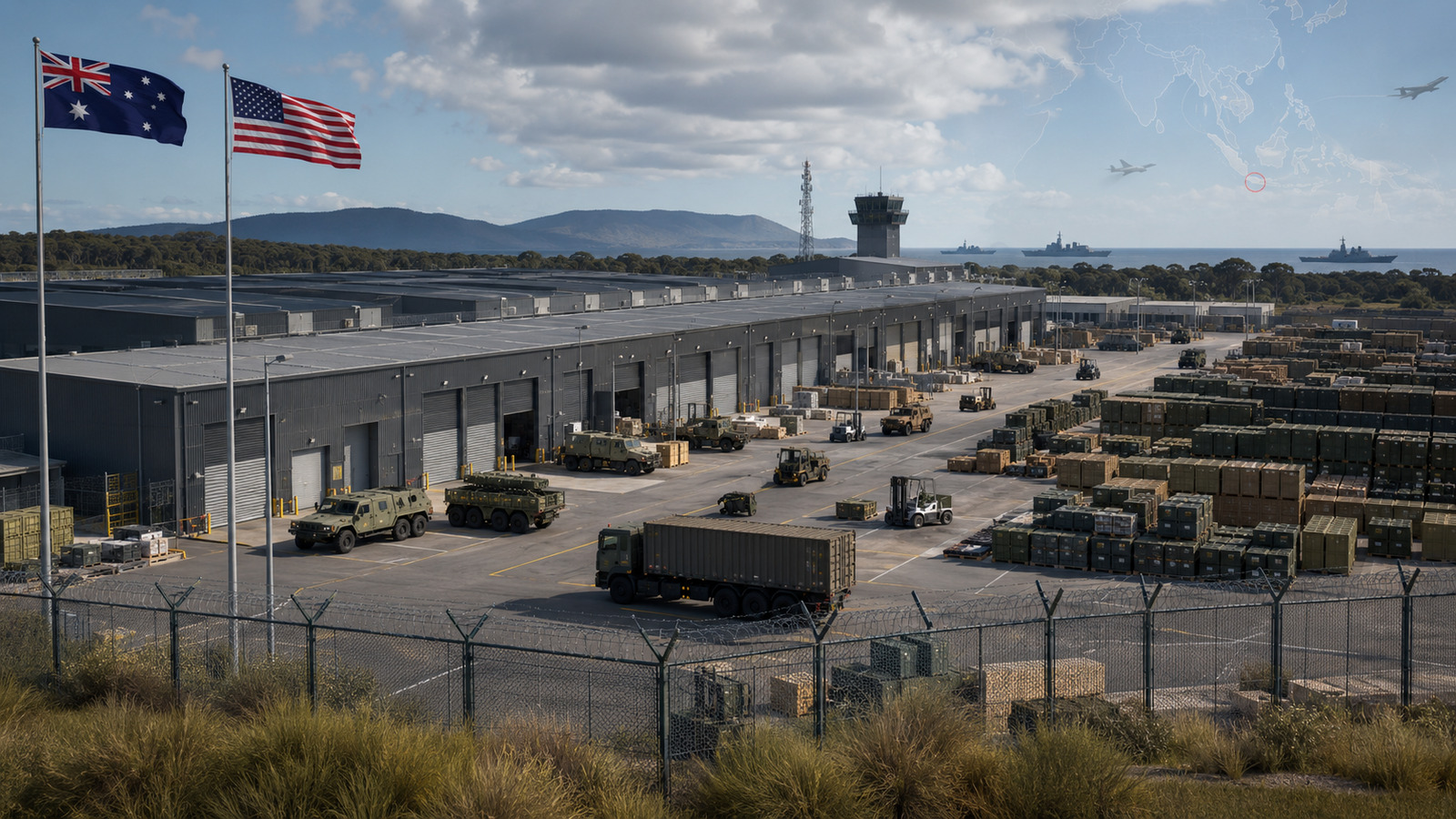
China off the radar: US plans mega $30 million weapons depot in Australia, out of reach of most Chinese missiles, with full capacity expected by 2028


Proposal born after comparison with ancient climate
The hypothesis was developed in a study published in the journal Science Advances. The work proposes building three dams along the Bering Strait, with the aim of trying to stabilize the Atlantic Meridional Overturning Circulation, known as AMOC.
According to the study, this system directly influences the climate of northern Europe. Therefore, the proposal attracted attention both for the size of the project and for its possible impacts on the global climate balance.
The largest structure would be approximately 38 kilometers long, using two islands in the middle of the strait as support points. Still, the authors treat the idea as a theoretical exercise, not as an immediate construction plan.
The current that softens the European climate
The AMOC functions as a large network of interconnected ocean currents. It transports warm, salty water from the tropical Atlantic northward, releases some of this heat into the European atmosphere, and returns cold water southward in deep layers.
That’s why London doesn’t have the same climate as St. Petersburg, despite the similar latitude. A severe weakening of this current could cause harsher winters in northern and western Europe.
According to the scientific website Live Science, sea levels on the northeast coast of the United States could rise by at least 50 centimeters. In addition, rainfall patterns in Africa and South America would also be altered.

Greenland melting increases concern
The warning comes because several studies indicate that the AMOC is weakening. The melting of Greenland’s ice is dumping increasing volumes of fresh water into the North Atlantic, reducing the region’s salinity.
With less salt, the water becomes less dense and sinks with more difficulty. Consequently, this process contributes to reducing the strength of ocean circulation.
According to the cited study, the speed of the AMOC could drop between 43% and 59% by 2100. Jelle Soons acknowledged to Live Science that evidence points to a risk of collapse, although this scenario still remains surrounded by uncertainties.
Dam could block fresh water from the Pacific
The study focuses its analysis on the exchange of water between the Pacific and Atlantic through the Bering Strait. Currently, fresh water from the Pacific enters through this maritime corridor, proceeds to the Arctic Ocean, and subsequently reaches the North Atlantic.
According to researchers, blocking this passage could increase the salinity of the North Atlantic. Thus, the measure could help stabilize the AMOC in some specific scenarios.
The Bering Strait is about 80 kilometers wide. Even so, two islands in the middle could serve as anchor points for three separate dams.

Scientists urge caution in the face of uncertainty
Despite the calculated feasibility, the model results are not definitive. In scenarios where the AMOC still maintains some stability, the blockage could help. However, if the circulation is already severely weakened, the intervention could accelerate its deterioration.
Jonathan Baker, from the UK Met Office, told Live Science that the proposal is not a simple solution. Aixue Hu, from the National Center for Atmospheric Research, also reinforced to The New York Times that there is great uncertainty about the proximity of a collapse.
Furthermore, Marilena Oltmanns, quoted by the Süddeutsche Zeitung, warned that the model does not represent the full real complexity of the oceans. According to her, a dam would not prevent the melting of Greenland nor solve the other effects of global warming.
Environmental and geopolitical risks weigh against the project
The project would have colossal dimensions. According to Live Science, the dam would reach a maximum depth of 59 meters, making it comparable to large existing dikes.
However, blocking a remote, icy passage with strong currents would bring much greater challenges. Furthermore, the region lies between two rival powers: Russia and the United States.
Another problem would be reversibility. A structure of this scale in the ocean would be extremely difficult to remove once built. Soons admitted to The New York Times that, in terms of geoengineering, the intervention would be relatively permanent.
Megastructure could affect communities and marine fauna
In addition to climate risks, the dam could alter human activities and local ecosystems. The closure of the strait would affect marine fauna, fishing, transport, and indigenous communities, who depend on the route for food and trade.
Thomas Haine, an oceanographer at Johns Hopkins University, told The New York Times that there would still be many reasons to consider the idea bad, even if the dam stabilized the AMOC.
Therefore, the authors themselves do not treat the proposal as a ready-made solution. They present the mega-dam as a theoretical exercise in the face of a large-scale climate problem.
Emissions reduction remains the central solution
Currently, Soons argues that the most reliable alternative remains reducing greenhouse gas emissions. According to him, an intervention of this magnitude could only be considered in an extreme scenario, should the collapse of the AMOC seem inevitable.
It would also depend on decarbonization no longer being sufficient to avoid the impacts. For now, the mega-dam between Russia and Alaska remains a scientific hypothesis.
The idea was born from an informal conversation among researchers. Now, it serves as a warning about the limits of geoengineering in the face of the climate crisis.
Ultimately, to what extent could a gigantic project in the Bering Strait protect Europe without creating new risks for the planet?





-

1 person reacted to this.