






 Portuguese
  Spanish
  4 min of reading
  0 comments



The World’s Largest Hydroelectric Power Plant on the Yangtze River Combines Power Generation, Flood Control, and Microscopic Impact on Day Length
One of the largest engineering feats in modern history continues to draw international attention. The Three Gorges Dam is located on the Yangtze River in Hubei Province, China, and is considered the largest hydroelectric project ever built on the planet.
Construction officially began in 1994 and was completed in 2012, after nearly two decades of complex work. Since then, the structure has established itself as a symbol of China’s energy advancement and a global reference in large-scale water infrastructure.

Technical Investigation and Dimensions of the Structure
The dam measures 2,335 meters in length and 185 meters in height, dimensions that place it among the largest concrete structures in the world. The reservoir holds approximately 10 trillion gallons of water, ensuring enormous operational capacity.
-
Federal Police involved in the case to identify the person responsible for hacking the Civil Defense system, which sent ten false alerts, frightened residents of different capitals, and turned messages about real risks into notifications with “misanthropy” and even alien attacks.

-
Extreme drought causes ghost village to reappear at the bottom of the reservoir that supplies Athens, revealing houses, a school, and ruins swallowed since the 1980s as the lake shrinks and exposes the water crisis threatening the capital of Greece.

-
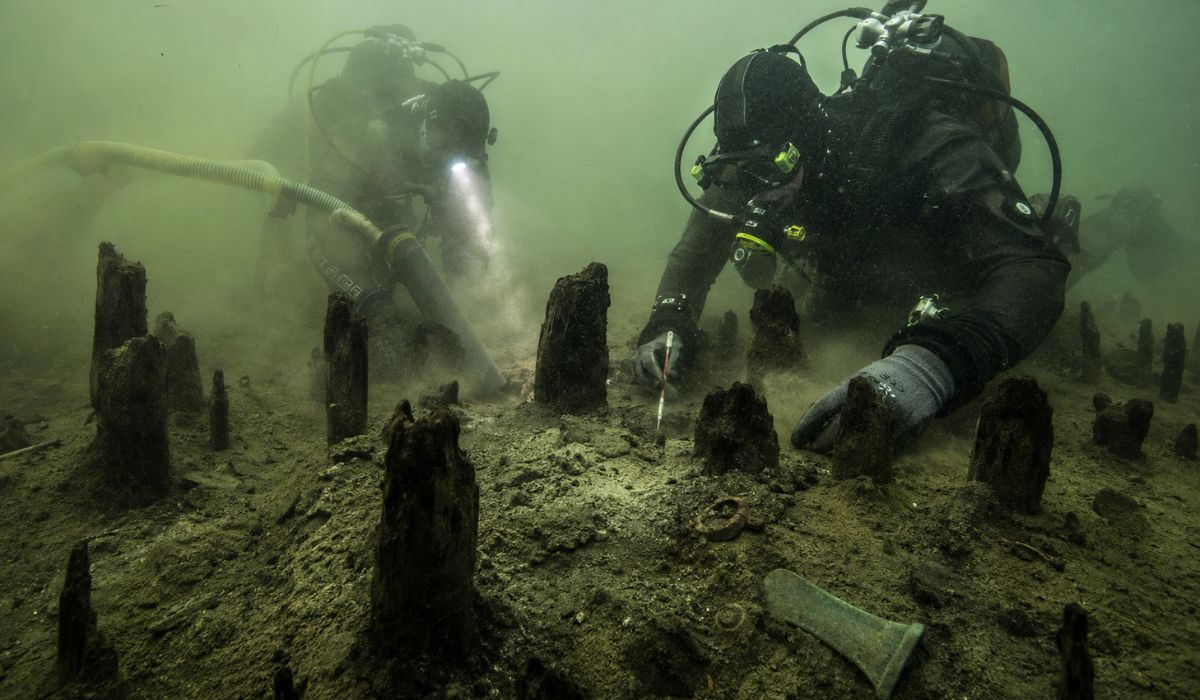
An entire village lay asleep at the bottom of a lake for 3,000 years: divers suction sediments in Italy and reveal more than 600 wooden stakes, bronze tools, and traces of a Bronze Age settlement hidden underwater.
-
They call it the “Shopee house” and even cardboard, but the R$ 20,000 house is a certified Wood Frame from Alea, financed by Minha Casa Minha Vida: understand if it’s worth more than masonry.



This structure allows for electricity generation sufficient for millions of people while also enhancing commercial navigation on the Yangtze River. At the same time, it strengthens river transportation and integrates into the national economic development strategy.
Flood Control and Historical Context
Historically, the Yangtze Plain has faced devastating floods throughout the 20th century. In 1931, for example, severe flooding resulted in approximately four million deaths, according to historical records widely cited by researchers.
Given this scenario, the dam was designed to reduce the risk of downstream flooding and regulate water flow during critical periods. Thus, it assumed a strategic role in water security and disaster prevention in the region.
Social and Environmental Impacts
Despite the structural benefits, the construction required the relocation of about 1.5% of the population of Hubei province. This process generated relevant social debates and mobilized discussions both inside and outside China.
Experts also warned of the increased risk of landslides in areas near the reservoir. Additionally, researchers expressed concern about impacts on wildlife, particularly endangered species that inhabited the river’s surroundings.
NASA’s Analysis on Earth’s Rotation
In 2005, NASA published a study conducted by geophysicist Benjamin Fong Chao, assessing the effects of mass redistribution caused by the reservoir. The research focused on the possible influence on Earth’s rotation and attracted the attention of the scientific community.
According to the calculations presented, holding a large volume of water alters the planet’s mass distribution. Based on the principle of moment of inertia, this change could increase the length of a day by approximately 0.06 microseconds.
Natural Events Also Influence the Planet
Natural phenomena can generate even greater impacts on Earth’s rotation. In 2004, the earthquake and tsunami in the Indian Ocean caused significant tectonic shifts and severe environmental consequences.
According to NASA research, this event shortened the length of a day by about 2.68 microseconds, a value higher than the estimated impact of the Chinese dam. Additionally, climate change also redistributes mass through the melting of polar ice caps and rising sea levels.
Reflections on Technology and Timekeeping
So far, these changes remain imperceptible in daily life. However, ultra-precise measurement systems, such as atomic clocks, GPS, and satellite communications, depend on extreme temporal accuracy.
Experts discuss potential future technical adjustments, including the hypothesis of a negative leap second, corresponding to a minute with 59 seconds. This proposal would serve to compensate for accumulated gradual changes in the length of a day.
Human Engineering on a Planetary Scale
Although the estimated impact is microscopic, the Three Gorges Dam represents a significant milestone in modern engineering. NASA’s study reinforces that large human interventions can generate measurable effects on the planet, even if irrelevant to everyday life.
The hydroelectric plant symbolizes the interaction between infrastructure and global physical systems and demonstrates how large-scale energy projects can influence planetary variables.
To what extent can future megastructures enhance this interaction between engineering and nature?




-

1 person reacted to this.