Portuguese
  Spanish


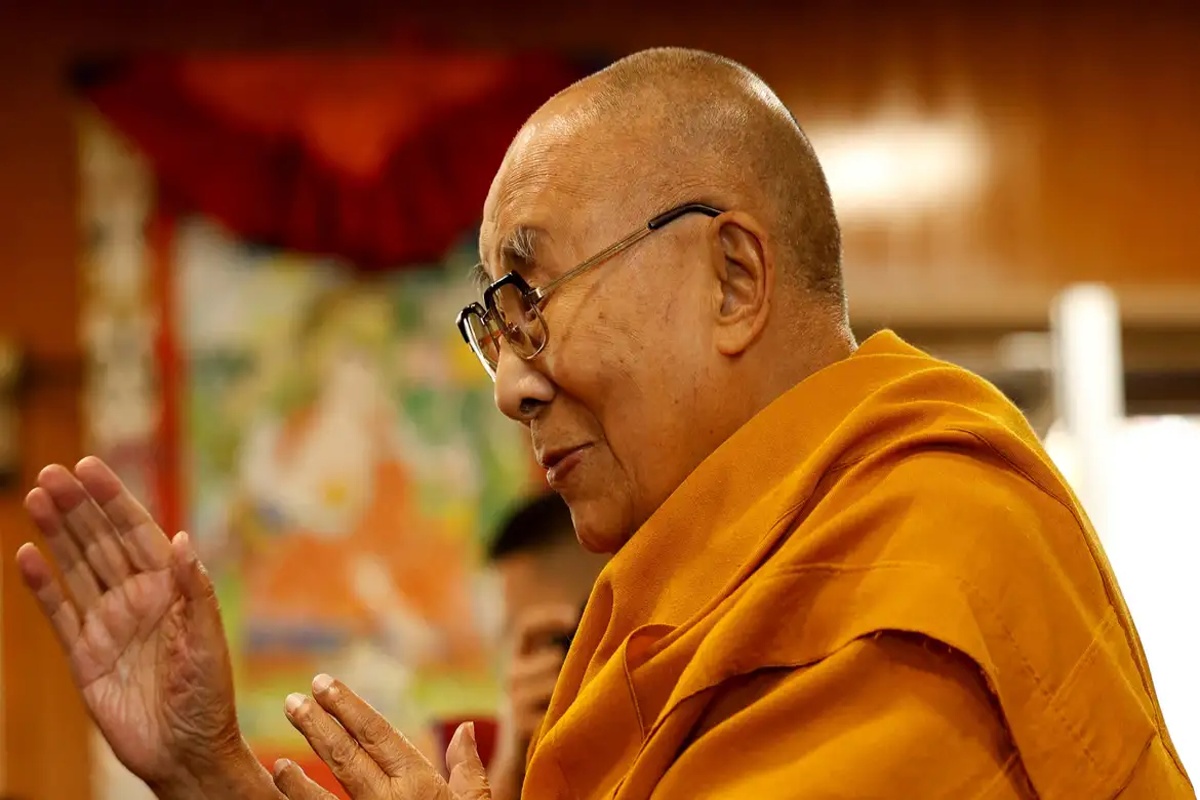

Unprecedented Succession Could Reconfigure Tibetan Influence in the International Scenario
The Dalai Lama’s decision to officially designate his next successor outside China marks a turning point.
The dispute between Beijing and the exiled Tibetan community is intensifying.
Since the 14th Dalai Lama, Tenzin Gyatso, took office in 1950, friction with the Chinese government has only increased.
In June 2024, during a conference in Dharamsala, India, the spiritual leader reiterated the decision.
Democratic governments will recognize the successor on foreign soil.
This statement reinforces the fear of political interference.
The measure guarantees greater autonomy to the Tibetan Buddhist tradition.
Buddhist Community Mobilizes for Religious Autonomy
Shortly after the announcement, several international organizations mobilized to support the succession process.
The International Campaign for Tibet intensified campaigns to ensure freedom from external pressures.
Since China’s occupation of Tibet in 1951, Beijing has tried to legitimize only successors aligned with its interests.
Human Rights Watch denounced this practice in reports from 2019 and 2022.
By moving the succession outside Chinese territory, leaders seek to ensure freedom of belief.
They aim to protect the continuity of a millennia-old culture under threat.


Historical Context Reinforces Strategic Decision
The process of reincarnation of the Dalai Lamas has always been a target of political dispute.
The Chinese authorities kidnapped the Panchen Lama, the second highest authority of Tibetan Buddhism, in 1995.
Beijing approved a monk to replace him, which drew criticism. Organizations like Amnesty International consider the legitimate Panchen to be missing to this day.
Therefore, the Dalai Lama emphasizes the importance of a protected succession.
Recognizing the new leader beyond Chinese reach ensures autonomy for the Tibetan movement.
-
European Parliament Approves Digital Euro, Aiming to Challenge Visa and Mastercard’s Dominance and Transform Payments Across Europe by 2029

-
Israel finds Hezbollah militarized tunnel over 200 meters long under village, with 4 missile launch shafts, 12 chambers, anti-tank missiles, drones, and weapons depots at a depth of 25 meters.

-
Ukraine launches largest drone attack on Moscow since 2022, Russia claims to have intercepted nearly 200 aircraft near the capital, Kapotnya refinery targeted again, and offensive reignites alert about war reaching the Russian energy heart just a few kilometers from the Kremlin.

-
Truck drivers, freight, and fines from 2022 take center stage in politics: Chamber approves MP with amnesty, mandatory tracking by CIOT, million-dollar penalties, and new minimum wage for those who spend more than 24 hours on the road.



International Tension Increases with Chinese Reaction
The Chinese Ministry of Foreign Affairs reacted on July 3, 2024.
Any appointment outside the norms of the Communist Party will be considered “illegal,” according to an official statement.
In response, the United States and India signaled support for the Dalai Lama’s decision.
In 2021, the U.S. Congress passed the Tibetan Policy and Support Act.
This law reinforces sanctions against Chinese interference in the reincarnation process.
Thus, the religious dispute amplifies diplomatic impacts on the global chessboard.
Outcome Signals New Directions for Tibet
Although details about the exact location have not been officially disclosed, strong speculation exists about the selection process.
Moreover, the Dalai Lama, at 89 years old, stated that he will leave clear guidelines in a public testament to avoid conflicts.
Therefore, the expectation is that the successor will be located in exiled communities, primarily in India or Nepal.
Meanwhile, Freedom House continues to monitor the actions of the Chinese government, as it believes in attempts at external influence.
Consequently, they seek to reverse the announcement with political strategies, as they wish to control the succession process.
On the other hand, the succession outside of China preserves, however, the Tibetan spiritual heritage against possible interventions.
This decision, even under strong geopolitical pressures, demonstrates, thus, resilience and commitment to the Buddhist tradition.