Portuguese
  Spanish


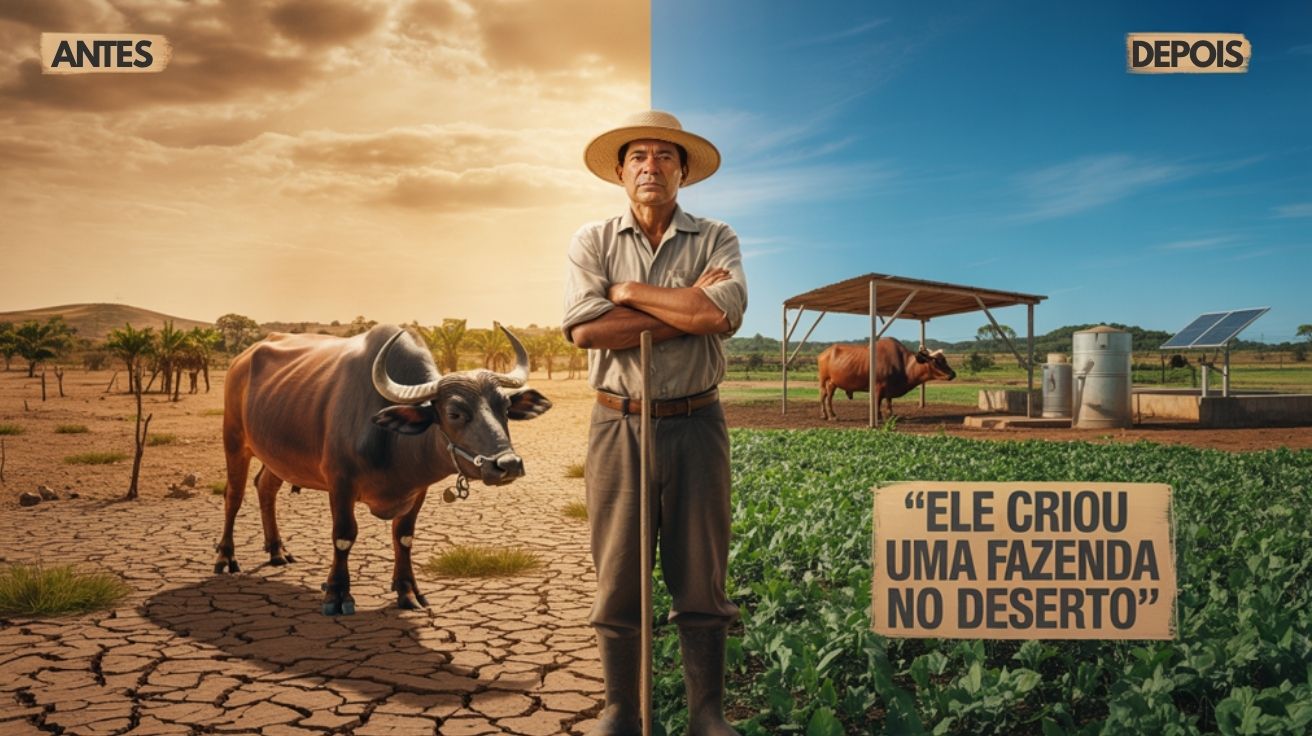


Farm in the Northeast Transforms Scarcity into a Model of Innovation in the Semiarid Region with Buffaloes, Free-Range Chickens, Self-Generated Energy, and Sophisticated Dairy Products Made with Buffalo Milk.
In the Northeast, right in the Potiguar hinterland, amidst the dry curves of BR-406, an old farm challenges what is understood as the limits of the semiarid. In Taipu, in Rio Grande do Norte, the sun has punished for decades more than it has consoled.
The average rainfall does not reach 850 millimeters per year, and traditional irrigation, common in other regions of the country, is not an option there: the underground is made of crystalline rock, with no available water.
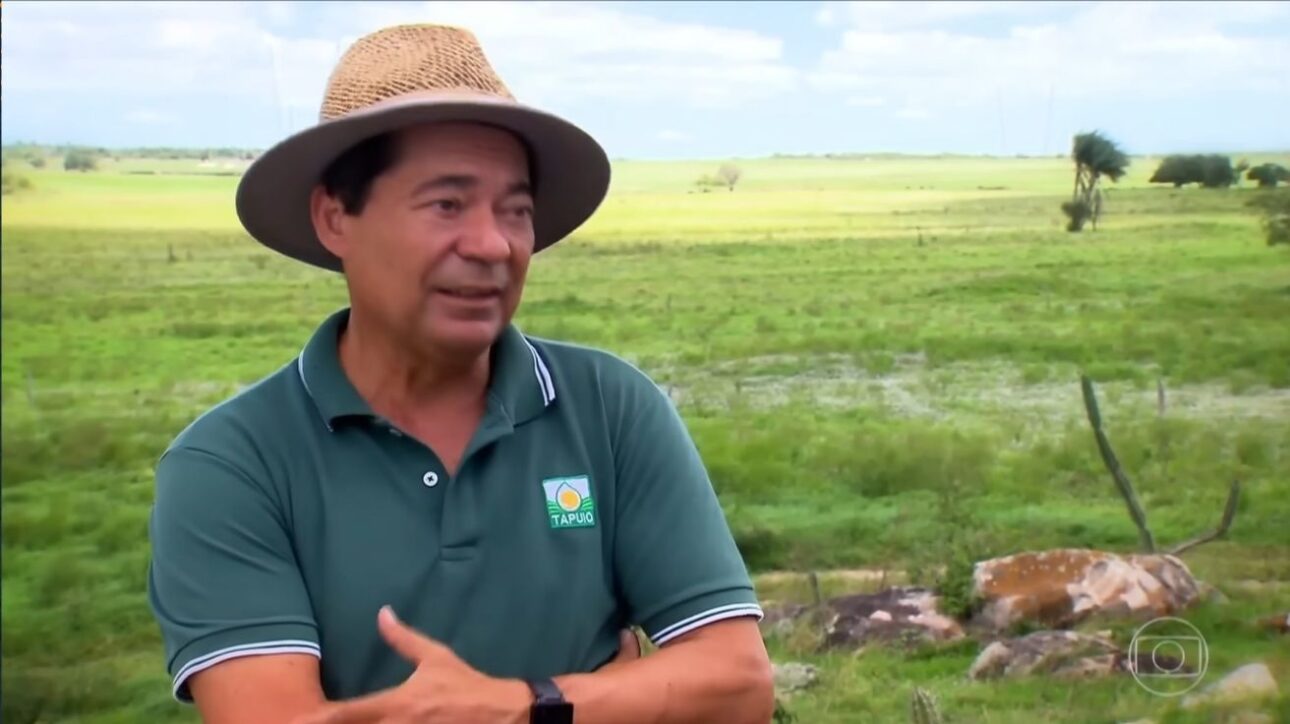
Even so, it was in this adverse environment that Francisco de Assis Veloso Jr. built one of the most innovative farms in Brazil.
-
Bruno Guimarães, 28, Misses Crucial Penalty Against Norway in World Cup After Replacing Vinicius Jr.

-
Inspired by a school lesson on Africa’s water crisis, a young boy raised money through chores to fund a well that transformed a Ugandan community.

-
Researchers Turn Discarded Mango Pits into Hydrogel That Absorbs 400% of Its Weight in Water, Offering Agricultural Solution for Droughts and Waste Reuse
-
Brazilian Construction Worker Moves to France, Earns Up to €2,500 Monthly with Home Renovations, Gains Social Media Attention




Transition from Sugarcane to Poultry Farming
According to a report published by Globo Rural, attempts in the Northeast began in 1989 when the then agricultural manager of a sugarcane mill decided to buy a farm from one of his bosses.
With almost 500 hectares, the initial plan was simple: plant sugarcane and sell it to the mill where he worked.
The expectation was for quick and certain profit. “I was sure I would make a lot of money now,” Veloso recalls. But within two years, the sugarcane completely died. The drought won.
“I realized that in this semi-arid condition we have here, with extremely irregular annual precipitation, it was not possible to grow rain-fed sugarcane,” says the producer.
Since there was no possibility of irrigation, the loss was total.
Veloso continued working at the mill until he heard a suggestion from a friend involved in poultry farming near Natal.
The Globo Rural reported that Rio Grande do Norte, at that time, was a state that imported eggs.
In 1991, he approached a bank, secured financing, and started raising 15,000 laying hens.
The new business was successful. In just five years, the flock increased to 80,000 birds.
Free-Range Farming and Rational Grazing
It was then that Veloso had the idea considered “crazy”: to transform chicken farming in the semiarid into a large-scale commercial free-range production, with the birds roaming in paddocks.
“We thought about working with chickens in paddocks, but it’s difficult. They don’t walk in corridors, I’ve never seen a chicken in a circus,” he jokes.
At the same time, the rancher also kept about 200 head of cattle. They began to benefit from a technique called Rational Voisin Grazing (PRV).
He learned about the method by watching a segment on his own network and invited the report’s specialist to assist him in implementing it.
The Bold Bet on Buffaloes in the Northeast
According to Globo Rural, Veloso’s restlessness took him even further. The same PRV technician suggested, in 1999, something even bolder: raising buffaloes.
“Like everyone, I was also surprised,” he remembers. But he decided to test it.
He fed the buffaloes the same management offered to the cattle and discovered that they gained 27% more weight. The future of the farm was decided.
Adaptations for Thermal Comfort and Access to Water
But there was a problem: buffaloes sweat less than cattle and need water to cool down.
In the semiarid region, this would be the hardest barrier to overcome.
To solve this, he installed structures called “Sombrits”, which block up to 80% of sunlight and provide thermal comfort.
He also built five cisterns with a total capacity of 3 million liters, using water collected from the farm’s rooftops.
Even so, the stored volume was not enough. Veloso then drilled two artesian wells on neighboring properties and brought the water through 8 km of underground piping, reducing costs by up to 80% compared to public supply.
Prickly Pear and Nutritional Innovation in the Herd
Another innovation was the intensive use of prickly pear, a drought-resistant plant rich in water.
Today, it represents 30% of the herd’s diet.
According to a statement in an interview with Globo Rural, “if a buffalo consumes 100 kg of prickly pear, it is ingesting up to 90 liters of water. If there is a water trough nearby, it doesn’t even need it”.
Additionally, the same sugarcane that caused losses at the beginning of the journey returned to the farm, now planted in the lower part of the property, where more water is available.
Desseasonalization of Buffalo Estrus
But a new challenge arose: the reproductive cycle of the buffaloes, concentrated between April and July, made management difficult.
The newspaper also pointed out that the solution came with the desseasonalization of the herd, led by a partner professor.
Through the use of hormones, the females began to come into estrus year-round, allowing for inseminations and births at any time.
Today, the farm has one of the largest buffalo herds in the country.
The animals are selected based on milk quantity, fat content, and protein, which allows estimating the mozzarella production per lactation.


Buffalo Milk and High-Value Artisan Dairy Products in the Northeast
The milking system installed on the property is the only brand in the world specifically for buffaloes and collects about 2,200 liters of milk per day.
This milk is used in the production of mozzarella, burrata, ricotta, Minas cheese, curd, and other dairy products.
The entire operation also includes biogas generation, obtained from the manure of the animals and birds, used in the boiler to pasteurize the milk and heat the water for production.
The surplus biomass also fertilizes the pasture through irrigation.
To top it off, a wind turbine installed on the farm takes advantage of the strong winds in the region to reduce energy costs.
Coexisting with Drought as a Survival Strategy
To Globo Rural, Francisco Veloso Jr. summarized the main lesson of his journey: “Drought is a normal phenomenon. It will happen. It has always happened. Being prepared is better than complaining. It is possible to coexist with it. It is more expensive, more difficult, but it is possible. Who knows, maybe even with a bit of craziness.”
Do you believe that the future of agricultural production in the semiarid can be as fertile as the wetter regions of the country?