






 Portuguese
  Spanish


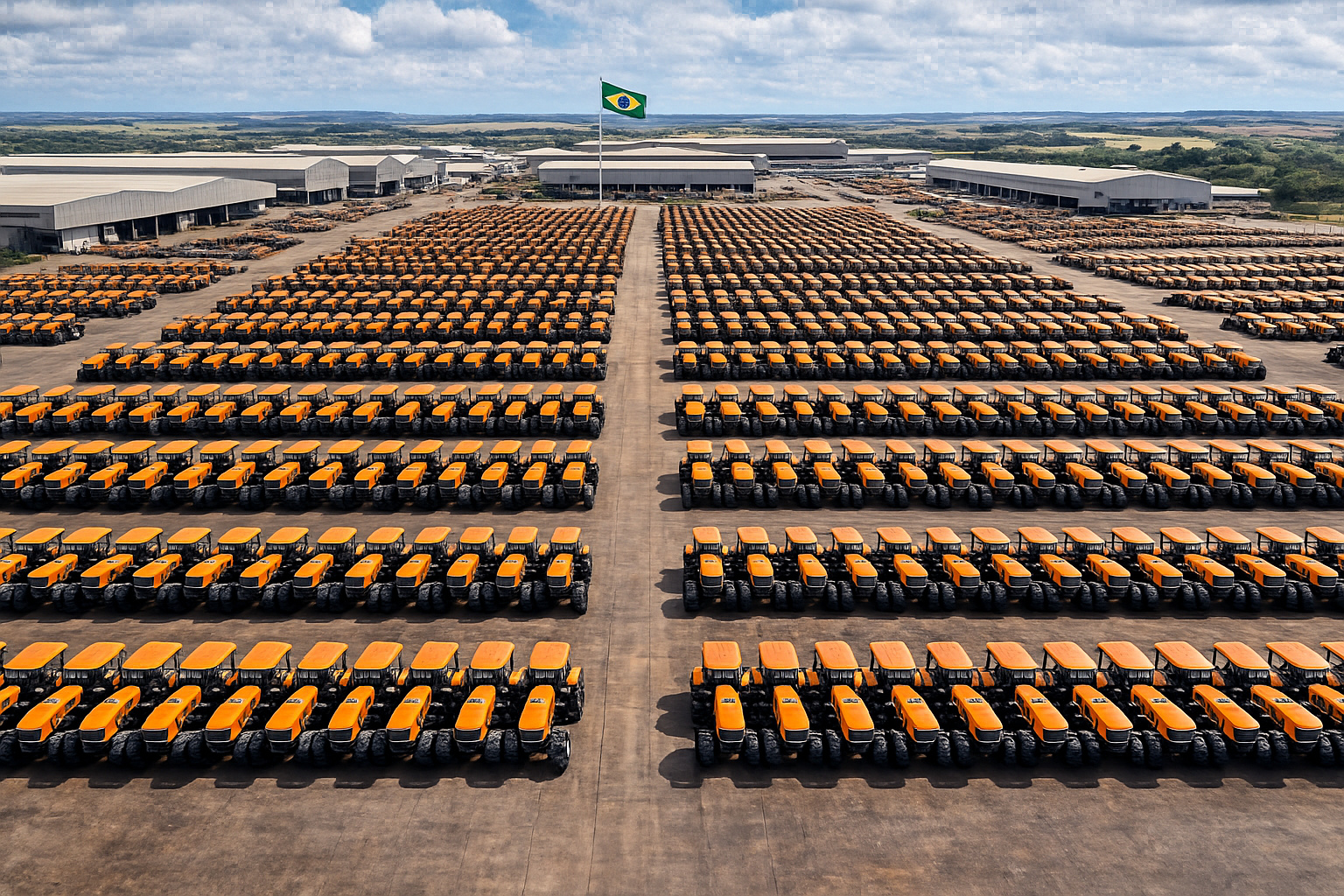


Founded By Immigrants Who Fled World War II, The Brazilian Company Came From A Small Blacksmith Shop In The Interior Of Rio Grande Do Sul To Become A Multinational Leader In Innovation, Precision Agriculture And Global Exports
Few people know, but in addition to the global giants of the agricultural industry, such as John Deere, New Holland, and Massey Ferguson, Brazil is home to a national manufacturer that has built an impressive trajectory in the agricultural machinery sector. This is the largest Brazilian manufacturer of tractors and agricultural implements, whose history crosses continents, wars, and economic crises to consolidate itself as a powerhouse of the national and international agribusiness.
This unique trajectory begins far from Brazil, in the midst of World War II, crosses the Atlantic Ocean, and finds its destination in a small district in Rio Grande do Sul, where a family of immigrants transformed extreme difficulties into innovation, technology, and industrial growth.
The information was disclosed by historical content and institutional records from the company itself, in addition to widely circulated accounts in audiovisual materials about the Brazilian agro industry, which detail the evolution of the company from its origin to the current scenario.
-
India’s Sugar Export Cuts and Ethanol Shift Amid El Niño Threat Could Impact Global Prices and Stocks

-
Quarantine Pest Threatening Palm Trees Puts Brazilian Authorities on Alert, Prompts Monitoring at University of Taubaté and Potential Control Measures Across São Paulo
-
Global Alert: Report Finds 159 Pesticides in Coffee Beans Sold in Europe, Posing Serious Risks to Millions of Farm Workers
-
Low-Demand Brazilian Beef Offal Gains Popularity Abroad: Indonesia Purchases $19.5 Million, Boosting Revenue and Reducing Waste



From War-Torn Holland to A New Beginning in Rural Brazil
The origin of this story begins in the province of North Brabant, in southern Holland, where the Stepper Brook family lived. They led a simple life, sustained by working on a small rural property. However, this daily life was brutally interrupted in 1940, with the German invasion during World War II.
Holland was heavily bombed, plunged into economic recession, faced severe political instability, and lived with the constant fear of new armed conflicts. In light of this scenario, the family began to fear, above all, that their children would be drafted into mandatory military service.
In search of safety, stability, and a chance to restart, the decision was made: to leave Europe and migrate to another continent. The chosen destination was Brazil, which at that time was receiving several Dutch families, especially in the region of Campinas (SP), where the colony of Holambra was emerging.
Thus, on April 19, 1949, Johannes Bernardos Stepper Brook arrived in Brazil, accompanied by his wife and children. Initially, the family settled in Holambra, where Johannes began to work as a blacksmith at Fazenda Ribeirão. Still, the future held even deeper changes.
A few years later, influenced by Dutch religious leaders who already lived in the southern part of the country, the family decided to move to the small district of Não-Me-Toque, in Rio Grande do Sul, an area that at the time belonged to the municipalities of Carazinho and Passo Fundo.
The Birth of The Industry and Creativity as A Differentiator
In this new scenario, Johannes and his family continued working with repairs and assembly of agricultural implements, a crucial activity for local farmers. Shortly thereafter, Johannes set up his own blacksmith shop in partnership with another immigrant, John Hers.
The growth was rapid. This happened because there was a growing demand for adaptations of European agricultural implements to Brazilian soil and climate conditions. From this need was born Stepper Brook Hers, the embryo of what would later become Stara.
Already in the 1960s, the company stood out for its creativity and innovation, beginning to develop its own equipment. In 1968, it launched a historic milestone for national agribusiness: the first weeder in Brazil with floating arms, a significant technological advancement for the time.
In addition, the company diversified its production, manufacturing sprayers, hospital beds, and other equipment. The family worked tirelessly, literally from Sunday to Sunday, turning iron into development and progress.
With the increase in orders, a larger factory was built and inaugurated in 1978, covering an impressive 8,000 m². However, growth would be interrupted by one of the most difficult periods in the company’s history.

Crises, Reconstruction, and The Technological Leap of Stara
The 1980s arrived, bringing a severe economic recession in Brazil. The national currency depreciated rapidly, while debts incurred in dollars became unpayable. As a consequence, the company delayed salaries, stopped paying suppliers, and even lost vehicles and machinery, confiscated by creditors.
Amid this deep crisis, in 1981, the patriarch Johannes passed away at the age of 83, leaving the company on the brink of collapse. It was at this critical moment that a new chapter began to be written.
Francisco, known as Seu Chico, who had left the company to work as a farmer, decided to return and invest his own savings to save the family business. Through collective effort, unity, and hard work, the company began to rise again.
Starting in 1984, a new generation took a decisive role. Susana, Francisco’s daughter, married Gilson, who would become a key player in the company’s reconstruction. With a modern and strategic vision, Gilson helped Stara make a giant leap in the following decades.
In 1987, two major market successes emerged: the front agricultural plane (PED) and the Asa Laser subsoiler. In the 1990s, the company continued to grow, although it faced internal disputes that led to some family members leaving, who founded other agricultural implement companies.
At the turn of the 2000s, Stara began to make heavy investments in precision agriculture, importing equipment for study and developing its own systems. The Aquarium Project was born, establishing the company as a pioneer in the use of GPS, satellite guidance, and intelligent systems in the field.
Even in the face of another difficult moment, with the passing of Seu Chico in 2003, at the age of 65, the company was already prepared to move forward. Leadership definitively passed to Gilson, who accelerated the development of innovative products even further.
In 2006, the Brava Corn Platform was launched. In 2008, the Vitória Line of Planters and the Prima of Seeders hit the market. Growth intensified until, in 2010, the biggest leap in the company’s history occurred.
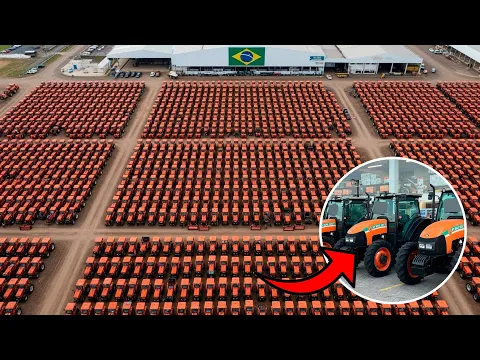
In that year, Stara inaugurated a new factory in Carazinho, dedicated to foundry and machining, and launched the world’s first sprayer with central bars, a global innovation. At the same time, it entered the market strongly with tractors, launching models like the ST Max 105 and the robust ST Max 180, both equipped with renowned engines and ready to operate with precision agriculture systems.
In 2019, the company officially became a multinational, with the inauguration of Stara Argentina. Already in 2020, leadership passed to AT, the great-grandson of the founder.
Today, Stara has four factories, employs more than 3,600 employees, exports its products to 35 countries, records annual revenue exceeding R$ 1 billion, and is ranked among the largest manufacturers of agricultural implements in Brazil, with international recognition for its exclusive technologies.
A giant that started small in Não-Me-Toque, in the interior of Rio Grande do Sul, and conquered the world with machines that transform the way food is produced.
Did you know the story of this Brazilian agribusiness giant or were you surprised to discover that Brazil also leads innovation in tractor manufacturing?








Se não tivesse tantos políticos criminosos ocupando cargo público e atrapalhando o desenvolvimento do país infernizando quem produz, estaríamos em outros patamares de desenvolvimento.
Há muito erro na reportagem, a começar pelo nome de família do empresário holandês, os Stapelbroek, e a terminar no outro holandês que vivia em Não Me Toque, Gerit Jan Rauwers. Não houve dívidas contraídas em dólar. Não foi o patriarca Johannes que deixou a empresa à beira do colapso, pois ele não era gestor da empresa. Se formos em frente, vamos encontrar mais erros.
Reportagem feita por IA, sem o mínimo de pesquisa humana abrangente.
Esse é o grande problema. E o elemento que se diz repórter ainda ganha por isso.