






 Portuguese
  Spanish


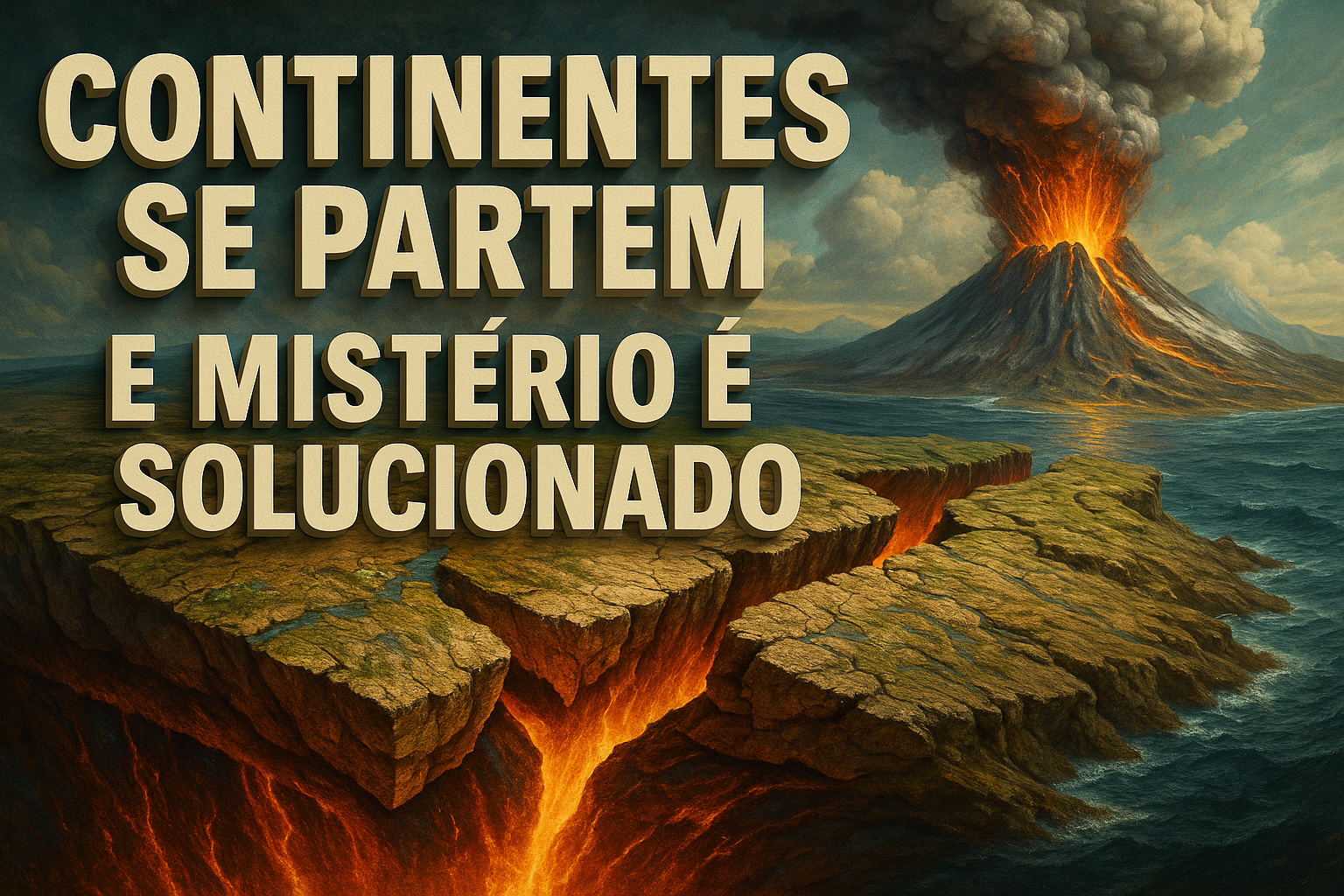


New Study Shows How Deep Roots Detach, Travel Long Distances in the Mantle, and Reemerge in Isolated Volcanoes
A study published in Nature Geoscience this month revealed that deep remnants of continents continue to break down. These materials descend into the mantle, travel long distances, and reemerge in remote oceanic volcanoes. This subterranean dynamic, according to scientists from the University of Southampton and the GFZ Helmholtz Centre for Geosciences, explains why oceanic islands exhibit continental chemistry, even far from any tectonic boundary.
In-Depth Investigation Reveals Geological Process Hidden in the Mantle
The study shows that, when a continent breaks apart, deep instabilities arise in the mantle at over 100 km deep. These internal waves, therefore, “scrape” ancient continental roots. They detach fragments and push them laterally. These pieces become buried under new oceanic regions created after the separation of continental blocks.

Over time, these buried fragments can melt. This melted material fuels distant volcanism. Researchers highlight that these fragments travel hundreds or thousands of kilometers. This clarifies the presence of continental chemical signatures on isolated islands.
-
China Unveils 300-Ton Hybrid-Electric Truck as the Heavy Machinery of the Future

-
Brazilian mechanic invents simple solar lamp using water and chlorine in a PET bottle, providing up to 60 watts of light during the day

-
Swiss glaciers melting fast enough to fill an Olympic pool every 6 seconds, France confirms 3,700 heatwave deaths, and WMO predicts strong El Niño intensifying extremes until 2027

-
Sudden Sea Recession in São Paulo Sparks Tsunami Alert and Online Debate on Giant Wave Risks in Brazil


Chemical Evidence Reinforces Long Continental Recycling
To test the hypothesis, the team analyzed the Indian Ocean Seamount Province. This province emerged after the breakup of Gondwana over 100 million years ago. The rocks reveal strong continental chemical markers. These markers did not align well with traditional models, according to the researchers.
The geoscientist Sascha Brune, from GFZ, states that the process continues after the ocean opens. This happens because the mantle remains in motion for tens of millions of years. He emphasizes that the planet’s interior “holds a memory” of rifting. This behavior explains the prolonged transport of enriched material over geological ages.
Models Indicate Constant Transport After the Separation of Continents
Simulations show that, after the fragmentation of Gondwana, large amounts of continental material were dragged into the mantle. Subsequently, these fragments returned to the surface in the form of oceanic volcanism. Over millions of years, this flow decreased. Current chemical records confirm this gradual reduction.
The authors emphasize that the finding does not rule out the importance of mantle plumes. Nonetheless, they present an additional mechanism. This mechanism can modify the composition of the mantle and reshape areas far from tectonic boundaries.
Research Expands Understanding of How Continents Continue to Change
The current work builds on previous studies by the same team. These studies showed that deep waves can trigger diamond eruptions. They also revealed that these waves can reshape internal areas without a direct connection to tectonic boundaries. The new research indicates that the continents, despite their stable appearance, are still being slowly “edited” from below. This editing occurs over geological eras.
What Does the Future Hold for Understanding the Earth?
Experts say that understanding this deep process helps explain phenomena previously considered isolated. The continuation of this investigation depends on ongoing analyses and the integration of chemical data, computational models, and geological observations.
Meanwhile, the persistent behavior of the mantle shows the scientific challenge of interpreting how continental fragments travel for millions of years. These fragments reemerge in unexpected locations. What do you think should take priority: deepening models on deep continental recycling or expanding studies on volcanic islands that reveal these hidden signatures?




Boa tarde pra todos. olha isso que tá acontecendo com o sistema global e a ganância. já viu a queli ditado **** quanto mais bexi mais Ela fedi. lá em jenis vai dize que Jesus falou pra Eva e Adão não comesi da quela árvore porque só das outras que podiam come. então o Diabo falou que si eles comesi seriamente seriam como Deus. então o que eu quero dizê a travez desi testo é que as pessoas esquecem que foi Deus que criou o mundo. Deus é tão sábio que escondeu o petrolho debaixo da terra lá no fundo do mar pois o homem vai lá e mexe e porcausa desas coisas que estão acontecendo isso. si acaba com as auzinas e também com a fabricação de veículos e não desmata o mundo pode até vouta a ser o que era. mais desi jeito o resultado e triste o sol vai explodi oss carros telhado pessoas navil ponte árvores tudo que está sobre a terra vai flutua.