Portuguese
  Spanish


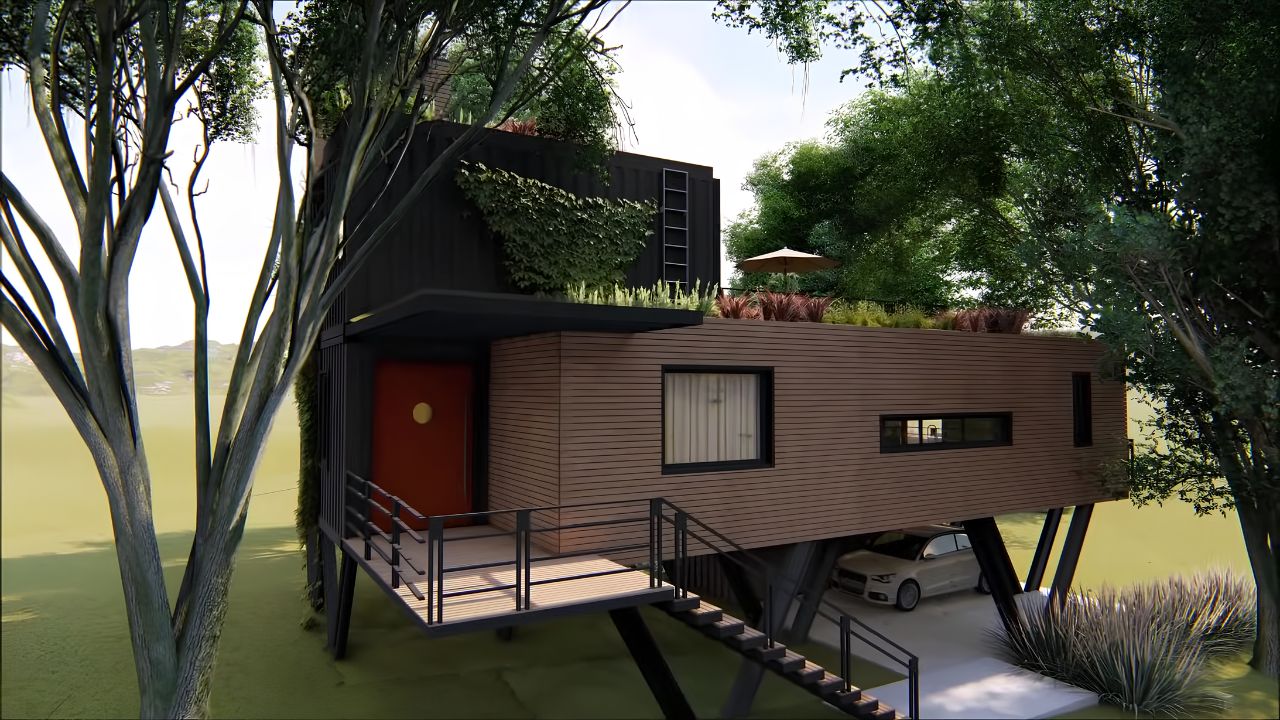


Suspended house made with recycled container uses reused materials, green roof, and sustainable solutions in the interior of São Paulo.
A residence elevated among the treetops, built with a focus on reducing environmental impact, has attracted attention in Campos Novos Paulista, in the interior of São Paulo. Known as a suspended house, the construction was developed by the architects of Casa Container Marília and uses a shipping container as a structural base, combined with various reused materials. The project prioritizes comfort, contact with nature, and sustainability in practically all stages of the work.
According to ArchDaily Brazil, about 80% of the materials used were recycled. Additionally, approximately 70% of the waste generated during construction was reused in some way, especially wood and steel scraps.
Learn all about the suspended house located in São Paulo
From the foundation to the finishes, the project was planned to reduce resource consumption and minimize waste.
-
Two-Bedroom Home Built in a 40-Foot Shipping Container Delivered and Ready for Same-Day Living in São Paulo Countryside

-
China Constructs Artificial Island 32 km Offshore for Yangshan Port, Connected to Shanghai by 32 km Bridge, Unloading 3,000 Containers in 20 Hours
-
China’s $70 Billion River Diversion Project, the World’s Largest, Moves 44.8 Billion Cubic Meters Annually, Crosses Under the Yellow River, and Displaced 330,000 People
-
Indian Driver Spends 14 Years Digging 10-Meter Tunnel Through Mountain to Connect Isolated Village to the World



The elevated structure is supported by metal pillars in a “V” shape. This system allows two supports to use a single base, reducing the need for concrete and simplifying the foundations.
As the residence has a relatively light weight and was built on firm soil, shallow foundations were used.
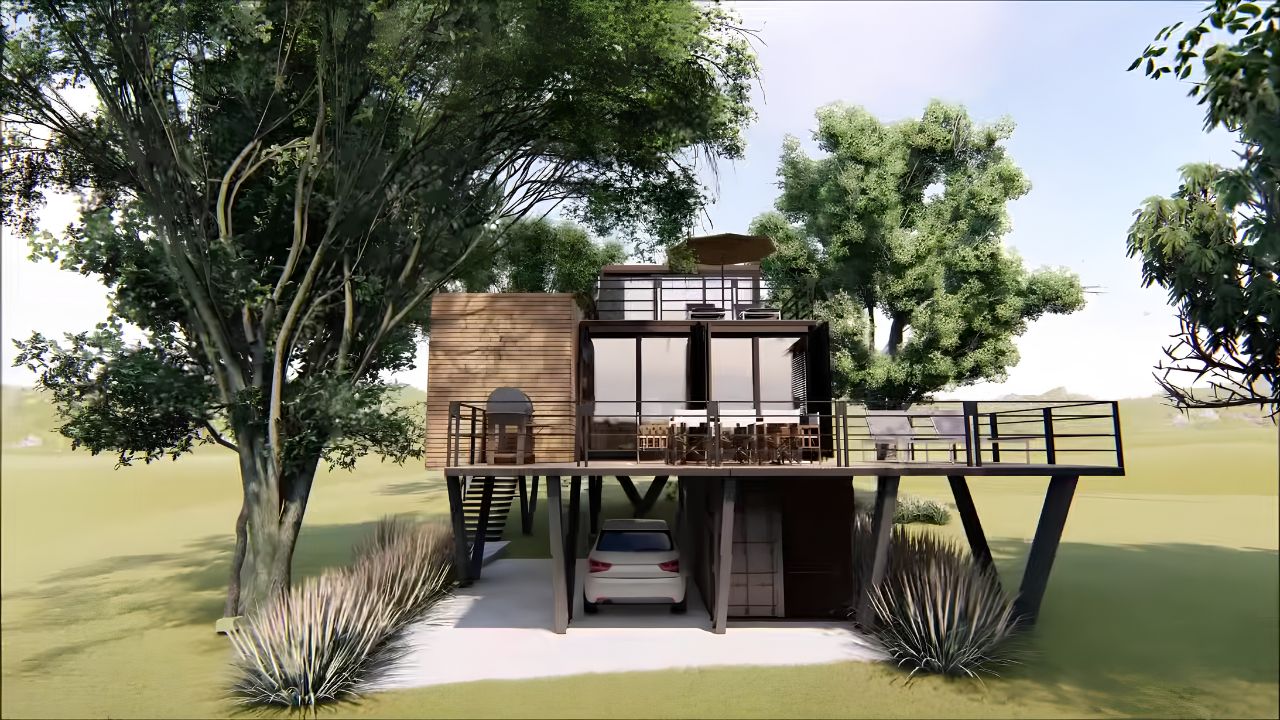
Among the solutions adopted are:
- Reuse of shipping container;
- Use of recycled wood in walls and ceilings;
- Use of reused sheets in internal doors;
- Reuse of construction waste;
- Installation of green roof.
Suspended house prioritizes ventilation and thermal comfort
Although it was developed from containers, the residence does not rely on air conditioning units to maintain pleasant temperatures.
To achieve this result, all the walls received thermal and acoustic insulation blankets. At the same time, large openings and the cross ventilation system promote constant air circulation.


The architects emphasize that the concern for environmental comfort was present throughout the development of the suspended house. The set of solutions allows the interior to remain pleasant even during the hottest periods in the state of São Paulo.
Another important element is the green roof. Besides contributing to the thermal balance of the construction, it uses reclaimed rainwater to reduce the need for irrigation. The adopted system is modular, facilitating any maintenance.
Recycled materials help define the visual identity
The sustainable proposal also directly influenced the appearance of the residence. The walls and ceilings received recycled wood, giving a rustic look to the environment.
As the material has its own finish, there was no need to apply paint in various internal areas. Meanwhile, some doors located on the first floor were produced from recycled sheets from container scraps.
Meanwhile, large glass surfaces were installed in doors and windows. This way, residents can observe the surrounding landscape practically at the level of the tree canopies.
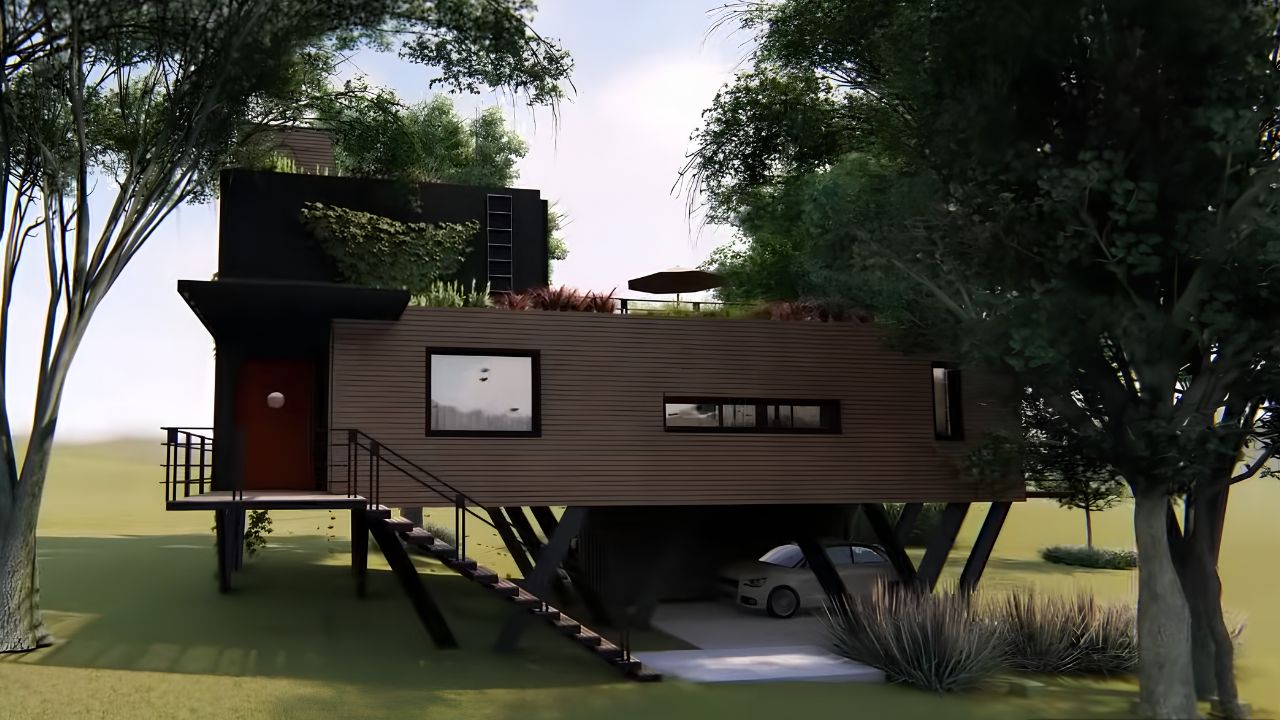
In addition to enhancing the visual connection with the external environment, this solution favors the entry of natural light and takes advantage of the shade produced by the vegetation during the day.
Spaces were designed for socializing and relaxation
Unlike many residential projects focused on technology and entertainment, this construction was designed to encourage moments of socializing. The country house brings together areas intended for daily life and leisure.
The program includes a living room, kitchen, two bedrooms, two bathrooms, and verandas equipped with wooden decks. In the outdoor areas, chairs and hammocks were distributed to encourage simpler activities, such as chatting, resting, and contemplating the landscape.
The central idea of the project goes beyond sustainable construction. Without television and without Wi-Fi connection, the residence was planned to provide an experience closer to nature. The goal is to encourage contact between family and friends, reducing technological distractions.
Set in a rural area surrounded by vegetation, the suspended house combines solutions for material reuse, environmental comfort, and integration with the surroundings. The result is a construction that seeks to balance functionality and environmental preservation through choices adopted from the foundation to the finishing details.
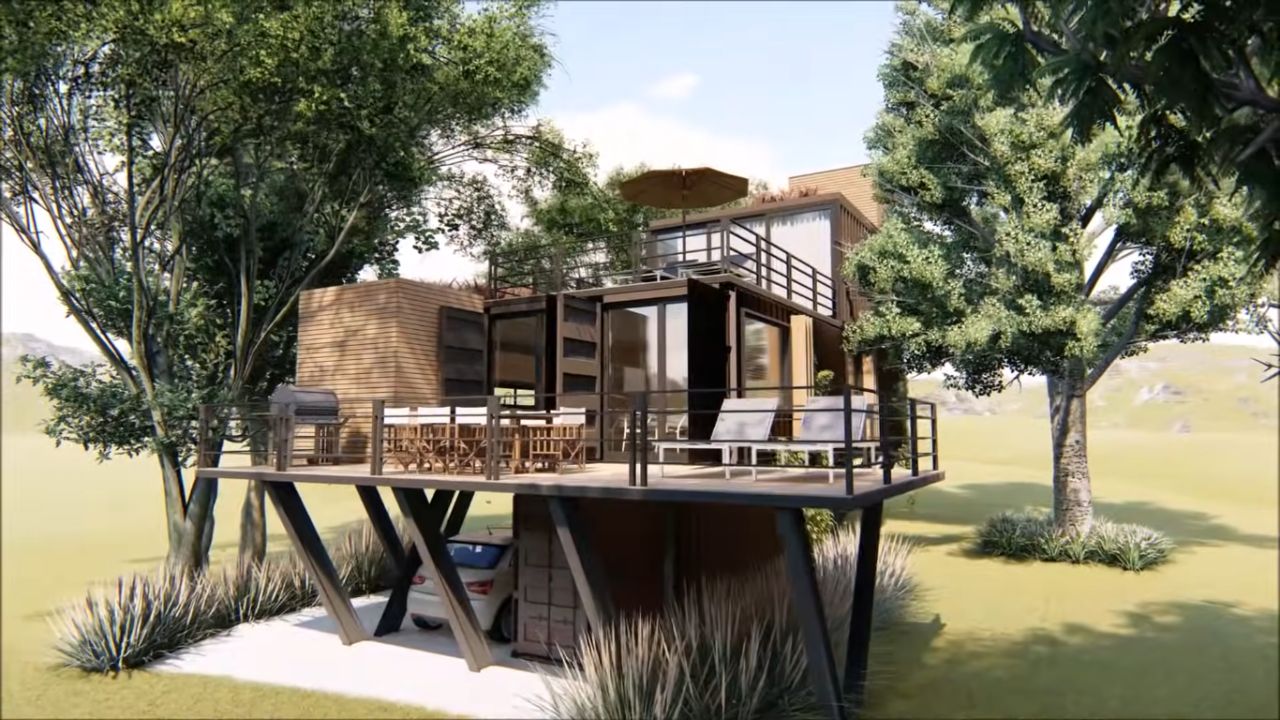
With information arch daily