Portuguese
  Spanish


Common Practices Behind the Wheel Can Accelerate Clutch Wear and Lead to Unexpected Costs, Affecting the Vehicle’s Transmission and Maintenance. Understand the Risks of Routine Automotive Habits and Learn How to Avoid Problems.
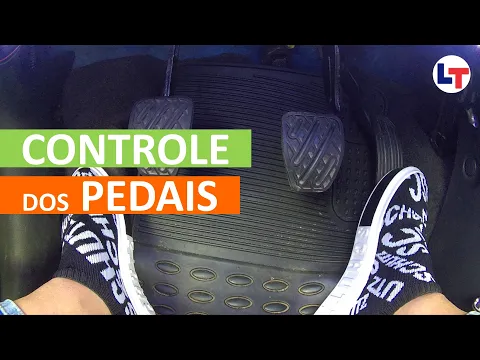
The habit of resting the foot on the clutch pedal, common among drivers of manual transmission vehicles, can cause serious damage to the transmission system and significantly reduce the clutch’s lifespan.
Experts warn that this behavior, often adopted for convenience or simple negligence, contributes to premature wear and can lead to high maintenance costs.
The clutch plays a fundamental role in the operation of cars with manual transmission.
-
London buses run on biofuel made from coffee grounds, turning café waste into sustainable public transport fuel without engine modifications.

-
Major Automaker Considers Closing 4 Factories, Putting 45,000 Jobs at Risk Amid Chinese Competition in Brazil

-
Formula 1 Drivers to Swap Million-Dollar Cars for Lego Karts with 28,000 Pieces and Electric Motors at Silverstone, Reaching Speeds of 25 km/h

-
Children Turn $600,000 Ferrari into Slide, Sparking Legal Dispute in China After Video Surpasses 60 Million Views




Responsible for connecting and disconnecting the engine from the gearbox, it allows for smooth power transfer and ensures efficient gear shifting.
However, the way the driver uses this component can directly affect its durability and the overall performance of the vehicle.
Incorrect Use of the Clutch Pedal
By constantly or lightly resting the foot on the clutch pedal, even without the intention of engaging it, the driver triggers a phenomenon known as improper pre-load.
This occurs when the clutch disc remains slightly separated from the pressure plate, generating continuous friction and heating of the system.
This practice can lead to premature polishing of the contact surfaces, accelerated wear of the disc’s lining, and localized overheating.
Additionally, premature fatigue of the clutch bearing and, in vehicles equipped with hydraulic actuation, possible leaks in the slave cylinder become common consequences of this habit.

Consequences of Holding the Car on the Clutch on Uphill
Another recurring mistake observed among drivers is using the clutch as a brake on hills.
Holding the vehicle on inclines solely with the help of the pedal causes constant friction between the disc and pressure plate, raising the temperature of the assembly beyond the levels recommended by manufacturers.
This thermal increase results in crystallization of the friction material, formation of gases between the surfaces, and even thermal deformation of the pressure plate, compromising efficiency and leading to failures such as vibration or chronic slipping.
In models with automated transmissions, such as Dualogic, i-Motion, and PowerShift systems, the situation worsens.
In these vehicles, electronic control attempts to compensate for grip losses, overloading modules such as the TCU (Transmission Control Unit), which accelerates system wear and may require complex and costly repairs in a shorter usage time.
Damage Caused by Improper Starting
The method of starting the vehicle also deserves attention.
The practice of abruptly releasing the clutch or exaggerating slipping when starting the car can compromise several components.
During slipping, there is intense abrasion of the disc, accumulation of debris, and, in extreme situations, the formation of thermal cracks in the metallic parts.
When the clutch is released suddenly, torque spikes are transmitted to the transmission, affecting mounts, drive shafts, differential, and even the gearbox supports.
High-powered vehicles or those used for towing are even more susceptible to these problems, as the system may be subjected to stresses beyond the limits designed.
Driver Behavior and Wear Prevention
According to automotive industry professionals, premature clutch wear, in most cases, is related to driving manners and not necessarily to the quality of the original parts.
Technicians recommend that during diagnostics, dynamic tests be performed to assess not only the pedal travel but also the contact point and the response time of the assembly, ensuring a more precise analysis of the system’s conditions.
During preventive maintenance or clutch kit replacement, it is essential to also check the flywheel, the axial play of the crankshaft, and the overall condition of the actuation system, whether hydraulic or mechanical.
Oil leaks from the manual transmission can contaminate clutch components, resulting in malfunction and reduced lifespan.
Therefore, detailed inspections are recommended in all periodic maintenance.
Tips to Preserve the Clutch
Among the most relevant guidelines for those looking to avoid costs with the clutch, a few simple practices stand out:
- When driving, keep your left foot always off the pedal, except at the exact moment of shifting gears.
- Use the handbrake to hold the car on inclines instead of relying on the clutch.
- When starting, gradually release the pedal in sync with increasing engine RPM, respecting the contact point of the system.
These actions preserve not only the functioning of the clutch but also other elements of the transmission and the engine.
Cost and Importance of Care
Technical knowledge about the operation of the clutch is essential for drivers seeking to prolong the vehicle’s lifespan and avoid unnecessary repairs.
Recent industry data indicates that, in Brazil, the cost of replacing the clutch kit can exceed R$ 1,500, depending on the model and technology of the vehicle.
This highlights the importance of adopting correct habits behind the wheel and being attentive to wear signs, such as vibrations, noises, or difficulties in shifting gears.
Adopting responsible driving practices not only reduces costs but also contributes to traffic safety and the preservation of automotive systems.
According to engineers, regular monitoring of maintenance and guidance from qualified professionals are essential strategies for those wishing to avoid mechanical problems related to the clutch and manual transmission.
Do You Take Proper Care of Your Car’s Clutch?
Given the information presented, it is clear that small behavioral changes can make a significant difference in the maintenance and performance of the car.
After all, are you taking proper care of your vehicle’s clutch or are you unknowingly making some of the most common mistakes?