





 Portuguese
  English
  Spanish
  4 min of reading
  0 comments


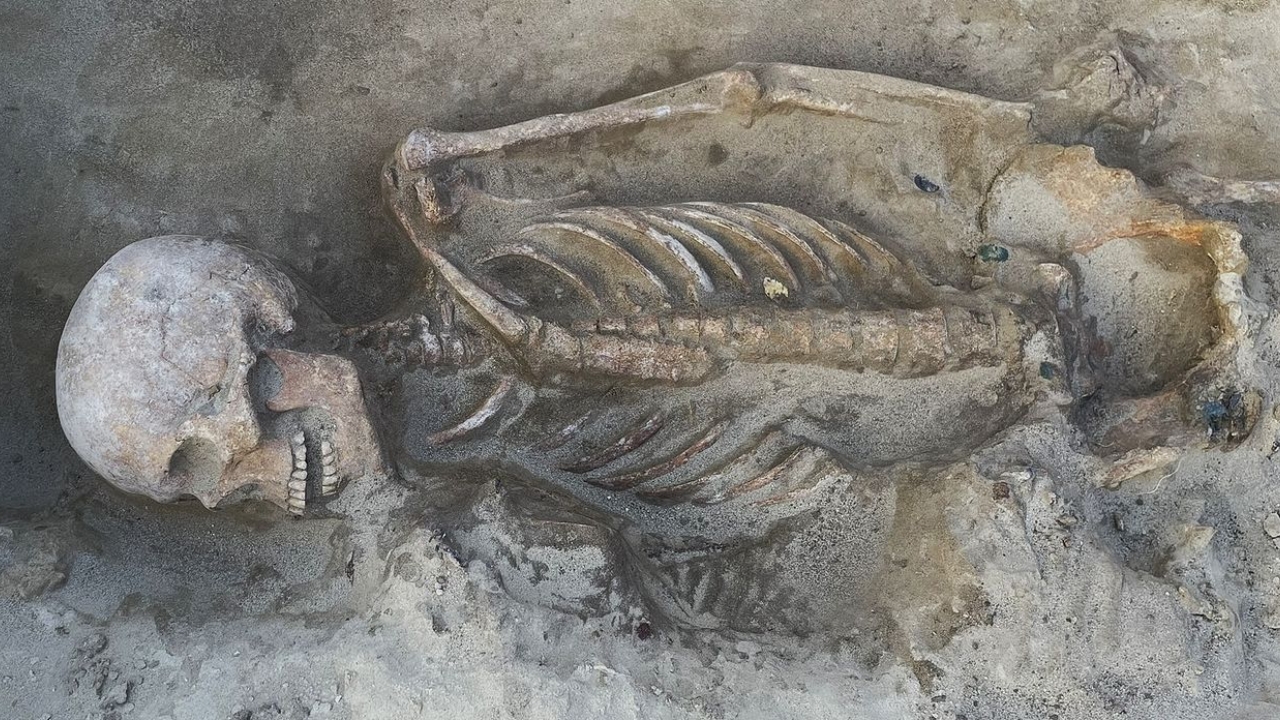
Find Near Akasztó Exposes Burials with Weapons, Horse Tack, and 81 Coins, Along with DNA-Confirmed Kinship
Hungary has returned to the spotlight in archaeology with the discovery of three male warrior burials from 1,100 years ago. The find impresses with the number of items buried and the level of ornamentation.
Investigations with DNA showed that the three men were related through the paternal line. One of them was likely a father or brother of one of the younger individuals.
The graves are located near the village of Akasztó, 57 miles, 92 kilometers southeast of Budapest. The discovery involved volunteers from the Katona József Museum and a team led by Wilhelm Gábor.
-
China wants to install a giant power bank in space to harvest solar energy continuously, day and night, and has already tested on the ground, in a 75-meter tower, the wireless transmission of energy over a distance of 100 meters to various moving targets.

-
The brute force of the waves turns into clean energy with almost no waste, as promised by a gyroscopic converter created in Japan that, in simulations, couples with the sea’s sway and reaches the maximum limit of 50% efficiency, leaving old marine generators behind.
-
NASA’s space telescope already has 73% of its images contaminated by satellite trails, and scientists warn that the problem could reach 100% if millions of objects are launched into low Earth orbit.

-
From discarded uniform to blanket for those sleeping on the streets: Brazilian initiative transforms tons of corporate fabric into shelter, reduces textile waste, and creates a chain of social impact that starts in companies and ends in the hands of those who need it most.




Discovery of Three Warrior Graves with Weapons and Coins Draws Attention in Hungary
The three men were buried between the decades of 920 and 930. Inside the graves, weapons, clothing accessories, and riding items emerged, indicating a group of high status.
Among the objects were a sabre, bow, quiver, and decorated straps. The volume of coins reinforces that these were not common burials.
In total, the graves revealed 81 coins. This type of find helps to reconstruct movements and contacts of the period.
Coins from Northern Italy Link the Burials to Hungarian Military Campaigns
The majority of the 81 coins came from northern Italy. They date back to the reign of Berengar, 888-924, ruler of parts of Italy and grandson of Charlemagne.
During that period, the Hungarians had already formed a kingdom in Hungary and were also participating in military campaigns in northern Italy.
The presence of these coins suggests a direct connection to this context. The circulation of foreign pieces in graves indicates movement and contact with other regions.
17 to 18-Year-Old Warrior Was Buried with Jewelry, Saddlebag, and Horse Tack

One of the buried individuals died at the age of 17 to 18 years. He was wearing a belt partially decorated with gold-plated silver.
On the right side, there was a leather bag called a saddlebag, decorated with a silver plate. This type of piece was associated with prominent warriors.
In his left hand, there was a gold ring with blue glass stones. His legs had silver armlets and anklets with elaborate finishing.
Small gold plates were also found on the body, possibly linked to clothing or the shroud. The burial included a horse harness with straps decorated in gold-plated silver.
Another Burial Reveals 15 or 16-Year-Old with Bow and Seven Arrows
Another grave held a warrior who died at the age of 15 or 16 years. He was buried with a bow and a quiver containing seven arrows.
The bow stood out for its decorative details. The rigid, arched ends and the shaft were covered with ornamental plates made of horn.
The presence of complete archery equipment shows military preparation from adolescence. It also reinforces the elite profile attributed to this set of burials.
Burial of a 30 to 35-Year-Old Man Includes Sabre, Archery Equipment, and Belt Decorated with Coins

The third burial housed a man who died between the ages of 30 and 35 years. Inside the grave, there was a sabre, archery equipment, and a horse harness.
A silver armlet was also found. The belt was decorated with coins, highlighting status and wealth.
This set enhances the understanding that the site gathered men with important military roles. The repetition of items related to horses and weapons reinforces the group’s characteristic.
DNA Analysis Confirms Paternal Kinship Among the Three Warriors
The DNA analysis indicated that the man aged 30 to 35 years was likely a father or brother of the younger warrior. The three were identified as relatives through the paternal line.
This type of genetic confirmation changes the way the site is interpreted. The burials not only show military elite but also a family bond.
The find suggests that the space may have served a specific group, with blood ties and elevated social standing. Research continues to enhance the understanding of this context.
Diet Rich in Animal Protein Appears in Isotope Analysis of Remains
In addition to DNA, there was an analysis of the proportions of isotopes, elements with different numbers of neutrons in their nuclei. This examination helps to understand dietary patterns.
The results indicated diets rich in animal protein among the three men. This aligns with the idea of access to resources and life associated with a privileged group.
The combination of valuable objects and dietary signals reinforces the elite profile. The set points to a standard of living different from the common during that period.
Research Continues to Identify the Origin and Role of the Military Group
The material found allows for asserting that a group of elite warriors was buried there, possibly linked to a military leadership. Investigations are ongoing to obtain more information about their identity.
There is still no clarity on how these men died. The absence of this answer keeps an important part of the story open-ended.
Nonetheless, the burials near Akasztó convey a strong message. Ornate weapons, riding gear, and 81 coins reveal power, mobility, and social organization in the early 10th century.









-

-

2 people reacted to this.