






 Portuguese
  Spanish


Researchers Found Evidence of a Seafloor Dating Back to the Dinosaur Era, Bringing New Perspectives on the Formation and Evolution of Planet Earth
Scientists from the University of Maryland made a fascinating discovery: an ancient seafloor hidden deep beneath the Earth’s surface. This finding, revealed through seismic waves, offers new insights into tectonic processes and the geological evolution of our planet, especially during the era of the dinosaur.
The Unusual Discovery Dates Back to the Era of the Dinosaurs on Earth
The research, led by postdoctoral geologist Jingchuan Wang, focused on a mysterious region of the Earth‘s mantle. They investigated the Eastern Pacific Rise, an area where two tectonic plates meet in the southeastern Pacific Ocean.
-
Brazilian Student Wins Global Science Fair in the U.S. with Sound Wave Method to Alter Alzheimer’s-Linked Genes

-
Bosch Unveils Revolutionary 2.3 kg Hub Motor for E-Bikes with 45 Nm Torque and 400 Watts Power, Eliminating Resistance Above 25 km/h in Historic Shift for German Manufacturer
-
Brazilian Engineer Develops Marine Bacteria from Ubatuba into a Mini Power Plant Generating 227 mW per Square Meter, Cleans Air by Capturing CO₂ and Releasing Oxygen
-
Trump Signs Orders to Develop Quantum Computer and Bolster U.S. Systems Against Encryption-Breaking Attacks


Until now, this area had not been explored thoroughly, but scientists discovered something unexpected: a dense piece of seafloor that sank hundreds of kilometers below the surface.
The findings were published in the renowned journal Science Advances and represent an important milestone in understanding plate tectonics, while also challenging previous theories about the structure and behavior of the Earth’s interior.
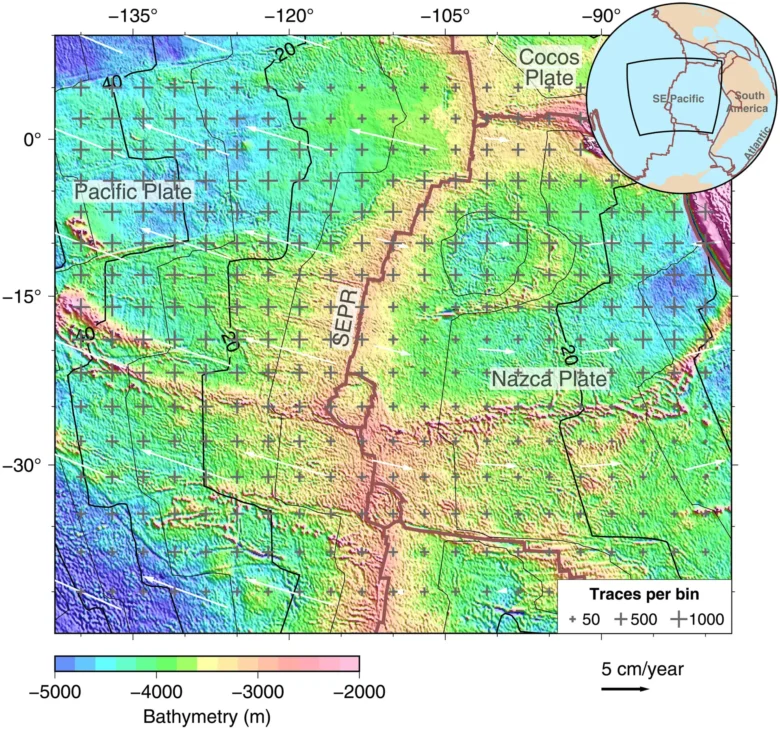
How Does the Research Work?
Scientists utilized seismic imaging, an advanced technique that functions like a CT scan for the planet. Seismic waves, originating from natural events like earthquakes, travel through the Earth and can be verified to map its internal structure.
Wang’s team used these images to explore the mantle, a layer situated between the Earth’s crust and core.
By examining this region, the investigators identified an anomaly in the mantle transition zone, a layer located between 410 and 660 kilometers deep. This zone, separating the upper and lower mantles of the Earth, can expand or contract depending on temperature and pressure.
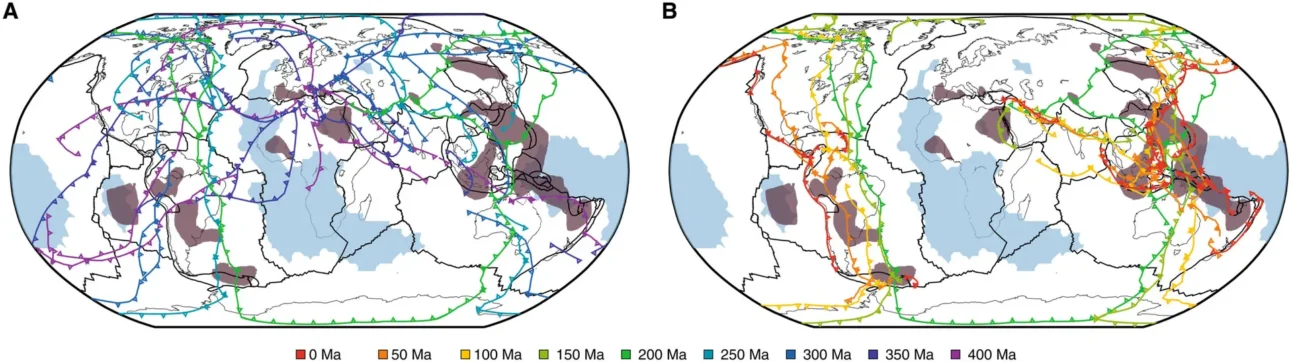
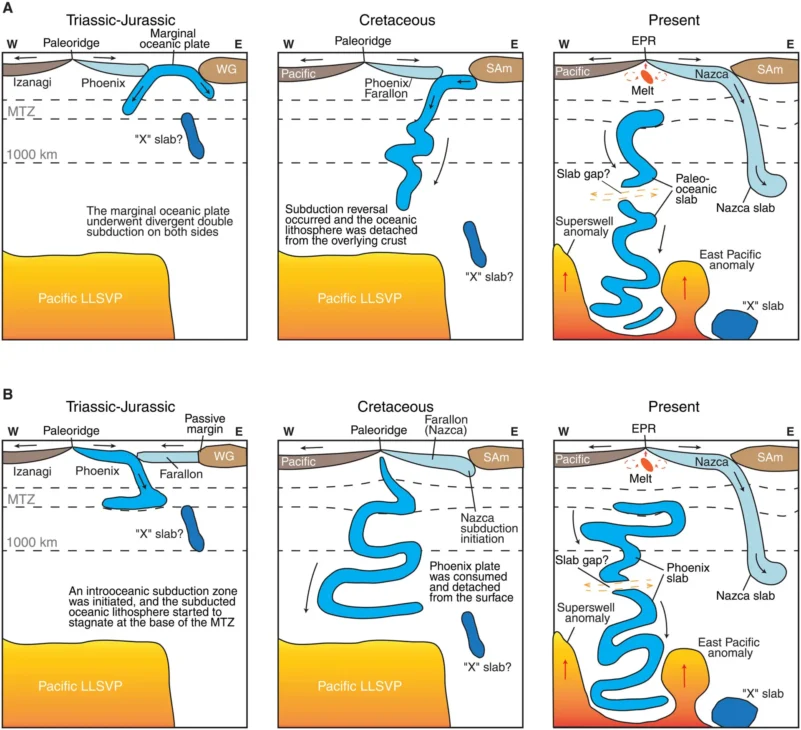
What they found was an unusual thickening, resembling a “fossilized fingerprint” of a piece of seafloor that sank into the Earth’s interior about 250 million years ago.
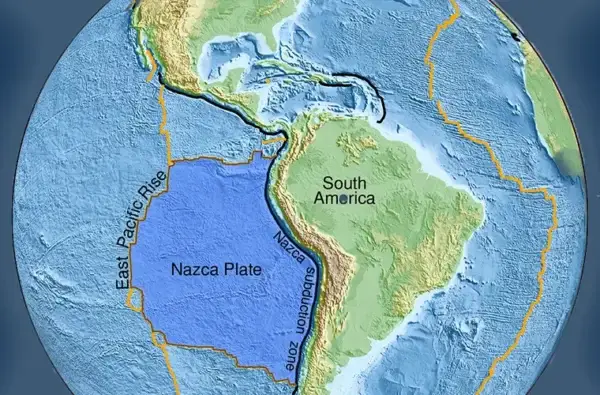
What Is Subduction and How Does It Happen?
Subduction is the process in which one tectonic plate slips beneath another, carrying material from the Earth’s surface into the mantle. This process is essential for understanding geological features such as earthquakes and volcanic activity.
Traditionally, subduction has been studied through surface and sedimentary rocks. However, Maryland scientists went further, analyzing the deeper consequences of this process within the Earth.
The findings showed that material in this region of the mantle moves much slower than previously thought. Wang and his colleagues observed that the material was sinking at a rate much lower than expected, about half the predicted speed. This data suggests that a mantle transition zone may act as a kind of “barrier”, slowing down the movement of subducted materials.
The Impact of the Discovery
This study has significant implications for our understanding of the Earth’s internal dynamics. The discovery of the submerged seafloor raises new questions about how material behaves in the deeper layers and how these interactions might affect surface conditions such as earthquakes and volcanic eruptions.
Additionally, the team hypothesized that the division in the Pacific Low Shear Velocity Province, a deep and complex area of the mantle, may be related to the discovered seafloor. These findings could provide a clearer view of how the Earth’s internal layers interact and how this can influence tectonic events on the surface.
Future Exploration and New Challenges
Wang’s team plans to expand their studies to other regions of the Pacific Ocean and beyond. The goal is to map areas of ancient subduction zones and identify points of resurgence — when subducted material heats up and rises toward the surface, contributing to volcanic activity. The research could reveal new details about how deep mantle structures interact with the Earth’s crust.
In the long run, these studies may also provide important insights into Earth’s history, revealing connections between past geological events and the current behavior of the Earth’s crust.
Implications for the Study of Other Planets
Wang’s work and that of his colleagues is not limited to the study of Earth. They believe that their discoveries can also aid in the exploration of other planets. By better understanding the processes occurring within the Earth, scientists can apply this knowledge to study other planets in our solar system, helping to understand their geological histories.
“We believe there are many more ancient structures waiting to be discovered deep inside the Earth,” Wang stated. He emphasized that each of these hidden features has the potential to offer new and valuable insights into Earth’s past.
The Dynamic Nature of the Earth’s Interior
This discovery also challenges the traditional view that the Earth’s mantle is a simple and uniform layer. In reality, it is much more intricate, with different materials moving at different speeds and even being recycled to form new structures.
The sunken seafloor found at the Eastern Pacific Rise serves as a reminder of the dynamic forces shaping the planet. The process of creation and destruction within the Earth is a slow and constant dance that occurs over millions of years.
As scientists improve seismic imaging techniques, new discoveries about the Earth’s interior will emerge. This not only helps explain our planet’s history but also informs how we prepare for future geological changes.
The work of Wang and his colleagues offers a glimpse into what lies hidden beneath the Earth’s surface and opens doors for new research and discoveries that may eventually change how we understand our planet and other planets in the solar system.







Excelente desde pequeno tinha essa obs: com esse movimentos das placas e ficava curioso e sem explicacao:agusou mais o meu entendimento “quando trabalhei e conhecir a cordiller de Los andes sentir a posição que confirmo hoje a placas tectônicas de nazca
Dinossauros no manto…risível