Portuguese
  Spanish


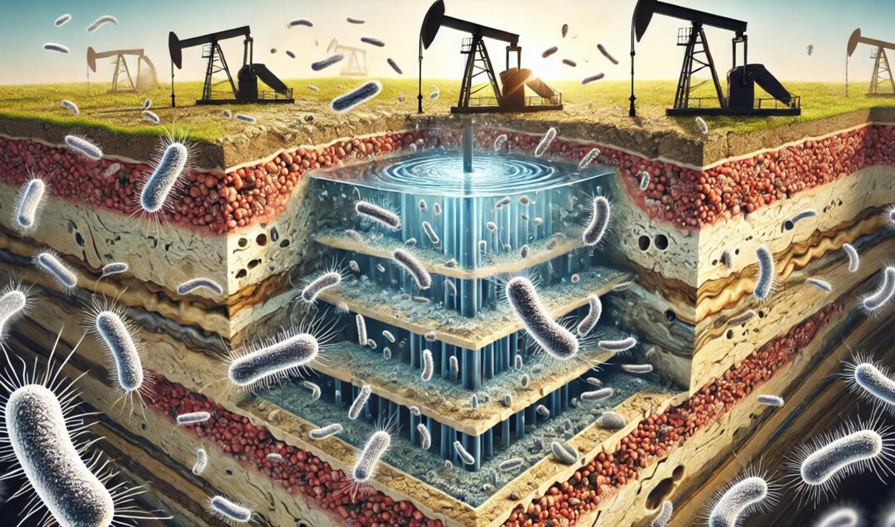

Discover How a New Bacteria Technology Can Revolutionize Oil Well Cleaning! Russian Scientists Made a Surprising Discovery That Promises to Radically Transform the Oil Industry.
Recently, Novosibirsk State University, in collaboration with the Vector Scientific Center for Virology and Biotechnology of Rospotrebnadzor, developed an innovative method for cleaning oil wells.
This technology uses bacteria to eliminate unwanted deposits such as asphalt, resin, and paraffin that accumulate during the operation of the wells. The new process is a true revolution in the sector, promising a significant impact on the efficiency and sustainability of the industry.
How Cleaning with Bacteria Works
According to the university’s official statement, the microbiological technology involves injecting concentrates with specialized bacterial strains into the oil well.
-
Oil production grows in Rio, but reserve replacement raises a warning sign

-
Petrobras is expected to complete the drilling of the Morpho well in the Foz do Amazonas in August 2026, the first well in the Equatorial Margin, an oil frontier that the ANP estimates at more than 30 billion barrels and could redraw the map of Brazil.

-
Oil returns to the center of concerns with tension between the US and Iran

-
IEA reduces forecast for global oil demand in 2026 after impacts of the Middle East crisis



These bacteria, previously isolated from contaminated soils in the productive regions of Siberia, are capable of degrading oil with high efficiency.
Andrei Savchenko, Deputy Director of the Technology Transfer and Commercialization Center, explained to Sputnik that the concentrate is injected and begins to circulate due to the well’s pump. The bacteria spread, decomposing deposits and cleaning all well components, including the most difficult to reach.
Moreover, the technique allows the well to continue operating during the cleaning process, eliminating the need for prolonged shutdowns and costly procedures.
The liquid from the well can be purified with air after using the bacteria, as they are aerobic and need oxygen to survive. The scientists also developed a method to saturate the liquid with air at specific frequencies, increasing the efficiency of the degradation of deposits.
Patents and Market Prospects
The scientists have already obtained patents for the technology and the bacteria involved. Currently, possible field tests in wells of Russian oil companies are being discussed.
The prospects for the new technology are promising, especially when compared to foreign solutions that do not include the use of air to enhance efficacy. The Russian innovation could offer a significant competitive advantage in the global market.
Environmental Impact and Previous Advances for Oil
The discovery of bacteria that clean oil wells and absorb oil in cold waters has important implications for the industry and for environmental protection.
Oil pollution is a serious problem affecting marine life and coastal communities. The new technology can reduce costs, improve efficiency, and minimize the environmental impact of oil exploration.
This innovation follows a tradition of significant discoveries in Russia, such as in 2021, when scientists identified bacteria in the Sea of Japan capable of absorbing oil at low temperatures.
This previous research demonstrated the ability of bacteria to destroy oil compounds under adverse conditions, pointing to future advancements in the creation of bioproducts to clean water from oil pollution.
The collaboration between science and technology is opening new paths for a more sustainable and efficient future in the oil industry. With the new well cleaning technology, the potential for significant improvements in how we manage and mitigate the environmental impacts of oil exploration has never been more promising.
Do you think this innovation can really transform the oil industry globally? Share your opinion in the comments!