






 Portuguese
  Spanish


Explore This Advanced Space Research Tool, Designed by Chinese Experts, That Will Completely Transform the Sector
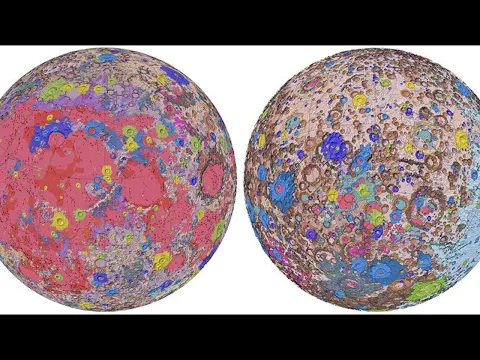
In a revolutionary move for space science, China has published the world’s first complete high-definition lunar geological atlas. This milestone provides an invaluable tool for future exploration and study of the Moon.
The Chinese lunar atlas, available in Chinese and English, represents a significant evolution in the available lunar mapping resources, promising to enhance scientific understanding of our natural satellite.

Details of China’s Lunar Geological Atlas
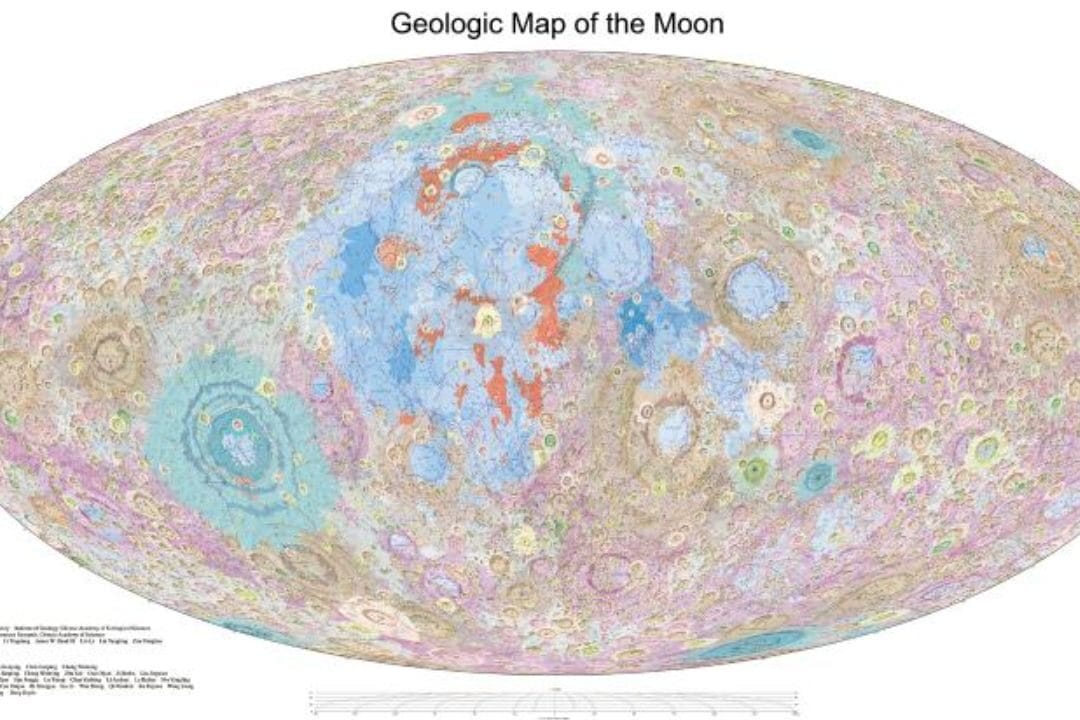
Produced by the Institute of Geochemistry of the Chinese Academy of Sciences (CAS), the Chinese lunar atlas has an impressive scale of 1:2.5 million. This publication includes the Lunar Geological Globe Atlas and the Quadrilaterals of the Lunar Geological Atlas Map, comprising an essential tool for scholars and researchers.
-
China Develops Custom 140-Ton Electric Mining Truck with 770 kWh Swappable Battery, Deploys 290 Units in Xinjiang’s Largest Zinc Mine

-
Meta to Launch Arena, a New Prediction App Targeting 3.56 Billion Users, Competing with Polymarket and Kalshi

-
Scientist Challenges Famous Human Evolution Theory, Argues Homo Sapiens Evolved Gradually Over Thousands of Years
-
15-Year-Old American Builds Ocean Generator with PVC Pipe and 3D-Printed Propeller for $12, Wins National Prize, Presents at White House, and Makes Forbes 30 Under 30 List




Moreover, its availability in two languages enhances its global reach, facilitating international collaborations in lunar research.
Scientific Impact and Future Explorations
According to Ouyang Ziyuan, a CAS academic and renowned lunar scientist, the new atlas is crucial for understanding lunar evolution. “This geological atlas not only allows us to select ideal locations for future lunar research stations but also paves the way for the utilization of lunar resources,” explains Ouyang.
Additionally, he emphasizes how this knowledge can assist in understanding other celestial bodies in the solar system, such as Mars, establishing a parallel between lunar geological features and those of other planets.
Modernization of Lunar Maps for Space Exploration
Liu Jianzhong, a senior researcher at the Institute of Geochemistry of CAS, highlights that despite advances in recent decades, the lunar maps used since the Apollo era have not been updated for about fifty years. These outdated maps are insufficient to meet the demands of modern research and lunar exploration missions.
“With this new atlas, we are not just updating our data but also expanding the possibilities for scientific and technological discoveries on the Moon,” states Liu, a senior researcher from China.
Future Perspectives
This development from China opens new avenues for space exploration and may significantly accelerate the plans of countries and private entities interested in the Moon. With more accurate resources and data, the path is paved for an era of unprecedented lunar discoveries and exploration.
The publication of the atlas in English and Chinese not only promotes global knowledge sharing but also reinforces China’s position as a leader in scientific research and space exploration.






