






 Portuguese
  Spanish


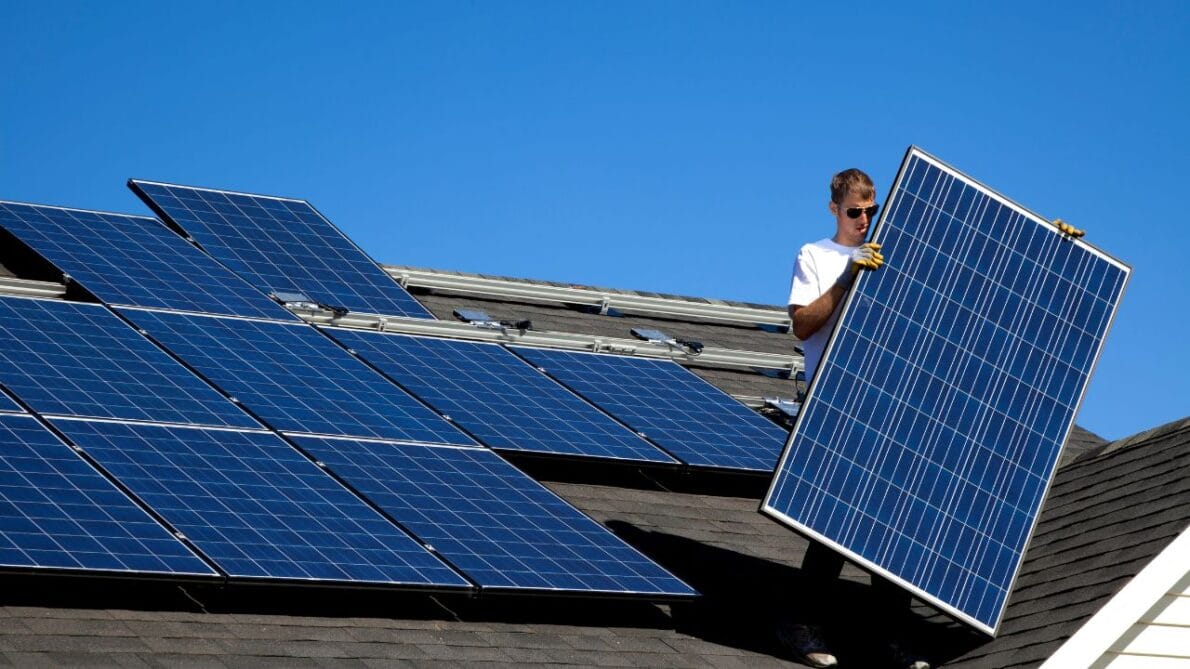

If You Are Tired of Paying High Electric Bills and Want to Escape the Increases in Energy Rates, Solar Energy May Be the Ideal Solution for You. But How Many Solar Panels Do You Need to Install to Generate 1000 kWh per Month?
Solar energy is a great way to reduce your electricity costs. But before installing solar panels, it’s important to calculate how many you will need to meet your energy consumption.
To calculate the number of solar panels needed, you will need to know three things: your average daily consumption, the solar irradiation for your city, and the efficiency of the solar system.
Calculate Average Daily Consumption

First, take your electricity bill and find the average monthly consumption in kWh. For this example, we will use an average monthly consumption of 1000 kWh. Divide this amount by 30 (the number of days in a month):
-
Giant Batteries Take Center Stage in Chile Auction as Company Offers 960 GWh of Solar Energy for Nighttime Use, Aiming to Stabilize Solar Power Supply

-
After a Year of Success in Switzerland, Solar Railway Attracts Italy’s Interest for Clean Energy Transformation
-
Robots Clean Solar Panels in Desert Power Plants Without Water, Preventing Energy Losses
-
Brazil’s Offshore Wind Energy Potential Worth $1 Trillion Stalled by Long-Delayed Agreement




- Average daily consumption = 1000 kWh / 30 = 33.33 kWh per day.
Solar irradiation is the amount of solar energy available at your location. To find out the irradiation for your city, you can use the site of Cresesb, which has solar irradiation data for all of Brazil. For Salvador, Bahia, the average daily solar irradiation is approximately 5.34 kWh/m²/day.
The efficiency of the photovoltaic system takes into account losses such as dirt on the panels and angle deviations. Typically, we consider a loss of 25%, so the efficiency of the solar panels will be 75% or 0.75.
Calculate Total System Power
To calculate the total system power, you need to divide the average daily consumption by the multiplication of the system efficiency by the solar irradiation. Thus, the system power is equal to average daily consumption divided by (system efficiency times solar irradiation).
By substituting the values, we have:
- The system power is equal to 33.33 kWh per day divided by (0.75 times 5.34 kWh per square meter per day), which results in 8.32 kWp (kilowatt-peak).
Define the Model of Solar Panels
Now we need to choose the model of the solar panels. We will use a panel with a power of 665 Wp (one of the most powerful in the market). To find the number of solar panels, you divide the total system power by the power of each panel.
The number of solar panels is equal to the total system power divided by the power of each panel. Substituting the values, we have:
- The number of panels is equal to 8320 Wp divided by 665 Wp, which results in approximately 12.5 panels. We round it to 13 solar panels to generate a little more energy and ensure a safety margin.
To generate 1,000 kWh per month in Salvador, Bahia, you will need 13 solar panels of 665 Wp each. Now, do the calculation for your city and see how many solar panels you need.


