Portuguese
  Spanish


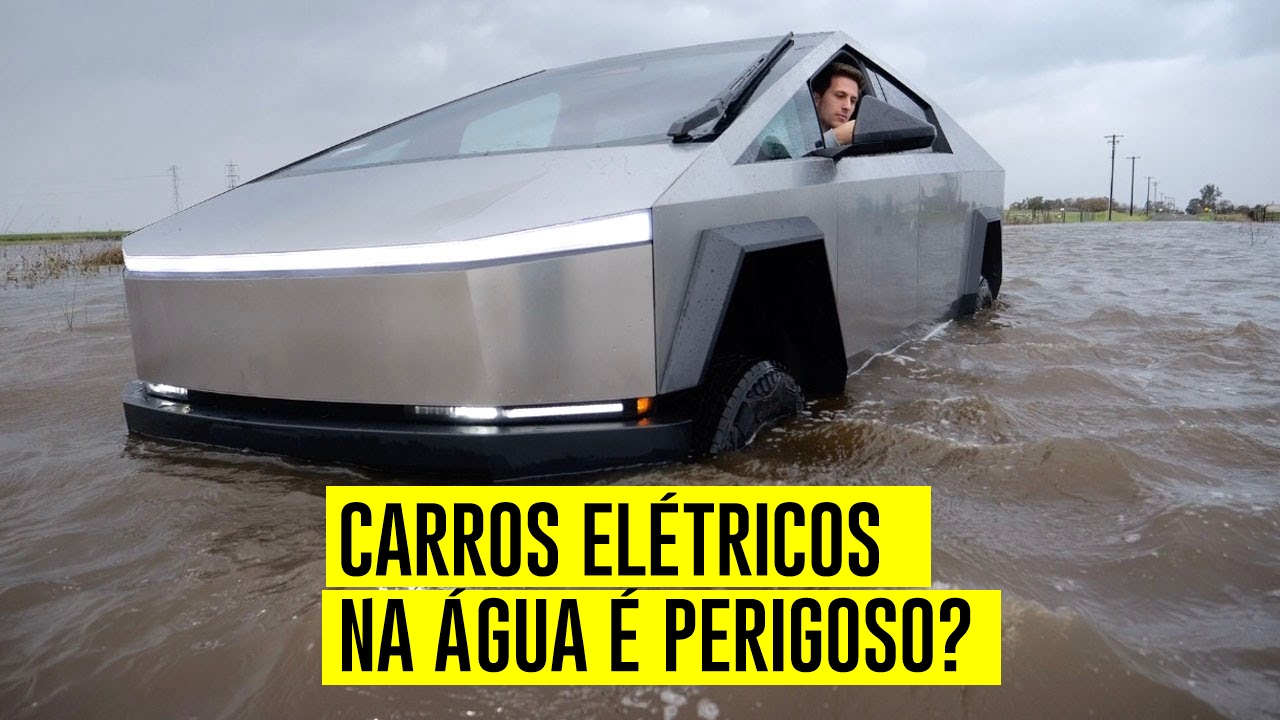

Driving Electric Cars In Floods Raises Questions And Concerns. Know The Truth About The Risks And How To Ensure Safety In This Type Of Situation.
Recently, the weather has become increasingly unpredictable, and social media is filled with images depicting the harsh reality of many drivers. In various videos, it is possible to see car owners bidding farewell to their vehicles as they are carried away after being damaged by flooding. Find out if driving electric cars in floods is dangerous.
In other cases, some share tips on how to protect the car from natural disasters, such as using plastic films to prevent damage caused by heavy rain. It’s no secret that cars and water do not mix well, but the issue is even more complex when we talk about electric vehicles.
The impact of flooding on these cars has become a recurring topic of discussion, as extreme weather conditions continue to affect roads and even garages.
-
Chery Offers Lifetime Battery Warranty and Car Replacement for Major Failures Under New Chinese Regulations

-
Nissan Discontinues Qashqai SUV Amid Cost-Cutting, Chinese Competition, and Product Line Review
-
BYD Patents Revolutionary System Using Computer Vision to Detect Animals Under Cars Before Starting, Preventing Tragedies

-
BMW Completes $1.7 Billion Investment in the U.S. for Electric Vehicle Production, Positions South Carolina for New Generation as Rivals Reassess EV Race


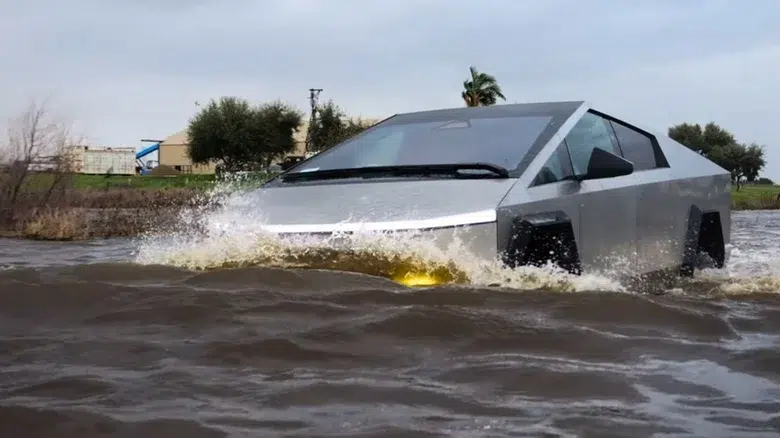
So, after all, is driving electric cars in floods more dangerous? And what happens if a driver is in an electric car during a flood? The short answer is: yes, electric cars face elevated risks in flooding conditions, but the dangers are common to all types of vehicles.
The Dangers Of Driving Electric Cars In Floods
No vehicle, whether electric or gasoline-powered, was designed to drive through floodwaters, especially while in motion. In the United States, meteorological services warn that half of the deaths during floods involve vehicles.
In the case of electric cars, water can not only sweep them off course or cause the driver’s drowning, but it can also damage the battery irreparably.
Electric vehicles are designed to withstand a certain exposure to water, but flooding can lead to a series of serious, potentially fatal problems. The batteries of electric cars are generally sealed to prevent water intrusion, but in extreme situations, such as those caused by floods, water can enter and cause a short circuit.
Moreover, the exposure of the mechanical and internal parts of cars to water can cause additional damage, making any vehicle, electric or not, vulnerable when submerged. If you have ever driven your EV in a flooding situation, it is essential to check the car immediately to ensure it is still safe to drive.
What Is The Maximum Depth Of Water An Electric Vehicle Can Cross?
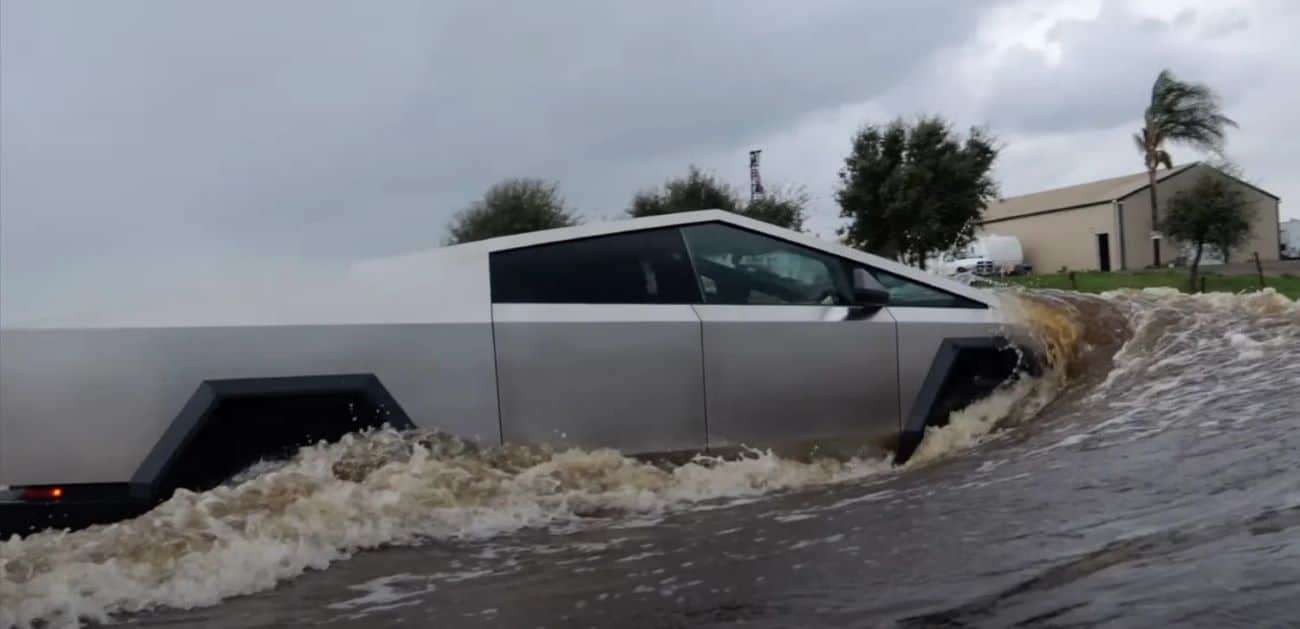
According to industry authorities in the United States, it is recommended not to drive in floodwaters deeper than 10.16 cm, a measure considered safe to prevent vehicle damage or loss of control. However, electric vehicle manufacturers provide more specific guidelines on the maximum depth their models can cross.
For example, Tesla indicates that its model can wade up to 81.28 cm in depth, while the Cybertruck reaches 82.55 cm. The Nissan Leaf, on the other hand, can handle up to 69.85 cm, and the Ford F-150 Lightning can cross up to 60.96 cm of water. Meanwhile, the Audi Q8 has a maximum wading depth of 29.97 cm.
This capability varies depending on the model and the vehicle’s ground clearance, as well as other mechanical components. However, this measure should not be seen as a challenge for drivers.
Pushing the wading limit can result in serious damage to the vehicle, not to mention the risk of being swept away by the currents or even becoming completely submerged. Therefore, the safest approach is to avoid water deeper than ten centimeters and, whenever possible, avoid driving in flooding conditions.

The Safest Decision: It Is Better Not To Drive Electric Cars In Floods
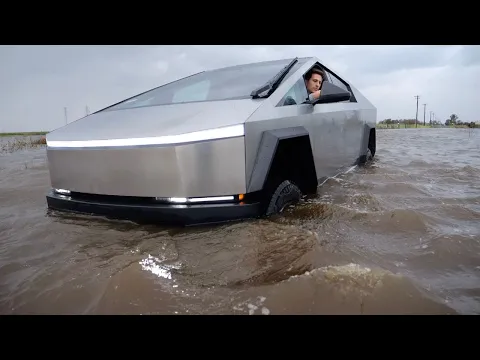
The best decision, regardless of the car model, is to completely avoid crossing flooded areas. Even if your vehicle is designed to withstand a certain amount of water, the forces of the current and the possibility of damage to the battery and other components are too great to be ignored. Additionally, the situation can quickly escalate, becoming more dangerous than it appears at first glance.
In times of unpredictable weather and increasingly frequent natural disasters, it is crucial to be aware of the risks of driving in extreme conditions. Electric cars, although designed to be more eco-friendly and efficient, are not immune to the challenges posed by water. Therefore, the recommendation is clear: in the event of flooding, it is better not to take risks.