






 Portuguese
  Spanish


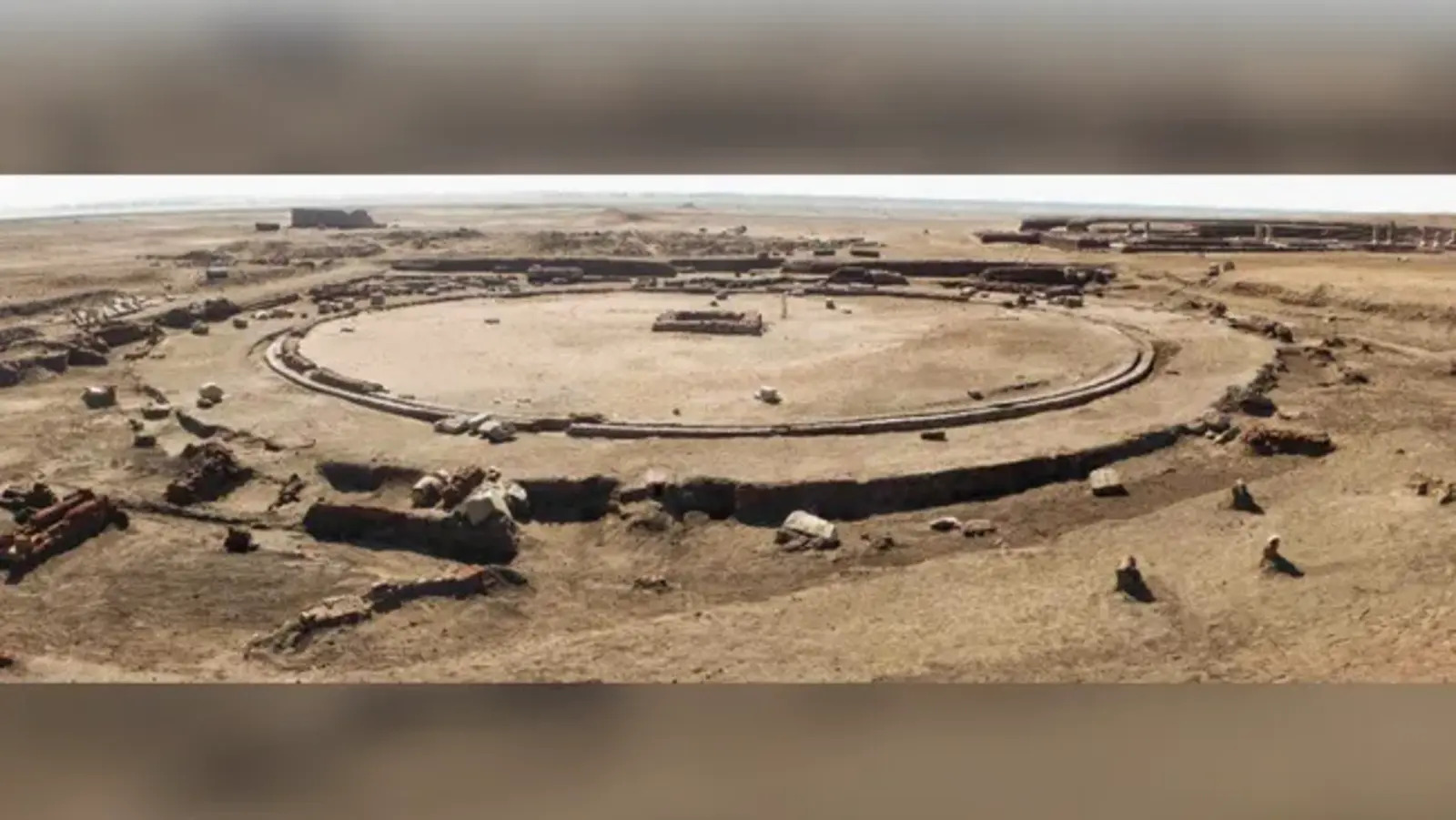

Discovery in Pelusium reveals circular temple of 2,200 years linked to the Nile, with channels, reservoirs, and signs of sacred rituals with water in Egypt
Archaeologists found a 2,200-year-old circular Egyptian temple in Tell el-Farama, ancient Pelusium, in North Sinai. The discovery gained importance for bringing together a central basin, channels, reservoirs, and a connection to the Nile, indicating sacred rituals with water.
Discovery in Pelusium
The structure was located at the archaeological site of Tell el-Farama, in the ancient city of Pelusium, at the eastern edge of the Nile Delta, in North Sinai province.
The find was announced by Egypt’s Ministry of Tourism and Antiquities in a statement translated on April 9. The site had already revealed, in 2022, a temple dedicated to Zeus carved from pink granite.
-
China Develops Custom 140-Ton Electric Mining Truck with 770 kWh Swappable Battery, Deploys 290 Units in Xinjiang’s Largest Zinc Mine

-
Meta to Launch Arena, a New Prediction App Targeting 3.56 Billion Users, Competing with Polymarket and Kalshi

-
Scientist Challenges Famous Human Evolution Theory, Argues Homo Sapiens Evolved Gradually Over Thousands of Years
-
15-Year-Old American Builds Ocean Generator with PVC Pipe and 3D-Printed Propeller for $12, Wins National Prize, Presents at White House, and Makes Forbes 30 Under 30 List




Interpretation changed with the excavation
Experts had initially identified the temple of Pelusium in 2019. At that time, the partial excavation of about a quarter of the area showed a circular structure made of red bricks.
The first reading by archaeologists was that the space could represent the seat of the city’s Senate. This interpretation was revised after the complete excavation of the complex and the full exposure of the building.
With the area fully revealed, the team concluded that it was a sanctuary dedicated to a local Egyptian deity called Pelusium.

Structure had connection with the Nile
The center of the sanctuary was formed by a circular basin about 35 meters in diameter. In the middle of it, there was a square pedestal, where a colossal statue of the god Pelusium likely stood.
Around the basin, archaeologists found water channels and reservoirs. Inside it, there was water and mud from the Nile, which reinforced the symbolic connection between the Egyptian temple and the local deity.
Researchers also identified that the basin was connected to a branch of the Nile. This complex hydraulic structure suggests that the sanctuary was used in sacred rituals linked to water.
Dating and prolonged use of the temple
Based on the stratigraphic layers of the site, experts assess that the temple of Pelusium was built in the 2nd century BC and continued in use until the 6th century AD.
This indicates a prolonged period of occupation and religious use of the structure, over centuries in which the city maintained strategic and religious importance in the region.
Mix of traditions
The design of the Egyptian temple combined traditions of ancient Egypt with Greek and Roman styles. For experts, this combination reflected the cultural exchange between Egypt and other parts of the ancient world.
The discovery was described as highly significant for showing that Pelusium played a relevant role in an increasingly cosmopolitan ancient world with intense cultural, religious, and commercial connections over time, reinforcing its ancient regional importance.
With information from Live Science.





