






 Portuguese
  Spanish
 7 min of reading
  0 comments


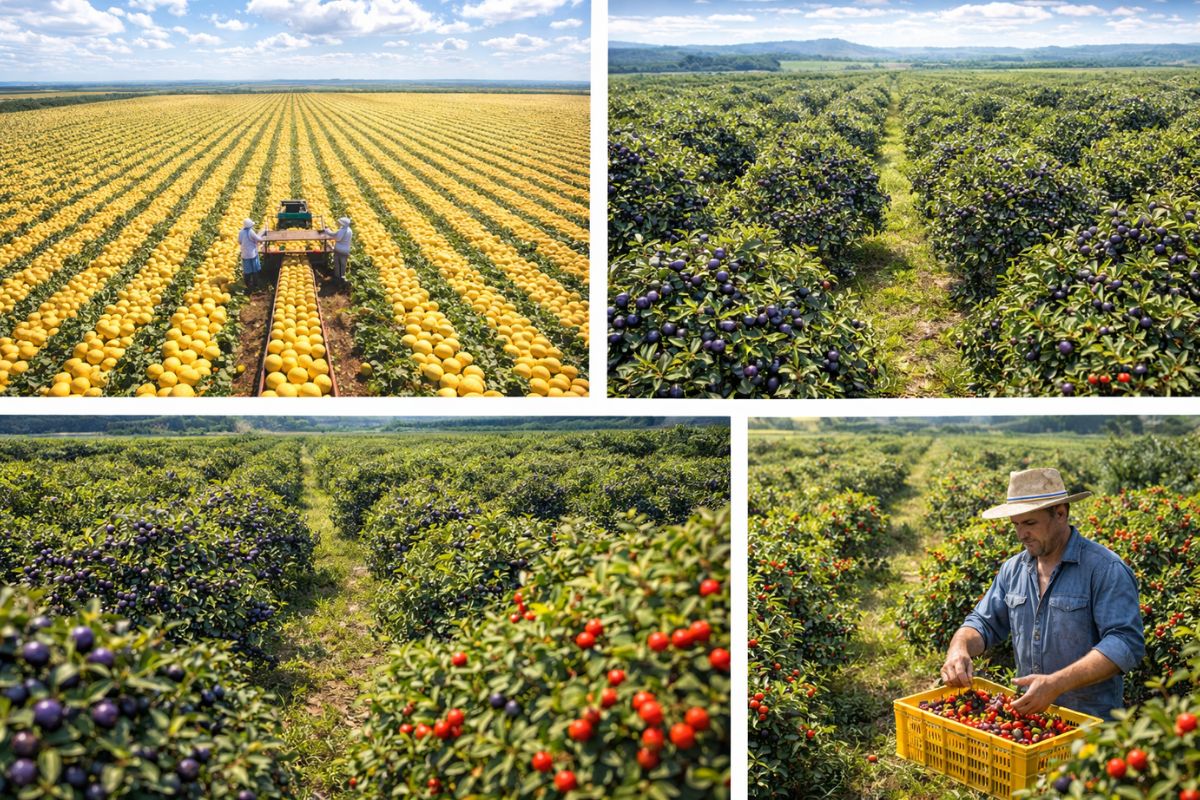
From The Semiarid Region Of Rio Grande do Norte To The Mountain Ranges Of Ceará, Passing Through The Heart Of Goiás, Giant Fruit Farms Have Transformed Challenging Landscapes Into Production Machines That Impress Brazil And The World, With Daily Harvests That Amount To Millions Of Fruits.
More Than A Curiosity, These Giant Farms Show How Technology, Irrigation, Careful Management, And Business Vision Have Managed To Create The Largest Melon Farm On The Planet, The Largest Jabuticaba Orchard In The World, And The Largest Organic Acerola Farm Ever Recorded, Consolidating Brazil As A Powerhouse In Tropical Fruits.
The Giant Melon Farm In The Semiarid Region Of Rio Grande do Norte

When It Comes To Giant Fruit Farms, It’s Impossible Not To Start With The Potiguar Melon. In Mossoró, In Rio Grande do Norte, The Caatinga And The Agreste Harbor The Largest Melon Production In Brazil And The World, With A Structure That Has Become A Reference For Exportation.
Just To Get An Idea Of Scale, The State Of Rio Grande do Norte Produced 356 Thousand Tons Of Melon In 2019, About 61 Percent Of All Brazilian Production Of This Fruit.
-
Foreign tree planted to combat drought invades more than 1 million hectares of the Caatinga, encroaches on riparian forests, and turns an old solution for the semi-arid region into a silent threat to biodiversity.

-
Invasive weed that withstands extreme heat advances with climate change, threatens crops on several continents, and raises a global alert about a silent plant capable of dominating soils, suffocating native species, and reshaping entire ecosystems.
-
While other coffees escape the American tariff hike, Brazilian instant coffee is excluded, raising an alert in the sector and may become up to 37.5% more expensive in the United States.
-
Degraded lands could become São Paulo’s new asset to expand planted forests, strengthen wood, cellulose, and biomaterials, as well as keep the state competitive in the international market.



The Vast Majority Of This Volume Comes From Agrícola Famosa, Founded In 1995 By Partners Luiz Roberto Barcellos And Carlos Povo, Who Grow Approximately 10 Thousand Hectares Of Melon In Flat And Fully Irrigated Areas.
The Harvesting Rhythm Is Nearly Incredulous. Quality Control Technician Johnson Leandro Claims That About 1 Million Fruits Are Harvested Daily.
All This In The Middle Of The Caatinga, With An Irrigation System That Draws Water From 28 Deep Wells And Distributes The Resource Through Approximately 50 Million Meters Of Hoses.
Despite The Mechanization In Harvesting, The Production Model Relies Heavily On People. The Giant Melon Farm Generates About 8 Thousand Direct Jobs And 2 Thousand Indirect Jobs In The Sertão Region, Boosting The Local Economy And Providing Job Opportunities In Areas Where Historically Options Were Limited.
After Harvesting, The Melon Goes Through Washing, Sorting, And Packaging In What Is Called A Packing House. About 70 Percent Of The Production Is Exported To More Than 20 Countries, Filling Containers That Go Directly From The Farm To The Port.
In Addition To Melons, The Company Also Produces Watermelon, Papaya, Banana, And Passion Fruit For The Domestic Market, While The Cattle Benefit From The Melons Discarded Due To Aesthetic Defects.
Around This Main Structure, Other Smaller Producers And Integrated Companies Connect To The Same Production Chain And Irrigation System, Finding In Fruit Cultivation A Concrete Way To Generate Income, Curb Rural Exodus, And Improve The Quality Of Life In The Northeastern Sertão.
The Largest Jabuticaba Orchard In The World In Goiás

If The Giant Melon Reigns In The Semiarid Region, It Is In Goiás That Brazil Shows Another Face Of Its Giant Fruit Farms: Jabuticaba. A Few Kilometers From Goiânia, In The District Of Nova Fátima, In Hidrolândia, Lies The Jabuticabal Farm, Considered The Largest Jabuticaba Orchard In The World.
The Story Began In 1947, When Farmer Antônio Batista Da Silva Decided To Plant The First Jabuticaba Seedlings On The Property.
He Was A Mason And A Street Vendor, Living In Nova Fátima And Selling Products In Goiânia, A City Newly Created At The Time. Upon Noticing The Good Acceptance Of The Fruit And The Growth Potential Of The New Capital, He Decided To Invest Heavily In Jabuticaba.
Today, The Result Of This Decision Is Impressive: More Than 42 Thousand Jabuticaba Trees Spread Over 130 Hectares, Forming A True Sea Of Trees Loaded With Dark Fruits During The Harvest.
The Farm Has Become Part Of Goian Imagery And Opens Its Doors To Visitors Between Early September And Mid-October, When The Season Is At Its Peak.
Walking Among The Jabuticaba Trees Is Like Entering A Green And Purple Maze. Visitors Have Picnics In The Shade Of The Trees, Hang Hammocks, Take Naps, And Spend The Day Harvesting And Eating Jabuticaba Directly From The Tree.
The Images Of Trunks Completely Covered In Ripe Fruits Help Explain Why The Place Has Become A Tourist Attraction.
Antônio’s Family Grew Along With The Orchard. Today, There Are 11 Children And About 120 Descendants, And About Half Work With Jabuticaba.
With The Increase In Production, The Simple Sale Of The Fruit Fresh Was No Longer Enough, And The Solution Was To Industrialize.
In 1999, The Family Set Up A Winery Within The Farm, Open To Visitors. There, Jabuticaba Becomes Caipirinha, Ice Cream, Sweets, Jam, Cappuccino, Cachaça, Barbecue Paste, And Various Other Combinations, Such As Jabuticaba With White Chocolate, With Pepper, With Sweetened Condensed Milk, And With Meat.
It’s A Clear Example Of How A Giant Fruit Farm Can Add Value And Diversify Income.
The Property Still Keeps A Traditional Game: Whoever Can Eat One Jabuticaba From Each Tree Wins The Entire Farm. The Challenge Is Still Valid, But With 42 Thousand Trees, It’s Easy To Understand Why Nobody Has Won The Prize To This Day.
The Largest Organic Acerola Farm In The World In Ceará

The Trio Of Giant Fruit Farms In Brazil Is Completed In Ceará, In Ubajara, Where The Largest Organic Acerola Farm In The World Is Located: The Nutrilite Farm.
There, The Numbers Are Also Impressive And Show How Brazil Has Become A Reference In Sustainable Fruit Production.
The Farm Has 1,300 Hectares And More Than 200 Thousand Acerola Trees, With A Production Of About 10 Thousand Tons Of Organic Fruits.
In A 42 Hectare Nursery, Approximately 50 Thousand Seedlings Are Produced Annually, Strengthening The Replenishment And Expansion Of The Planted Area.
The Structure Involves 112 Integrated Producers And 280 Direct Jobs, Connecting Families And Communities Around The Project.
The Capacity For Processing The Fruit Reaches 15 Thousand Tons Per Year, With About 1,200 Tons Designated For Powder Processing, A Format Widely Used In The Supplements And Food Industry.
All This Started In 1997, When The Challenge Was To Transform A Practically Inactive Orchard, With Some Conventional Crops Of Coconut And Passion Fruit, Into The Largest Organic Acerola Producing Farm On The Planet.
Decades Later, The Effort Translates Into A Robust Operation, Internationally Recognized For Quality Standards.
Brazil Concentrates About 90 Varieties Of Acerola And 95 Percent Of What Exists In The World, And The Cultivation Of The Fruit Has Grown Significantly In The Last 20 Years, Becoming An Important Crop For The Northeast’s Economy. However, To Be Truly Organic, Production Must Go Beyond The Absence Of Pesticides.
At Nutrilite Farm, The Concept Of Sustainability Involves Productive, Social, Environmental, And Economic Aspects. This Requires Investment In Processes, Training For Workers, Support For Families, And Integration With The Surroundings.
The Management Follows The Principles Of Biodynamic Agriculture, Combining Chemical, Biological, And Even Astronomical Knowledge In Crop Management.
Irrigation Is Done Through Drip Systems, Which Brings Low Energy Consumption, Efficient Water Use, And High Precision In Application.
This System Is Also Used For Fertirrigation, Allowing Nutrients To Be Applied Along With The Water. The Result Was A Saving Of Approximately 70 Percent Of Water Compared To Conventional Pivot Systems, A Critical Point In A Country That Endures Periods Of Drought.
Another Significant Advancement Was The Development Of Specific Machines For The Mechanical Harvesting Of Acerola, Something That Had Not Been Recorded In Brazil Until Then.
These Harvesters Reduced Costs, Prevented Fruit Waste, And Allowed The Fields To Be Cleared Sooner For A New Bloom, Increasing Efficiency Without Sacrificing Organic Standards.
Why Brazil Dominates Giant Fruit Farms
Melon In The Semiarid Region, Jabuticaba In Goiás, And Organic Acerola In Ceará May Seem Like Totally Different Stories, But These Giant Farms Share Something In Common: They Are All Born From A Combination Of Market Opportunity, Climate Adaptation, And Investment In Technology And Management.
In Mossoró, Irrigation Has Transformed The Caatinga Into A Global Melon Hub. In Hidrolândia, The Vision Of A Vendor-Mason Made The Jabuticaba Orchard A Trademark Of Goiás, Uniting Rural Tourism, Handcrafted Industry, And Family Tradition.
In Ubajara, An Almost Dormant Orchard Transformed Into A World Reference For Organic Acerola, Integrating Producers And Encouraging Sustainable Practices.
This Set Of Cases Shows That Brazil Is Not Only Noteworthy For The Size Of Its Grain Crops Or Its Herds.
We Are Also A Power In The Giant Fruit Farms, Capable Of Supplying Demanding Domestic Markets, Exporting To Dozens Of Countries, And At The Same Time Generating Jobs, Income, And Innovation In The Field.
And You, If You Could Spend A Day In One Of These Giant Fruit Farms, Would You Choose To Experience The Melon In The Semiarid Region, The Jabuticaba In Goiás, Or The Organic Acerola In Ceará?







-

-

-

-

-

-

21 people reacted to this.