






 Portuguese
  Spanish
  3 min of reading
  0 comments


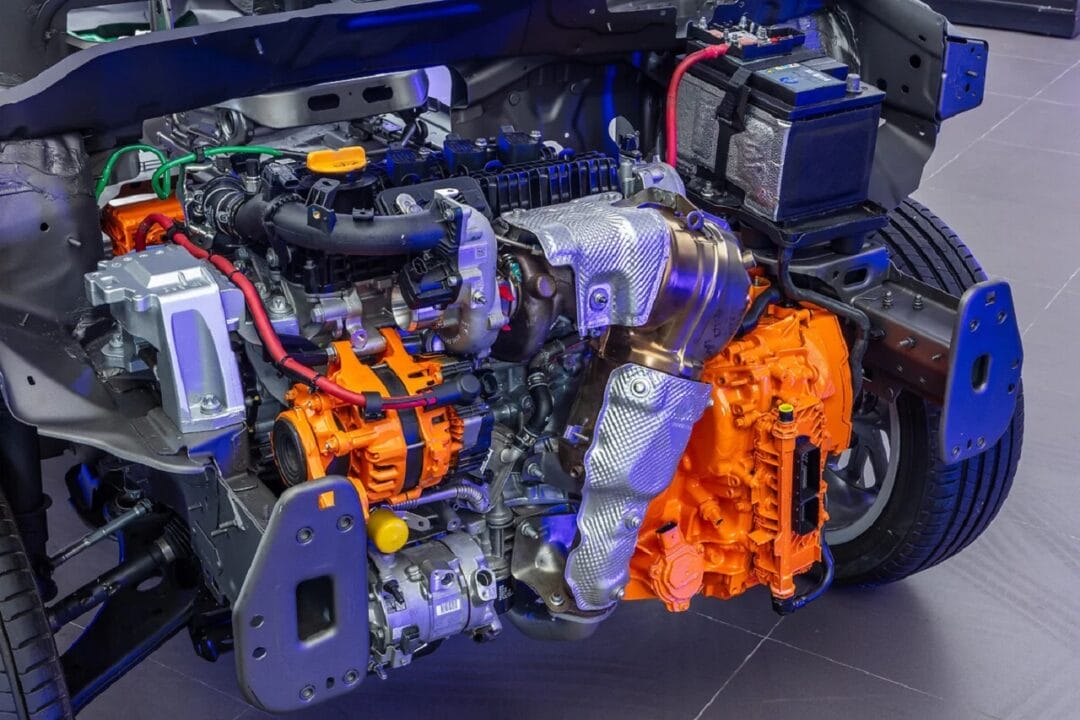
New Fiat Car Will Be Equipped With Innovative Hybrid Technology From Stellantis. The Technology Is Called Bio-Hybrid And Was Fully Developed In Brazil.
The Automotive Group Owning Fiat, Stellantis, announced the development of its first Brazilian electric car in the country, which promises to impact the market and shake up the competition in the category. According to media reports, Stellantis, which owns brands like Fiat, Jeep, Peugeot, Citroën, RAM, and Peugeot, announced the production of cars with hybrid technology starting in 2024.
New Fiat Car With Hybrid Technology Will Be Produced In Pernambuco
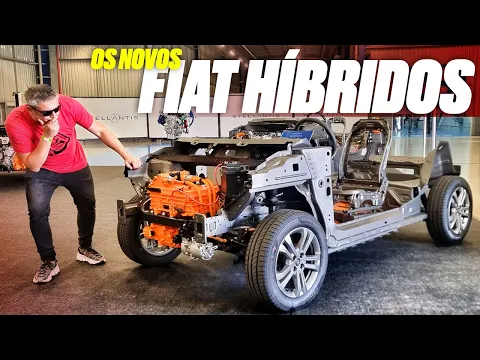

The company has now confirmed that the Goiana (PE) factory will be the first to manufacture the models with hybrid technology, in addition to informing that the site will also produce electric cars.
The owner of Fiat developed a hybrid technology called Bio-Hybrid. These systems include mild hybrids (MHEV), conventional hybrids (HEV), and plug-in hybrids (PHEV). In any case, all systems will feature an electric motor working alongside another thermal one, whether it’s flex or ethanol. The brand will also offer BEVs (Battery Electric Vehicles), that is, electric cars.
-
German sedan with rear-wheel drive flaunts a 1.6 turbo engine with 156 hp, automatic transmission, 480-liter trunk, premium status, and executive cabin in the range of fully equipped compact zero km: meet the Mercedes-Benz C180 Avantgarde 2015.

-
Suzuki launches “hybrid family van” with 8 seats, sliding rear door, Toyota Noah-like design, 1.8 electrified engine, and a price equivalent to about R$ 124,000 without taxes, below 7-seater SUVs sold in Brazil: meet the Landy in Japan.

-
Mitsubishi has a “Kombi 4×4 premium” diesel that is cheaper than the Tiggo 8 Pro when converted: the Delica D:5 costs around R$ 143,000 without Brazilian taxes, seats 7 or 8 people, and promises to handle snow, mud, and rough roads in Japan.
-
The part that can destroy your engine doesn’t warn when it’s going to break, ages even when idle, and has a different lifespan for each car.


Stellantis will produce and launch its first hybrid car in Brazil in 2024. However, the automotive group stated that the production of the first electric cars in Brazil will begin in 2030. It is worth noting that, in addition to the Goiana factory, Stellantis will also install the hybrid technology, Bio-Hybrid, present in the new Fiat car, at the factories in Betim (MG) and Porto Real (RJ). Thus, it will be available to all group manufacturers.
Understand The Details About The Bio-Hybrid Hybrid Technology Of The Owner Of Fiat
According to Stellantis, the new technology combines flex thermal energy and electrification. The different alternatives of the hybrid architecture were demonstrated on three current platforms of the company and can be adopted flexibly across the range of brands and products, constituting various affordable transition solutions for more sustainable mobility.
The hybrid platforms were developed by the Stellantis Tech Center in South America, in conjunction with suppliers, researchers, and other partners that make up the innovation ecosystem leveraged by the company.
Antonio Filosa, president of Stellantis for South America, also highlighted the efficiency gains and fuel economy generated by the hybrid technology systems, which will be installed in the new Fiat car.
The Bio-Hybrid is part of the technological route to accessible and sustainable mobility adopted by Stellantis. The Group aims to enhance the virtues of ethanol as a renewable fuel, whose production cycle absorbs most of its emissions, combining propulsion based on the biocombustible with electric systems.
Nationalization of Technologies
The development of the new hybridization technologies aligns with Stellantis’s long-term strategic plan, Dare Forward 2030, which aims for the decarbonization of the company’s processes and products by 2038, with a 50% reduction in emissions by 2030.
The efforts to develop the Bio-Hybrid platforms started last year, with the creation of Bio-Electro, a platform designed to promote propulsion technologies based on hybridization, combining thermal efficiency and electrification.
Through it, Stellantis has articulated a large set of strategic partnerships, focused on accelerating the development and implementation of new propulsion solutions for decarbonizing mobility.
Now, the Bio-Hybrid platforms, which emerge as a result of the “Tech” pillar, are a concrete expression of Stellantis’s development strategy in South America, which is based on decarbonization, localization, and regionalization. Filosa emphasizes that the new hybrid and electric technologies should constitute an opportunity for strengthening Brazilian engineering and the national industry.






Be the first to react!