






 Portuguese
  Spanish


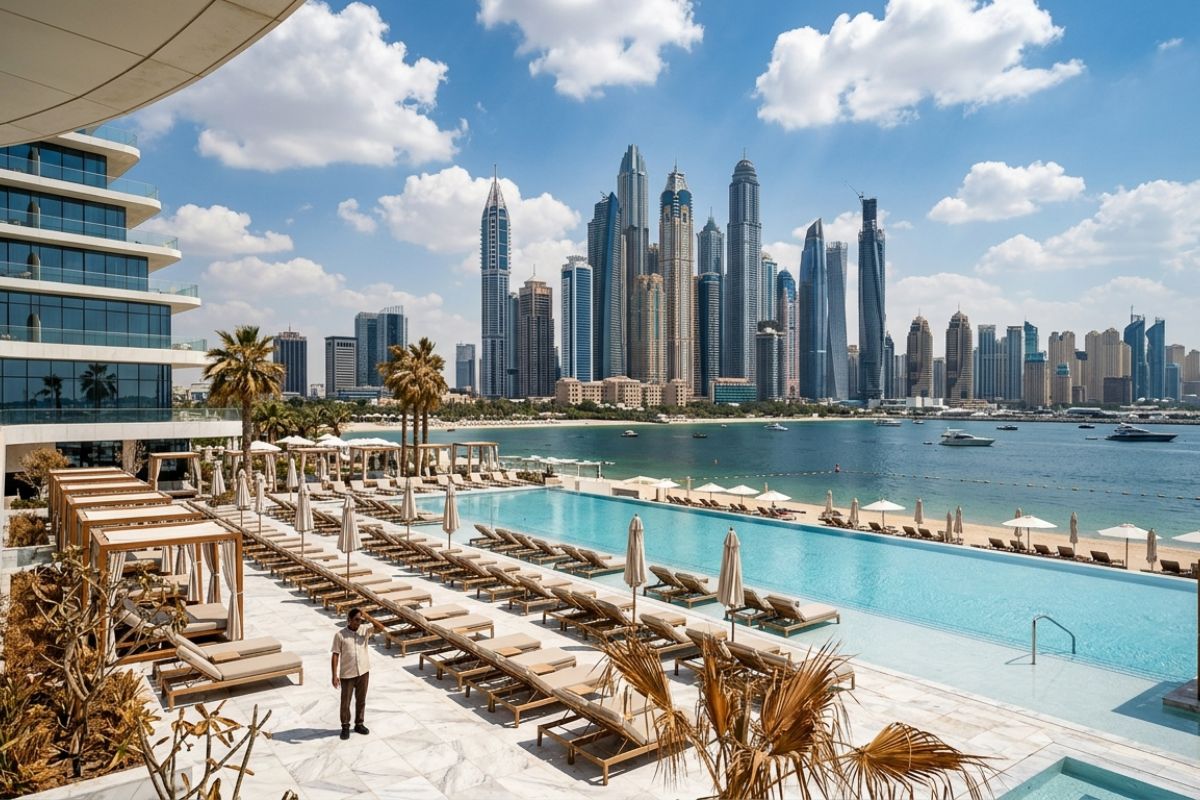


With extreme heat and high costs, tourism in Dubai sees hotel occupancy drop and luxury tourism lose strength with regional competition
Dubai faces a type of wear that does not first appear in advertisements, but in the daily life of those who keep the city running. The grassroots report describes hotels with empty corridors, restaurants struggling to fill tables, and attractions that previously required reservations now having immediate availability. At the center of this change is a combination of factors where extreme heat and high costs cease to be details and begin to influence travel decisions.
The narrative points out that the destination, known for its grand infrastructure and high-end tourism, has entered a phase of questioning the sustainability of the model. The slowdown is not treated as a bad week, but as a pattern that begins to appear in various points of the tourism ecosystem.
Signs on the ground: hotels and restaurants feel the emptiness
The presented portrait begins with everyday details: quieter hotel areas, entire floors unoccupied for days, and restaurants that previously relied on reservations weeks in advance now trying to fill tables even on weekends.
-
Microsoft Lays Off 4,800 Employees, Cuts 20% of Xbox Staff Amid AI Pressure on Major Tech Firm

-
Brazil’s ANP Opens 86 New Oil Blocks in the Equatorial Margin, Expanding the Amazon River Mouth Frontier

-
Warren Buffett’s Lesson: How Discipline, Extra Income, and Small Investments Can Transform Your Financial Future
-
Brazilian Startup Turns Coffee Grounds into Plant-Based Leather, Cutting Water Use by Over 50 Times for High-Impact Sustainable Fashion




The grassroots also mentions tour operators who used to conduct multiple desert safaris a day and are now struggling to fill one.
The central point of the report is that tourism, which sustained the image of continuous growth, is beginning to show limits.
The question that arises is not just “where are the crowds,” but whether the model can continue to grow as before, especially with extreme heat and costs accumulating at every stage of the experience.
Turning numbers: lower occupancy and revenue per room falling
After the initial shock, the grassroots pulls the indicators. In 2023, Dubai appears with over 17 million international visitors. The scenario changes in mid-2025, when the text describes stagnation and declines in some quarters.
Occupancy, which hovered around 80%, is now competing for the 60% mark in important districts. Revenue per available room drops 18% compared to the same period in 2024.
There is also mention of airlines reducing frequencies and hotel chains postponing expansions announced months earlier. The set suggests a slowdown that is not limited to a single sector.
The price distances itself from the value and luxury becomes a barrier to entry
The grassroots describes Dubai as a luxury destination where, at some point, the price would have drifted away from the perceived value. A standard room in a mid-level property appears with an average of 280 per night in high season, compared to traditionally expensive cities.
For a family of four, the report points to total expenses on some days of travel that can reach high amounts when adding accommodation, food, attractions, and transportation.
In gastronomy, the text mentions breakfast in a hotel for 45 per person and dinners in mid-range restaurants between 80 and 120 for two people, excluding alcohol. The repeated idea is that even basic choices are treated as luxury, which reduces the tourist’s willingness to spend.
Extreme heat and humidity turn the climate into a decisive factor
The text treats the climate as an enemy that cannot be avoided just by paying more. From May to September, daytime temperatures regularly exceed 42°C, and humidity can reach 90%, raising the heat index and making outdoor activities described as potentially dangerous.
The grassroots reinforces that Dubai is experiencing longer periods of extreme heat than a decade ago, with temperatures above 45°C appearing more frequently. Guides report tourists giving up on hikes within minutes, asking to return to air conditioning.
In desert safaris, the text describes cases of discomfort and an increase in medical incidents due to exhaustion and dehydration in the last three years. In this scenario, extreme heat ceases to be discomfort and becomes a risk that changes behavior.
Hidden costs: expensive attractions and transportation that weighs on the budget
In addition to hotel and food, the grassroots lists a series of expenses with attractions and mobility. There are cited values for viewpoints, parks, and quick experiences that, when added together, raise the cost of the trip.
Even when the metro is described as cheap, the text points out a limitation: it does not reach where many tourists are, forcing the use of taxis.
The result, according to the report, is a tourist who arrives expecting luxury and leaves frustrated upon realizing how the budget evaporates. The most frequent complaint, according to the grassroots, becomes the feeling of not receiving value for what was paid.
When this combines with extreme heat, the visitor tends to spend more time indoors and spend less on outdoor experiences, which affects the ecosystem as a whole.
Saudi Arabia and Qatar press and take market share from Dubai
The grassroots states that Dubai does not compete in a vacuum and describes tougher regional and international competition. Saudi Arabia is presented as a strong threat, with an investment cited of 800 billion dollars for tourism within an initiative called Vision 2030, in addition to events and destinations with cultural and historical appeal.
Qatar appears as another competitor that, after the 2022 World Cup, would have maintained infrastructure and invested heavily, offering a luxury hotel experience similar to lower prices and with geography that facilitates transportation.
The grassroots also mentions competition for more experienced professionals, with better salaries in Qatar, creating pressure on service quality in Dubai.
Crisis of authenticity and the feeling of a manufactured city

A strong axis of the text is the crisis of authenticity. The grassroots describes the city as a collection of imported concepts and replicated experiences, as if it were a theme park without historical depth, with itineraries that depend on records and superlatives.
The argument is that modern travelers, especially younger ones, seek truth and stories, not just photography. The grassroots states that when the filter drops, a feeling of emptiness appears.
This perception weighs even more when the visitor faces extreme heat, high costs, and concludes that they could have a similar experience elsewhere for less.
Workers at the limit and the effect on the tourist experience
The text associates part of the problem with the human base of tourism. The grassroots describes a sector with hundreds of thousands of expatriate workers, long hours, low wages, and a sponsorship system cited as Kafala, which ties residency to the employer. There is also mention of staff cuts in hotels and increased workloads.
The presented reading is straightforward: when workers are exhausted and poorly paid, service quality drops, and the tourist notices. The report even compares the monthly salary of basic workers with the spending of a tourist on a single dinner.
The sum of high costs, extreme heat, competition, and pressure on labor creates a scenario where the luxury model seems more fragile than the image suggests.
What this says about the future of the model
According to the grassroots description, the problem is not just the low season, but the possibility of summer turning into “off-season,” with luxury hotels reporting occupancy below 40% in July and August.
The city continues with grand infrastructure but faces a test: to convince the tourist that the experience is worth the price, despite the extreme heat and more competitive regional and global alternatives.
And you, knowing these points about cost, competition, and extreme heat, would you still place Dubai at the top of your travel list or do you think the luxury model needs to change to survive?


