Portuguese
  Spanish


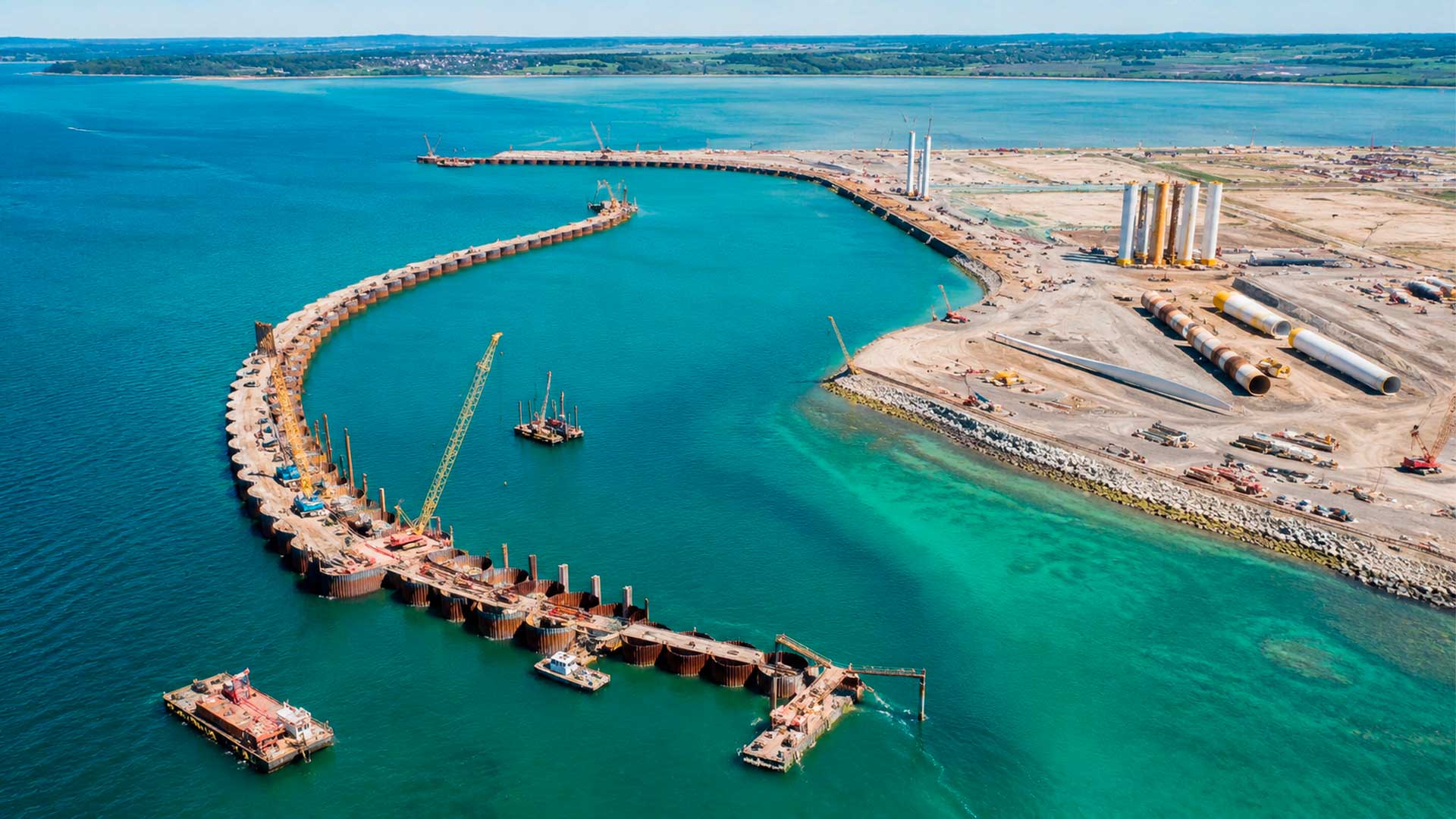

The French port has gained a new piece of industrial land to receive giant parts from the offshore sector, with a curved dike, reclaimed area, and quay made for loads that do not fit in common structures
France has transformed part of the maritime area of the port of Brest, in Brittany, into a new industrial land focused on marine renewable energies. The project used a closing dike to create a polder, a term for an area reclaimed from the water and then prepared for use on solid ground.
The project draws attention because it is not just a barrier in the sea. In practice, the structure created space to move heavy components of offshore wind turbines, metal bases, towers, and equipment that require a reinforced quay.
According to Bouygues Construction, responsible for the dike construction through Bouygues Travaux Publics Régions France, the closure is 890 meters long and was completed in November 2019.
-
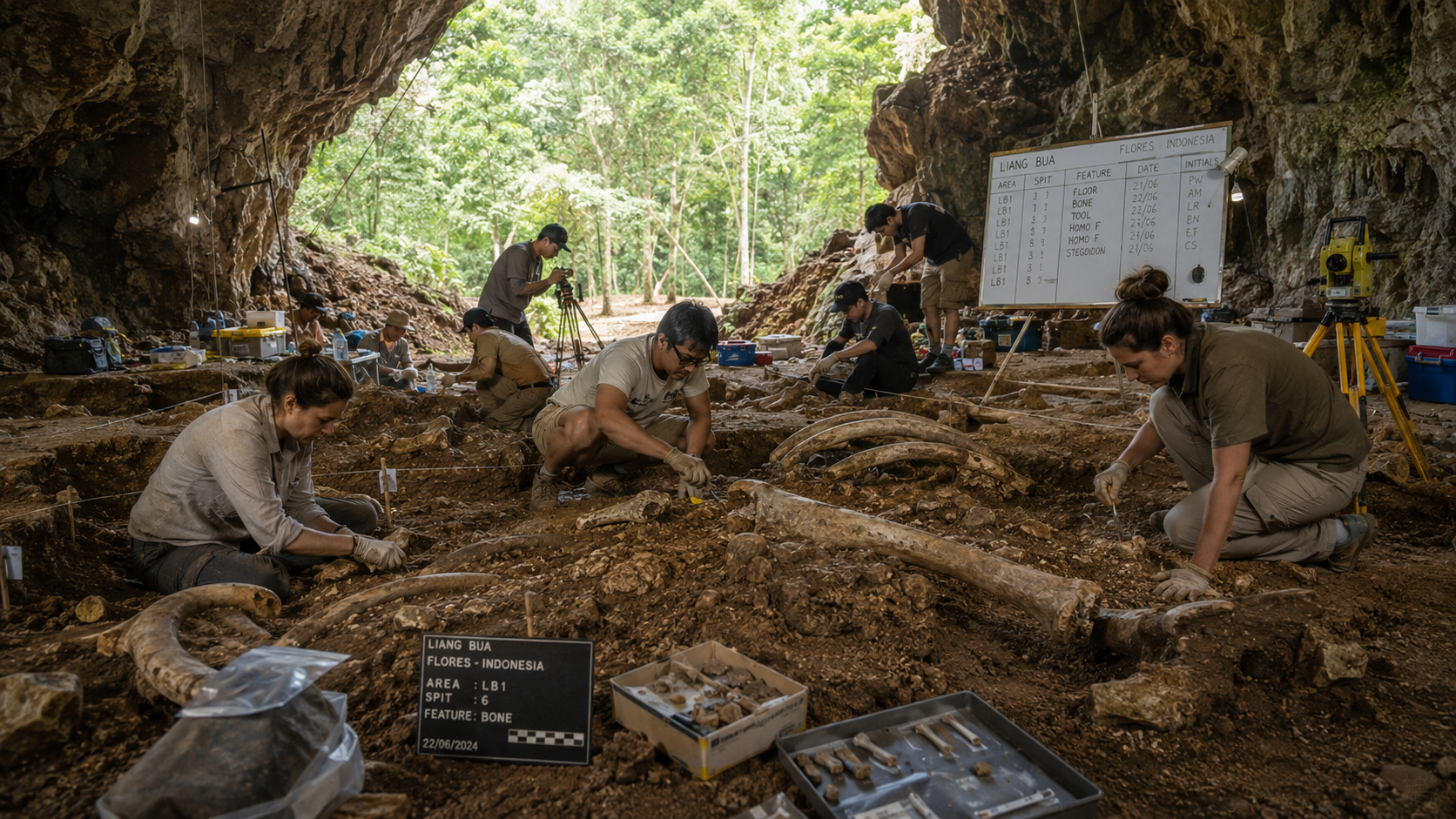
New Discovery Suggests Prehistoric “Hobbits” May Have Survived on Komodo Dragon Remains

-
Tiny 10-centimeter fish in Brazilian reservoirs may play a surprising role in reducing methane emissions, scientists find.
-
ChatGPT Creator Bets Big on Fusion Energy Machine Promising Unlimited Power for Microsoft by 2028, But Physicists Skeptical

-
Time Travel Proven Possible by Science, Yet a Mystery Still Challenges Einstein, Quantum Physics, and Top Scientists


The company states that the structure allowed the creation of a new polder of 14 hectares, with storage of 1.25 million m³ of dredged sediments from the port.


The goal of the Port of Brest was simple and expensive to execute: to gain useful area where there was once water to serve an industrial chain that works with increasingly larger parts. In the offshore sector, the bottleneck is not only at sea but also in the land space to assemble, store, and ship these pieces of equipment.
The almost 900-meter dike became the edge of a new land within the port
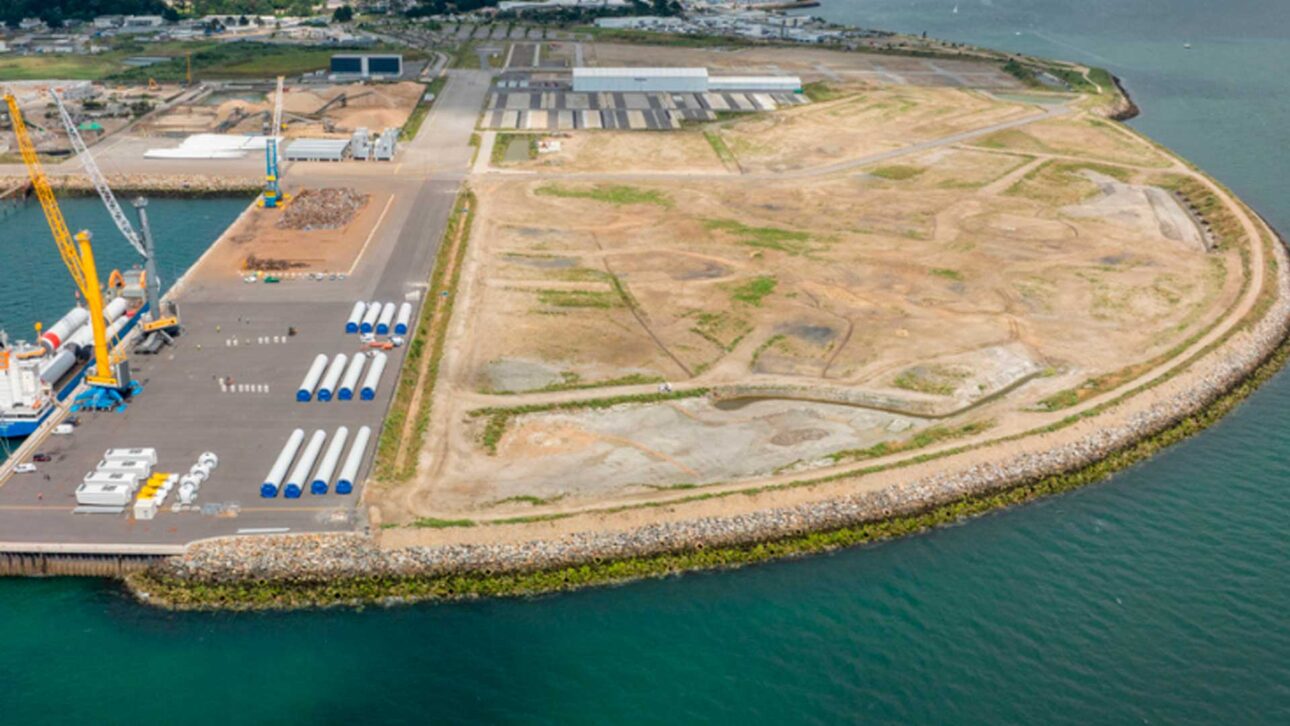
The polder was created from an area enclosed by an arc-shaped structure. After the closure, the sediments removed by dredging could be deposited within this space, forming a new port surface.
This type of solution solves two problems at once. The port expands its land area and also provides a destination for the dredged material, which would be an operational liability in channel deepening and maintenance works.
The project used 26 circular cofferdams and about 800 thousand tons of riprap, according to the technical data released by the construction company. The design also included ecological reefs capable of retaining water at low tide, a measure adopted to reduce impacts on local ecosystems.
Why creating land in the sea has become a strategy for offshore energy

The wind turbines installed at sea do not only depend on strong winds and transmission lines. Before reaching the offshore field, each set goes through a heavy stage on land, with welding, assembly, inspection, storage, and shipment.
This is where Brest enters the competition. A common port can handle containers, grains, or fuel, but it does not always support parts weighing dozens or hundreds of tons concentrated in a few square meters.
BrestPort reports that the terminal dedicated to offshore renewable energies has a 400-meter quay, a handling platform with 100 meters of depth, and load capacity between 10 and 64 tons per m². The structure also has a draft of 8 meters in the access channel and a reference depth of 12 meters alongside the quay.
This technical difference changes the type of operation the port can attract. Instead of just receiving ships, Brest began to offer space for industrial assembly linked to the fixed and floating offshore wind chain.
The area also has a connection with reinforced internal roads, necessary for transporting parts by SPMT, those self-propelled modular transporters used for giant loads. Without this, the component may reach the port, but it cannot safely circulate to the ship or the assembly area.
The terminal began targeting turbines, metallic bases, and floaters
The port expansion was not designed for a single energy project. It was planned to serve a sequence of projects linked to the energy transition in the Atlantic and the Celtic Sea.
According to Bretagne Ocean Power, 250 million euros were invested in the development of a terminal dedicated to marine renewable energies, with an industrial area of 40 hectares, a 400-meter quay, and load capacity between 10 and 64 tons per m². The entity points to Brest as one of the French industrial hubs for floating wind energy.
The port is already associated with projects like Saint-Brieuc, Yeu-Noirmoutier, and Dieppe-Le-Tréport, with companies using the platform for assembly or supply of components. The greater interest, however, is in floating wind energy, which requires even more space on land before installation at sea.
In this model, the turbine sits on a floating base anchored to the seabed. This allows for the installation of parks in deeper areas, but increases the size of the parts and pressures ports to offer open, resistant areas close to the quay.
The French bet remains alive, even with adjusted targets for offshore wind energy
France has an electricity matrix marked by the strength of nuclear energy, but also tries to expand its renewable capacity. Offshore wind is part of this strategy, even though the pace is slower than observed in countries like the United Kingdom, Denmark, and Germany.
In February 2026, Reuters reported that the new French energy framework reduced the offshore wind target to 15 GW installed by 2035, below the 18 GW discussed in previous versions. Even with the cut, the plan maintains the need to adapt ports, industrial chains, and electrical connections for offshore projects.
This detail helps to understand why an apparently local project, at the port of Brest, carries greater weight. Without coastal industrial areas capable of handling heavy loads, offshore expansion becomes slower, more expensive, and more dependent on foreign suppliers.
The project shows that renewable energy also depends on concrete, steel, and heavy logistics
The case of Brest breaks a common idea about clean energy. Before a turbine generates electricity at sea, there is a chain of civil works, dredging, steel, cranes, special transport, and port occupation.
The 14-hectare polder does not produce energy on its own. It functions as an industrial ground so that the offshore chain can operate at scale, reducing displacements and concentrating assembly, maintenance, and shipping in a prepared area.
There are also limits. Reclaiming land from the sea requires environmental studies, sediment control, soil reinforcement, and high public or private investment. In the case of Brest, the delivery of the dike in 2019 was a step within a larger transformation, with terminal areas entering operation in phases.
Even so, the logic is straightforward: the larger the turbines and offshore bases become, the more ports need to adapt. Brest bet on creating space where there was once water to compete in a market that depends as much on the wind as on engineering on land.
Do you think projects like this, which create industrial areas within the sea to support renewable energy, compensate for the cost and environmental impacts? Leave your opinion in the comments and say if Brazil should study similar models in strategic ports.