Portuguese
  Spanish


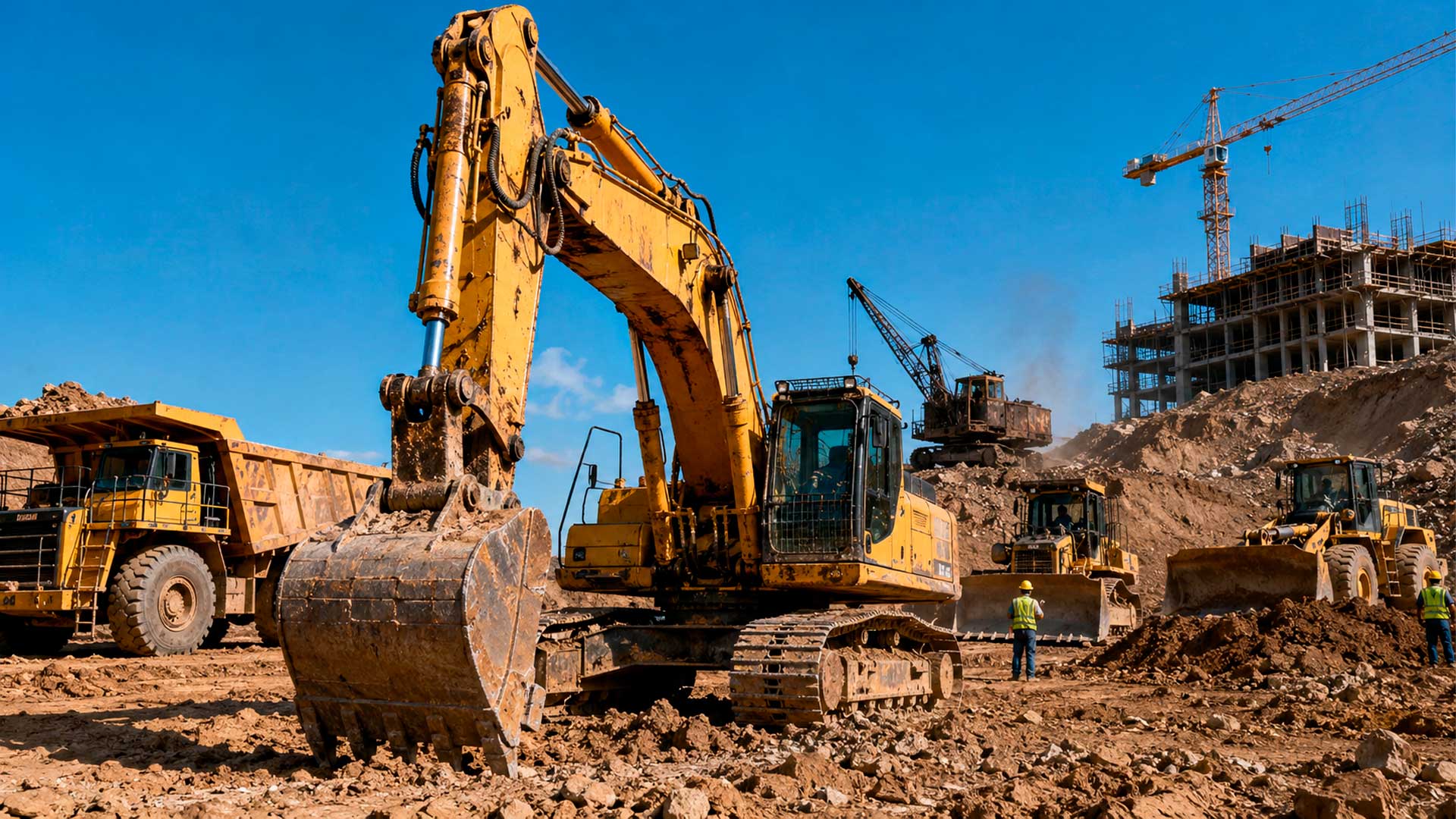

The color yellow has become almost synonymous with tractors, excavators, and heavy machinery, but this preference did not arise from fashion or chance. The explanation involves visibility on construction sites, an industrial decision by Caterpillar in the 1930s, and studies associating yellow with quicker perception in risk situations.
Anyone looking at a construction site, a mine, or a road under maintenance almost always sees the same scene: large machines, dust, operators moving around, and a lot of yellow in the middle of the terrain. The color has become a sort of visual code for heavy construction.
The main reason is simple. Yellow easily attracts attention, especially in environments where there is mud, dirt, concrete, smoke, fog, dust, and other moving vehicles.
As reported by Superinteressante on July 1, 2026, the color became associated with tractors and heavy vehicles because it stands out and follows the same logic as signs, high-visibility vests, and safety alerts.
-
U.S. Channel Highlights 20 Brazilian Innovations Leading Latin America: From Açaí to Modular Homes and Biogas

-
Dog Goes Viral for Buying Its Own Food and Carrying the Bag Home in Its Mouth

-
Unfinished 150-Year-Old Church in Brazil’s Bahia Stands Without a Roof After Railway Shifted Alagoinhas’ Center

-
Viking Textile Factory Unearthed in Denmark Reveals Ancient International Trade Links



But the story did not start with a global rule requiring all manufacturers to paint their machines this way. Before the 1930s, tractors and construction equipment appeared in various shades, such as gray, brown, black, red, and other less striking colors.
Before yellow dominated construction sites, tractors were once dark gray and even red


The most well-known shift occurred in 1931. According to Caterpillar, the brand’s machines were painted gray at the company’s inception, including the 1925 models, and switched to the Hi-Way Yellow shade in 1931. In 1979, this shade was replaced by Caterpillar Yellow, a color that visually marked the brand worldwide.
The decision was directly related to the actual use of these machines. Construction machines do not remain stationary in clean warehouses. They work on roads, mines, drainage projects, earthworks, demolitions, and places where the operator’s and surrounding workers’ vision is constantly changing.
The yellow helped solve a practical problem. A gray excavator on a cloudy day, covered in dust or operating near concrete and rock, can blend into the scenery. A yellow machine appears more quickly in the field of vision, even when the environment is visually cluttered.
This advantage was not restricted to Caterpillar. Other manufacturers began to adopt similar shades, creating the image that many people recognize from afar today. In practice, yellow stopped being just a paint choice and became a visual language of the heavy industry.
The human eye perceives yellow too quickly for it to be ignored

The preference for yellow is also supported by perception studies. Researchers affiliated with Cornell University analyzed the visual priority of yellow compared to colors like blue and red, using tasks where volunteers needed to identify which stimulus appeared first on the screen.
The article Yellow is for safety, published in the journal Psychological Research, pointed out that yellow was perceived with a temporal advantage compared to colors at the extremes of the visible spectrum. The authors concluded that the color has a sort of perceptual priority and helps explain why it frequently appears in safety contexts.
This does not mean that yellow is magical or that it eliminates accidents. The color only improves one stage of the problem, which is being seen. On a construction site, factors like machine speed, operator training, maintenance, signaling, lighting, noise, blind spots, and pedestrian circulation also come into play.
Even so, being seen earlier makes a difference. On a site with dump trucks, loaders, and excavators working simultaneously, a few meters or milliseconds can separate a safe maneuver from a collision.
The logic of yellow taxis shows that color also matters in traffic
The case of taxis helps to understand why yellow moved from construction sites to become a reference in visual safety. In a study with data from Singapore, researchers analyzed 36 months of accident records from a company operating yellow and blue taxis. Yellow vehicles had 6.1 fewer accidents per 1,000 taxis per month, a 9% reduction in accident probability compared to blue ones.
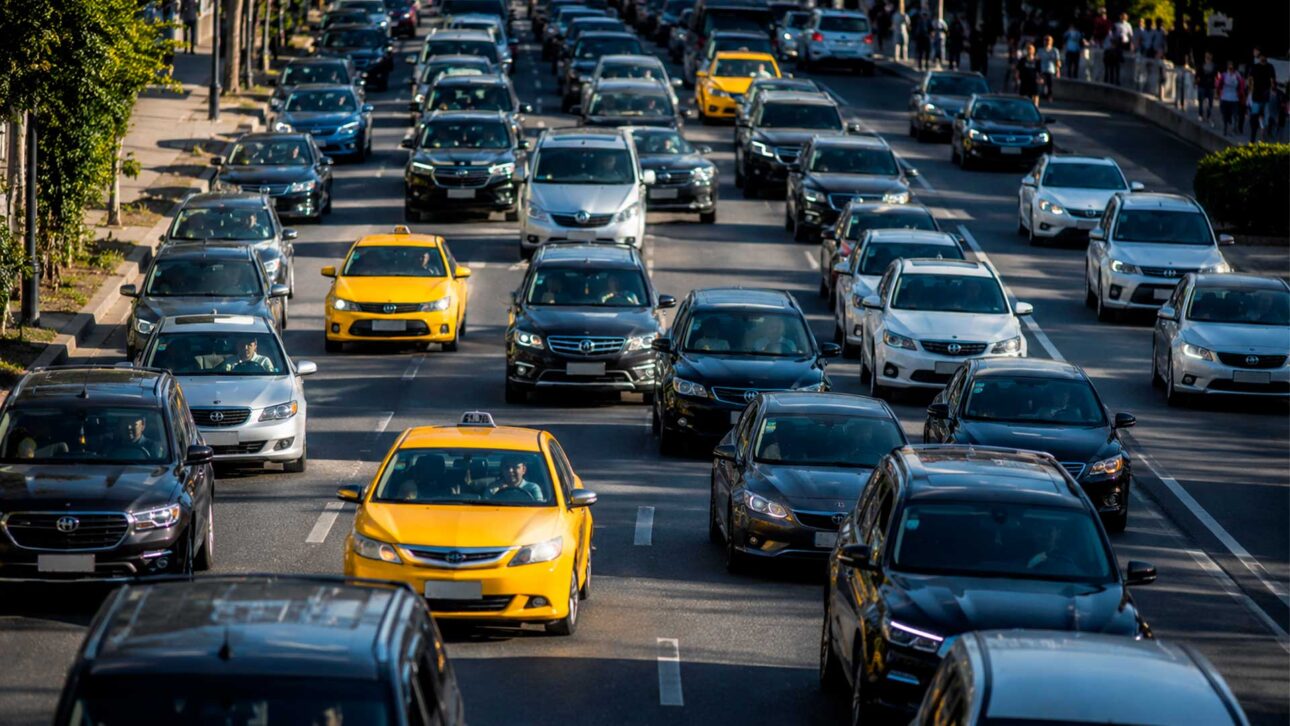
The data does not prove that any yellow vehicle will automatically be safer. The study analyzed a specific set of taxis, in a specific city, with its own traffic conditions. Even so, it reinforces an idea used for decades in signage, construction, and public transport, more visible objects tend to be noticed earlier.
In construction, the comparison makes sense because the risks are similar in some aspects. There are heavy vehicles moving, people circulating, constant noise, and the need for quick reaction. A dull color can disappear into the background. A strong color functions as a permanent warning.
Not all yellow is the same and paint alone does not secure a dangerous operation
Despite its reputation, the yellow of machines does not replace signage, area isolation, and protective equipment. In many cases, risk control depends on combined measures. A visible machine helps, but it does not solve blind spots, unstable ground, mechanical failure, or untrained operators.
OSHA, the United States occupational safety agency, treats the use of high-visibility clothing as a requirement in specific situations, such as workers exposed to public traffic in excavations and flaggers in roadworks. The logic is the same applied to tractors, those working near moving vehicles need to be noticed before the risk gets too close.
Another point is that yellow needs to maintain contrast with the environment. A machine covered in mud, ore dust, or concrete loses part of the advantage. Therefore, cleaning, reflective strips, warning lights, and sound alarms are still necessary on larger sites.
There are also variations among manufacturers. Some use a more muted yellow, others lean towards orange tones, and there are green, red, or blue agricultural equipment due to brand tradition. Even so, when it comes to heavy construction machinery, yellow remains the color most associated with visibility and alert.
The color became a construction trademark because it combines safety, visual memory, and standardization
The yellow of tractors prevailed because it works on three fronts. First, it stands out well in difficult environments. Second, it was adopted by an industry giant in 1931 and ended up influencing the market. Third, it entered the public’s mind as a sign of construction, heavy machinery, and ongoing operations.
Today, when seeing a yellow excavator parked by the roadside, many people immediately understand that there is some intervention there, even before reading a sign. This quick recognition helps drivers, workers, and pedestrians interpret the risk without relying solely on text or verbal guidance.
History shows that a painting decision can have practical consequences for almost a century. Yellow did not make tractors more powerful or more modern, but it helped make these machines stand out better in places where disappearing into the background can be costly.
Have you noticed that almost all heavy machinery follows this same color logic? Leave a comment if you think yellow really conveys more of a sense of safety in construction and roadworks or if other colors could also work.