Portuguese
  Spanish


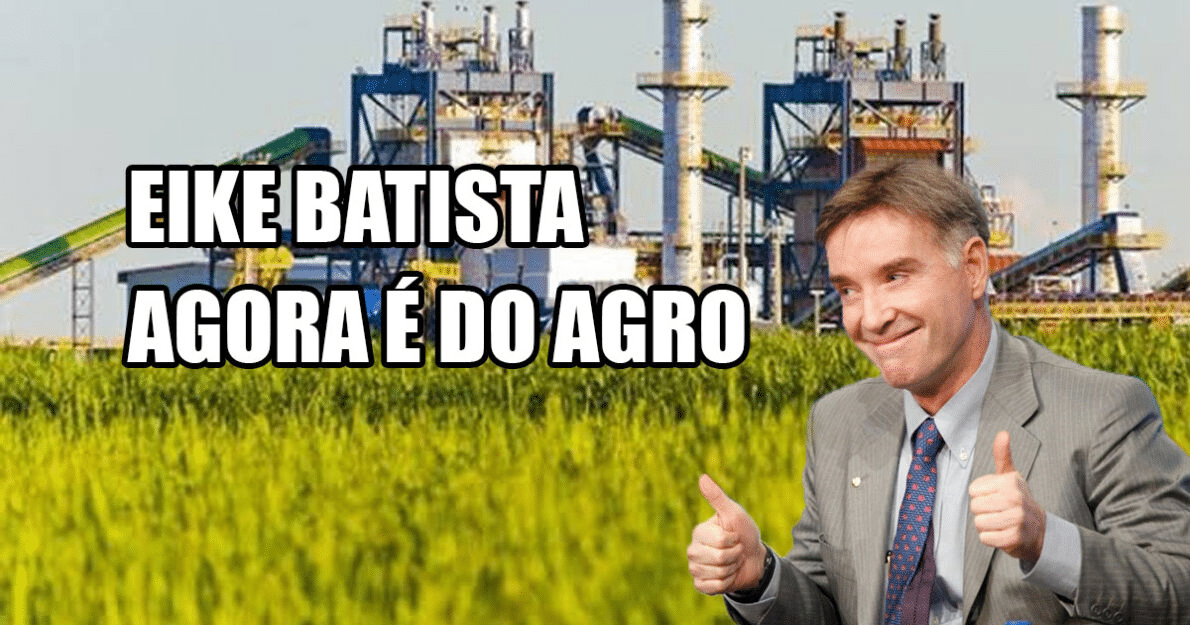

Entrepreneur Eike Batista Introduces ‘Super Cane’, Capable, According to Him, of Tripling Ethanol Production and Multiplying Biomass Generation by 12. To Finance This Revolution in Agriculture, He Launches the Cryptocurrency $EIKE, Seeking to Raise US$ 100 Million.
In the current scenario of the Brazilian agribusiness, technological innovations have been the key to increasing productivity and sustainability.
Visionary entrepreneurs are constantly seeking solutions that can transform the sector and position Brazil as a leader in renewable energy.
In this context, an initiative emerges that promises to redefine the standards of the national sugar-alcohol industry, uniting advanced biotechnology, strategic investments, and new forms of digital financing.
-
Rare fox feared “extinct” found alive on Caribbean island after over two decades without official sightings

-
Facing Labor Shortage, Japan Plans to Invest $34 Million to Attract Foreign Workers in Construction, Healthcare, Industry, and Commerce
-
21-Year-Old Brazilian Student Turns Homemade Popsicle Hobby into $100,000-a-Month Business

-
Australia Dumps Hundreds of Thousands of Tons of Gravel into Rivers to Restore Natural Barriers and Reverse 150 Years of Erosion



The entrepreneur Eike Batista recently announced an ambitious project involving a genetically enhanced variety of sugarcane, called ‘super cane’.
This plant has the capacity to produce up to three times more ethanol and generate 12 times more biomass compared to traditional cane.
To enable the large-scale expansion of this crop, Eike formed a partnership that resulted in the raising of US$ 500 million, with some of the funding coming from investors in the United Arab Emirates.
The amount will be applied to the initial cultivation of 70 thousand hectares of this new variety near the Port of Açu, in Rio de Janeiro.
According to Brazil Journal, in addition to traditional investment, the entrepreneur launched the cryptocurrency $EIKE, aiming to raise an additional US$ 100 million for the project.
The proposal of the digital currency is to offer a new model of financial participation, allowing investors to buy tokens that will entitle them to 10% of the future profits of the initiative.
The movement reflects a growing trend in the market, where agricultural projects seek decentralized financing through blockchain.
The Origin of the ‘Super Cane’
The trajectory of the ‘super cane’ dates back to the early 2000s, when manager Luis Carlos Rubio and agronomist Sizuo Matsuoka joined forces to genetically enhance sugarcane.
In 2002, Rubio, then part of Votorantim Novos Negócios, collaborated with Matsuoka, a researcher at the Federal University of São Carlos (UFSCar), on a project aimed at increasing the productivity and resilience of the plant.
The result was the creation of CanaVialis, an innovative company in the sector.
The success of CanaVialis attracted the attention of major corporations, and in 2008, the company was acquired by Monsanto for US$ 290 million.
However, in 2015, the multinational discontinued the business, temporarily halting the advancement of research.
From that point, the creators sought new ways to continue the project, betting on the resumption of the development of ‘super cane’ through strategic partnerships.
The Partnership with Eike Batista
In 2011, after leaving CanaVialis, Rubio and Matsuoka founded Vignis, a company dedicated to the development of ‘super cane’.
Four years later, Eike Batista invested in the project, initiating the experimental cultivation of the new variety in areas near the Port of Açu.
However, financial challenges and legal issues faced by the entrepreneur in 2017 led to the shutdown of Vignis, which eventually declared bankruptcy.
Determined to revive the initiative, Eike and the researchers reconnected in 2024, resulting in a new agreement.
This time, Batista secured a stake in BRXe, a company that now holds the technology of the ‘super cane’, conditioned on successful fundraising.
The project received new momentum, and with the support of international investors, gained scale to transform national biofuel production.
Robust Investment and Planned Expansion
In February 2025, Eike Batista announced the acquisition of US$ 500 million in investments, coming from a infrastructure fund structured by entrepreneur Mário Garnero.
The fund includes the participation of the Abu Dhabi Investment Group (ADIG) and Garnero himself, ensuring the necessary capital for the acquisition and operation of the first module of the project.
The initial plan envisions the production of 1 billion liters of ethanol and 1 million tons of biomass annually.
The interest of investors from the Middle East is due to the need for renewable fuels for aviation, with ethanol being an essential input for the production of sustainable aviation fuel (SAF), used by Emirates and other airlines.
Launch of the Cryptocurrency $EIKE
To further diversify funding sources, Eike Batista launched the cryptocurrency $EIKE, aiming to raise an additional US$ 100 million.
The initial offering envisions the issuance of 100 million tokens, sold at US$ 1 each, primarily to US investors.
Token holders will have the right to 10% of the future profits of the venture, a strategy that aligns investors’ financial interests with the project’s success.
The cryptocurrency was developed on the Solana blockchain and has a four-year lock-up period for founders, ensuring a necessary period for the venture to achieve anticipated profitability.
Financial Projections and Future Expansion
The business plan anticipates the implementation of multiple production modules. Each module will begin with planting 50 hectares in the first year, progressively expanding to 70 thousand hectares in full operation.
The expectation is that, with the increase in demand for renewable fuels, ‘super cane’ will become a strategic product for the global energy transition.
In addition to ethanol production, the project includes the development of sustainable bioplastics from the generated biomass, a promising market with potential to reduce dependence on petroleum-derived plastics.
This initiative reinforces the project’s environmental commitment, aligning with global goals for carbon emission reduction and promoting biodegradable materials.
The Impact of ‘Super Cane’ on Agribusiness
If successful, ‘super cane’ could represent a revolution in the ethanol and biofuel industry.
The high productivity of the new variety promises to make Brazil even more competitive in the global market, solidifying its position as the leading supplier of biofuels for the energy transition.
The initiative could also generate thousands of direct and indirect jobs, positively impacting producing regions.
With an innovative funding model and support from major investors, Eike Batista bets on the revival of his business empire, now with a renewed focus on sustainability and technological innovation.