






 Portuguese
  Spanish


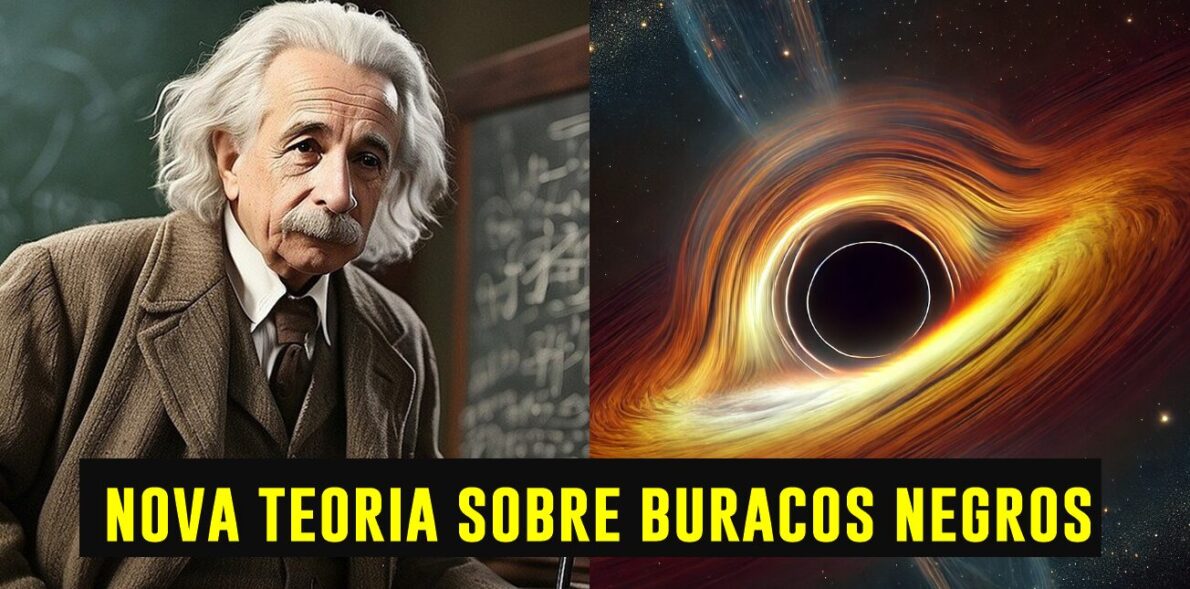

A Revolutionary Study Challenges Einstein’s Theory, Suggesting That Black Holes May Actually Be Frozen Stars. Discover How This New Research Could Change Our Understanding of the Universe!
Black holes are one of the greatest mysteries of the universe, challenging physics and raising numerous paradoxes over the years. However, a new study presents a theory that could radically alter our understanding of these enigmatic entities, directly contradicting Albert Einstein’s theory.
According to the research, black holes could actually be frozen stars — remnants of stars that have cooled and ceased to emit light or heat. This idea, while intriguing, could solve many of the mysteries related to black holes.
What Are Frozen Stars?
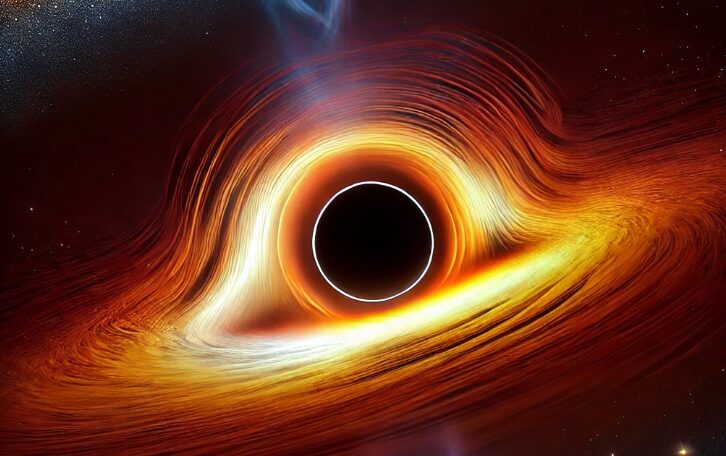
Frozen stars, also known as black dwarfs, are a theoretical final stage of the stellar life cycle. When a star exhausts all its fuel, it goes through several transformations, such as becoming a white dwarf.
-
Brazilian Researcher Develops Protein Supplement from Tilapia Waste, Combining Innovation and Sustainability with Economic Potential

-
Women in São Paulo Unknowingly Tracked by Coin-Sized Tags Hidden in Cars and Belongings, Raising Stalking Concerns
-
Near a $750 million AI data center in Brazil, a resident’s well runs dry, leaving her unable to afford the $25,000 needed for repairs.

-
16-Year-Old from Brazil’s Sertão Wins Young Scientist Award for AI Predicting Rainfall with 94.5% Accuracy to Aid Farmers


Over trillions of years, white dwarfs cool to the point that they stop emitting visible radiation, turning into frozen stars. The question is that, given the universe is “only” 13.7 billion years old, there hasn’t been enough time for any star to reach this stage.
However, the new study suggests that certain conditions could allow these stars to exist at an earlier stage than previously thought.
The Problem with the Traditional Black Hole Model
Albert Einstein’s general theory of relativity, proposed in 1915, describes black holes as regions of space containing singularities — points of infinite density — and surrounded by an event horizon, a kind of boundary that prevents anything from escaping, including light. However, this theory, while widely accepted, faces significant challenges.
First, the idea of singularities is complicated by the fact that, in physics, it is difficult to conceive of infinities in nature. Everything we know is finite, which makes the existence of singularities in black holes a controversial issue.
Moreover, Stephen Hawking’s radiation paradox, which suggests that black holes can emit radiation and lose mass, further complicates the classical model. Hawking’s theory implies that, eventually, black holes may completely evaporate.
But this would contradict the idea that nothing can escape from a black hole. And if a black hole were to disappear, the information it contained would be destroyed, violating one of the fundamental laws of physics: the conservation of information.
The Solution: Black Holes as Frozen Stars?
The recent study, led by Ramy Brustein, a physics professor at Ben-Gurion University, proposes that many of the paradoxes associated with black holes could be resolved by considering them as frozen stars. According to the researchers, these stars do not possess a singularity or an event horizon, eliminating theoretical contradictions.
Additionally, the theoretical values of properties such as entropy and thermal radiation, observed in black holes, are similar to those of frozen stars. This suggests that these ultracompact objects could “perfectly mimic” the observable properties of a black hole without violating any of the fundamental laws of physics.
In other words, the theory provides an explanation for phenomena such as Hawking radiation and information preservation.
The possibility that black holes are, in fact, frozen stars challenges modern physics and the assumptions we have held for over a century. If this theory is proven true, it could rewrite our understanding of stellar evolution and the laws of the universe.


