






 Portuguese
  Spanish


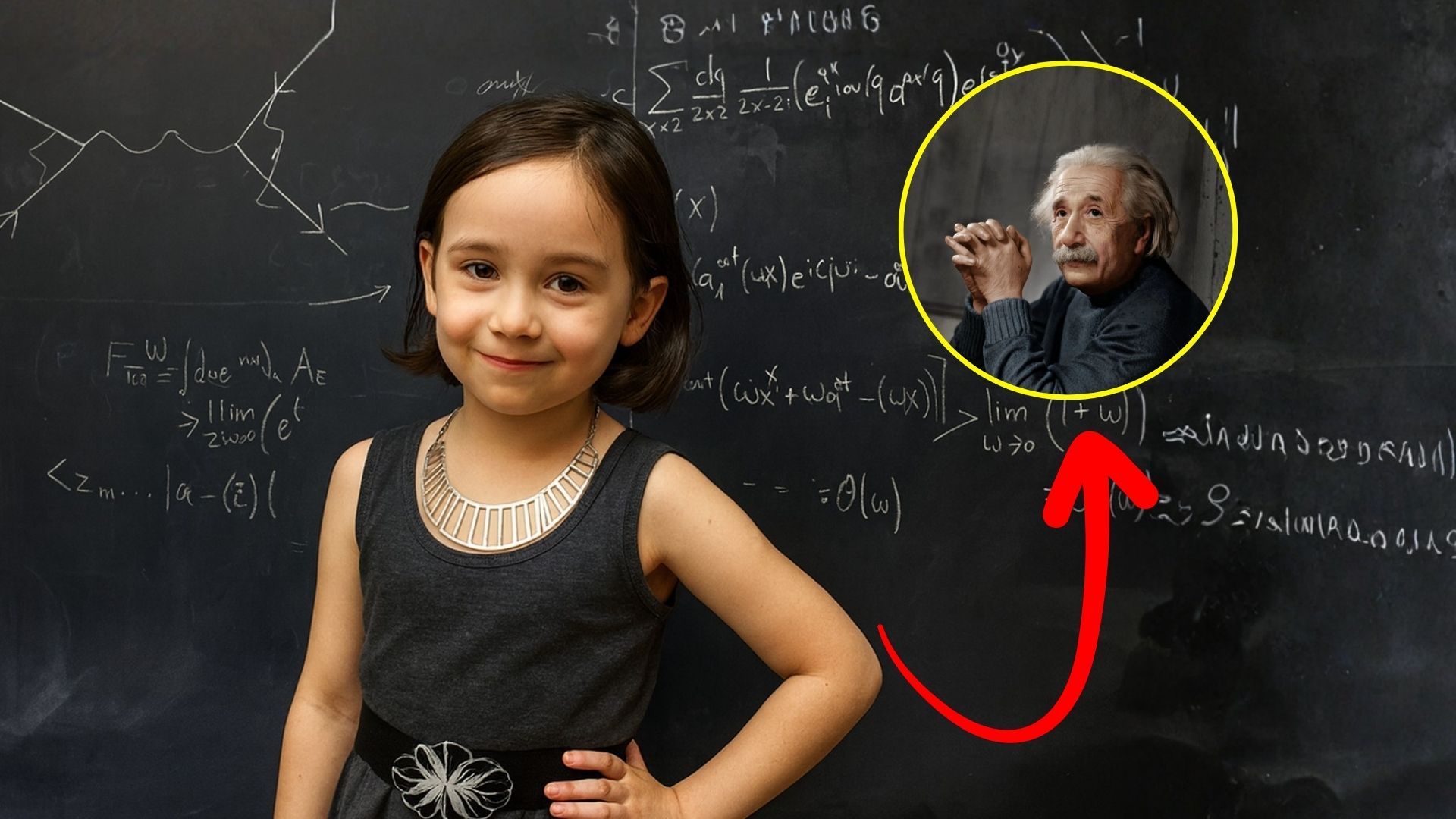


Sabrina Gonzalez Pasterski’s Trajectory Wins Frequent Reinterpretations in the Media and Sparks Interest in Her Impact on Research on Quantum Gravity and Celestial Holography.
Theoretical physicist Sabrina Gonzalez Pasterski, born in 1993 in Chicago, has become a frequent presence in the international press after being featured in various reports as “the next Einstein” and “the new genius of quantum gravity.”
The expressions, used by science and technology media, aim to summarize the impact attributed by researchers to her contributions in areas such as black holes, gravitational waves, and field theory.
Born to a Cuban immigrant, graduated from MIT and Harvard, she currently works at the Perimeter Institute for Theoretical Physics in Canada, where she leads a research front in celestial holography.
-
Giant Stone Spheres on New Zealand Beach Reveal Crystal Interiors Formed Over 4 Million Years

-
10 Lesser-Known Countries with Surprising Attractions That Even Seasoned Travelers Find Intriguing

-
Forklift Operator Salaries at Brazilian Retail Giants in 2026: Over R$2,200 in São Paulo, Market Ceiling Exceeds R$3,000, with Attractive Benefits Package
-
Daughter Receives Monthly Support from Father in Brazil, Learns It May Be Taxable Income if Not Declared as a Gift


In interviews, Sabrina usually states that she prefers to be associated with the content of her research rather than comparative labels.
Nonetheless, her name remains linked to discoveries that have gained prominence in specialized publications and analyses by quantum gravity physicists.
From Youth to MIT
Sabrina attended public schools in Chicago and joined, while still a teenager, programs aimed at students with advanced performance in mathematics and sciences.
Between the ages of 10 and 14, she began the process of rebuilding an experimental aircraft at home with her father – a lawyer and electrical engineer – following regulations established by the U.S. aviation authority.

Her first solo flight occurred at 16, after receiving certification from instructors.
In 2010, she graduated from the Illinois Mathematics and Science Academy and applied to the Massachusetts Institute of Technology (MIT).
Initially placed on a waitlist, she was eventually admitted and completed her Physics degree in three years, with a GPA of 5.0 out of 5.0, a performance considered rare among students at the institution, according to professors and administrators cited in profiles published in the U.S. press.
Research at MIT and Advancement to Harvard
During her undergraduate studies, Sabrina joined the group of the Compact Muon Solenoid (CMS) experiment at the Large Hadron Collider (LHC).
Researchers who followed the project state that the experience in high-energy physics helped direct her interest towards fundamental questions involving particles, gravity, and spacetime.
After MIT, she was accepted into the PhD program in Physics at Harvard and began working with Andrew Strominger, a leading figure in quantum gravity.
In her first months at the university, she described the spin memory effect, a theoretical phenomenon that relates gravitational waves to persistent changes in spacetime geometry.
This idea is being studied by groups investigating implications of LIGO detections.

In 2015, she published a paper that completed the so-called Pasterski–Strominger–Zhiboedov (PSZ) triangle, which specialists have pointed out as an important piece to connect asymptotic symmetries, low-energy particles, and gravitational memory effects.
The work came to be included in discussions about possible holographic formulations of gravity.
Sabrina completed her PhD in 2019 and then joined the Princeton Center for Theoretical Science (PCTS) for a postdoctoral position.
Celestial Holography and Studies on Spacetime
Since 2021, Sabrina has been part of the research team at the Perimeter Institute, where she founded the Celestial Holography Initiative.
The group investigates whether “almost flat” universes, like ours at large scales, can be described by quantum theories defined on a distant two-dimensional surface.
According to physicists involved in the project, this approach aims to unify concepts of quantum information, scattering amplitudes, and gravitational symmetries.

Her work also involves the analysis of infinite symmetries of the S-matrix, gravitational memory effects, and the rewriting of scattering amplitudes in terms of correlations of two-dimensional conformal theories.
International reports published in 2023 stated that this line of research has the potential to influence debates on the structure of spacetime.
Citations by Hawking and the Label of “New Einstein”
The recurrent use of the nickname “new Einstein” is related, among other factors, to the fact that Stephen Hawking and collaborators cited Sabrina’s work in a 2016 paper on the so-called “soft hair” of black holes, part of the discussion on the information paradox.
Researchers in the field believe that this line of investigation is relevant for understanding how black holes store and release information.
Additionally, her trajectory has attracted the attention of companies linked to the aerospace sector.
Biographical profiles report that Sabrina received job offers from organizations such as Blue Origin and NASA, information confirmed in interviews she gave in previous years.

On social media, there were versions claiming that Jeff Bezos personally called her to invite her to travel to space.
There is no documented record of this dialogue in journalistic or academic sources; fact-checking experts state that the story has solidified as a viral narrative without verification.
Action as a Researcher and Encouragement for Education
After her time at Princeton, Sabrina expanded her role as an independent researcher.
At Perimeter, she is part of the Quantum Fields and Strings group and participates in the organization of the Simons Collaboration on Celestial Holography, a consortium that brings together research teams from institutions such as Harvard and Cambridge.
Outside the lab, she develops initiatives to encourage scientific education.
She has been invited to initiatives linked to the Let Girls Learn program, participated in events at the White House during the Obama administration, and was included in the Forbes 30 Under 30 list in the Science category.
Educators and communicators cite her as an example of a trajectory that encourages girls’ participation in science, technology, engineering, and mathematics fields.


He?