Portuguese
  Spanish




Region Is the Fastest Growing in Brazil Driven by Demand and Direct Investments from China in Infrastructure and Agribusiness.
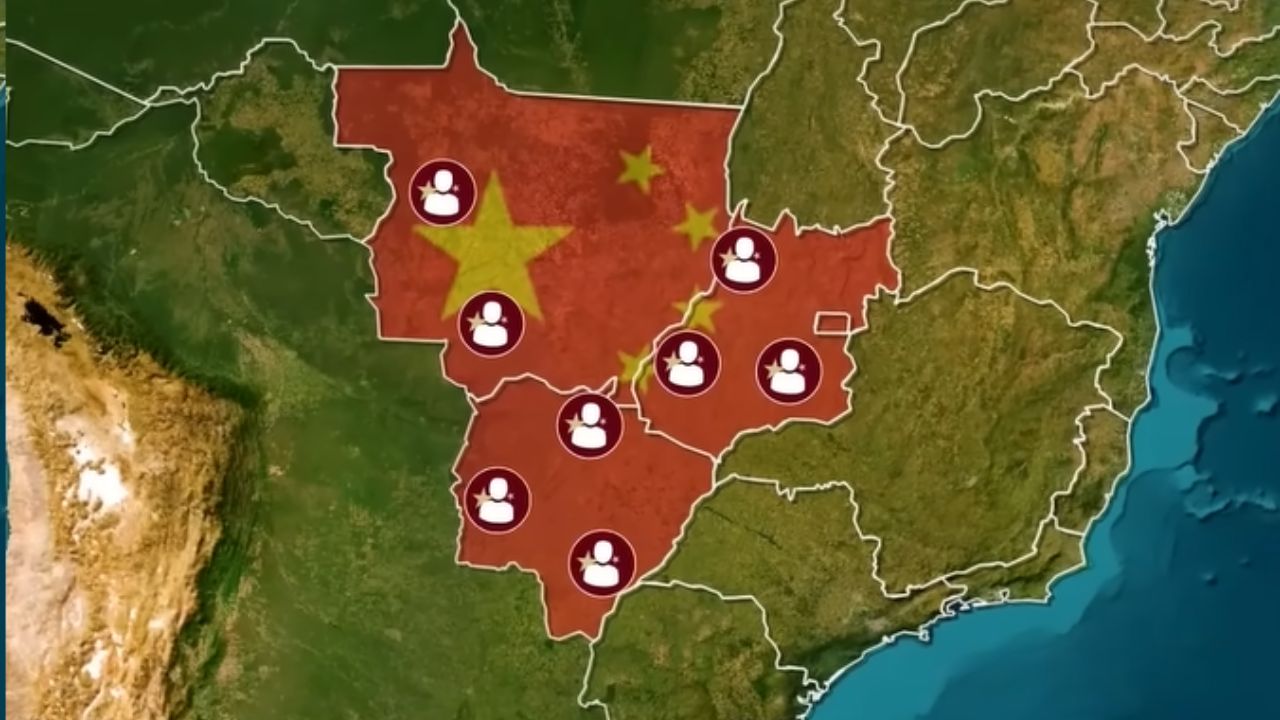
The Brazilian Midwest, comprised of three states and the Federal District, is establishing itself as the main trading partner of China in Latin America. According to an analysis by Capital Finance, this relationship has transformed the region, once overlooked, into the most developed in the country. The impact is visible: 46% of all soybean imported by China comes directly from the Midwest, making one Brazilian subdivision sustain all the Chinese demand for the grain.
In just 15 years, the local economy tripled. Population growth is keeping pace: between 2010 and 2022, the Midwest population increased by 16%, the highest rate among all Brazilian regions. But why is this closeness with China so intense? The answer lies in the transformation of a historically poor region into a global agricultural powerhouse, which perfectly meets the needs of the Asian giant.
From Forgotten Region to Agricultural Powerhouse
Historically, the Midwest was an underdeveloped and even forgotten region of Brazil. Located more than 650 km from the coast, the three states were far from major economic centers, such as São Paulo and Rio de Janeiro. For most of Brazil’s history, the entire region far from the coast was therefore almost ignored. The area, a transition between the Cerrado, the Amazon, and the Pantanal, was difficult to access.
-
At 17, she hand-painted her first watercolor design for school uniforms; her brand grew without investors, sold 135,000 pieces, and aims for $3 million in revenue by 2026.

-
Shell Discovers Intact Early 19th-Century Wooden Shipwreck in the Gulf of Mexico at Over 1,300 Meters Deep
-
Brazilian Entrepreneur Turns Door-to-Door Jewelry Sales into a Family Business Empire with Over 70 Stores

-
$75 Million Bridge in Brazil Opens to Connect Cities, Create Jobs, and Cut Travel Time from 30 to 2 Minutes; Spanning 1.24 km, It’s Among the Country’s Largest and Ends Decades of Ferry Queues.




Due to the soil of the Cerrado not being considered fertile at the time, the Midwest remained stagnant. In the mid-1950s, only 3% of Brazil’s wealth came from the region. The symbolic turnaround came with the creation of Brasília in 1960. The new capital was not just a political project for interior development; it was a geographic gesture for national integration. By building a modern city in the middle of the Cerrado, Brazil forced infrastructure to advance into the interior, bringing roads, energy, and population flows from the Southeast, Northeast, and South to the heart of the country.
The second major turnaround occurred in the 1970s. While the government invested in agricultural colonization programs, encouraging southerners to migrate to the Cerrado, the Embrapa (Brazilian Agricultural Research Company) was founded in 1973. The institution was crucial in recovering the soil of the Cerrado, transforming it into one of the most productive areas on the planet and allowing the region to have multiple harvests per year.
The Parallel Awakening of Giants
While Brazil was pushing its infrastructure into the interior in the 1960s, China was experiencing a moment of stagnation. During the same period, the Asian country was immersed in the economic isolation of the Maoist era. Agriculture was collective, not very efficient, and the country faced shortages and famine. It was in the 1970s and 1980s that their trajectories began to converge.
In the same decade that Embrapa revolutionized the Cerrado, China began its economic reforms under Deng Xiaoping, leaving behind decades of isolation and opening up to the global market. The result was rapid growth and the lifting of at least 500 million people out of extreme poverty. Brazil learned to produce on a large scale in the Midwest, while China began to consume on a large scale.
In the 1990s and 2000s, the “match” was solidified. The Midwest mechanized its agriculture, while China became the largest food importer on the planet, driven by its urban and industrial growth. When China began to massively import soy and meat to feed its population and its pig herd (the largest in the world), the epicenter of this production in Brazil was already the Midwest, especially Mato Grosso and Goiás.
China: From Buyer to Strategic Investor
The movement gained a new dimension in the 2010s and 2020s: logistics integration. The government and investors began focusing on railways and routes to the north, such as the Northern-Southern Railway, BR-163, and the ports of the Northern Arc (Santarém, Barcarena, São Luís). These projects shortened the distance between the Midwest and Asia, directly connecting the Cerrado to the Atlantic ports linked to the Panama Canal and, consequently, the Pacific.
This optimization led China to increasingly invest directly in the Midwest. Since 2015, Chinese companies and institutions have been investing capital in logistics and energy infrastructure projects in the region. According to Capital Finance, this is why the Midwest is becoming the “backyard of China”, focusing on railways, international routes, industrial hubs, and energy transmission.
The Map of Chinese Investments
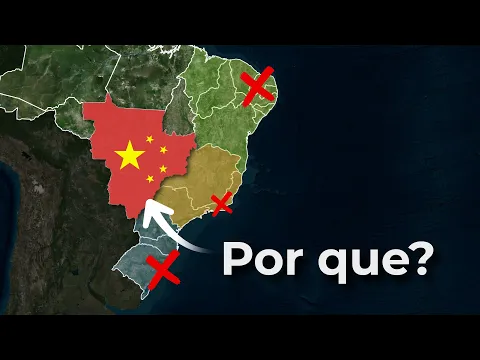

The Chinese investments are not just promises; they are materializing into strategic projects across the three states, aiming to streamline agricultural production more efficiently.
In Mato Grosso, the highlights include the Central-West Integration Railway (FICO), connecting Mara Rosa (GO) to Água Boa (MT), and the Ferrogrão, which connects Sinop to Mirituba (PA), both with strong support from Chinese companies. In the electricity sector, State Grid (Chinese state-owned company) operates transmission lines that pass through cities like Sinop. In Sorriso, the Chinese group Haid plans to install a seed and cotton processing factory.
In Mato Grosso do Sul, the main focus of Chinese activity is the Bioceanic Route, the international highway corridor that starts from Porto Murtinho, crosses Paraguay and Argentina to the ports of Chile, shortening transport time to Asia by about two weeks. The international bridge between Porto Murtinho and Carmelo Peralta (Paraguay) is in the final phase. Chinese companies have also expressed interest in Nova Ferroeste (Maracaju to the Port of Paranaguá), while China Three Gorges operates the Jupiá and Ilha Solteira plants.
In Goiás, the Northern-Southern Railway operates actively, and one of the most strategic projects is the Brazil-China Industrial Hub in Águas Lindas de Goiás. The site is receiving Chinese companies from the energy, drones, and electronics sectors. Additionally, the Chinese company SIMOC operates in niobium and phosphate mines in Catalão, and State Grid also operates in the state’s electrical infrastructure.
A Structural Partnership
China is now the main economic engine of the Brazilian Midwest. Between 2023 and 2025 alone, the states in the region exported over 22 billion dollars to the Asian country, with a focus on soy, corn, meat, cotton, and cellulose. Chinese state-owned enterprises lead investments in infrastructure that reinforce the flow of this production.
The reason for this deep alliance is simple: since a large part of Chinese territory is unproductive for agriculture, they need a stable partner to meet their grain demand. And that partner, according to Capital Finance, is the Brazilian Midwest. The Chinese presence is not only commercial but structural. China needs the Midwest now more than ever, and this is the exact reason why the region is becoming its “backyard”.
Do you agree with this change? Do you think it impacts the local market? Leave your opinion in the comments, we want to hear from those who live this experience.