






 Portuguese
  Spanish


WMO indicates a high probability of El Niño between May and July 2026, with above-average rainfall in Southern Brazil and risk of prolonged drought in the North and Northeast, after the Equatorial Pacific registered rapid warming of surface waters at the end of climatic neutrality, according to Inmet.
The Equatorial Pacific is warming faster than models predicted, and signs point to the formation of El Niño as early as May, a phenomenon that could unevenly redistribute rainfall in Brazil in the coming months. The WMO confirmed that sea surface temperatures in the central and eastern equatorial Pacific are rising rapidly after a period of neutrality at the beginning of the year, and the entity’s head of climate prediction, Wilfran Moufouma Okia, stated that climate models “are strongly aligned” in indicating that the phenomenon will begin, followed by progressive intensification. For Brazil, this means that rainfall will increase in some regions and decrease in others, a pattern that historically repeats every time El Niño establishes itself.
The National Institute of Meteorology (Inmet) details how rainfall is expected to behave in each part of the country. In Southern Brazil, the trend is for above-average precipitation, a scenario that increases the risk of floods, landslides, and river overflows in regions that are already vulnerable to extreme events. In the North and Northeast areas, the effect is the opposite: El Niño usually reduces rainfall volume and causes prolonged drought, a condition that threatens reservoirs, rainfed agriculture, and communities that depend on regular rainfall for their water supply. The concrete impact will depend on the intensity of the phenomenon, the time of year, and the interaction with other climate systems that act over Brazilian territory.
What indicates that El Niño is forming and will alter rainfall

The formation of El Niño is declared when the waters of the central and eastern Equatorial Pacific remain warmer than average for a prolonged period, a change that modifies atmospheric circulation patterns on a global scale.
-
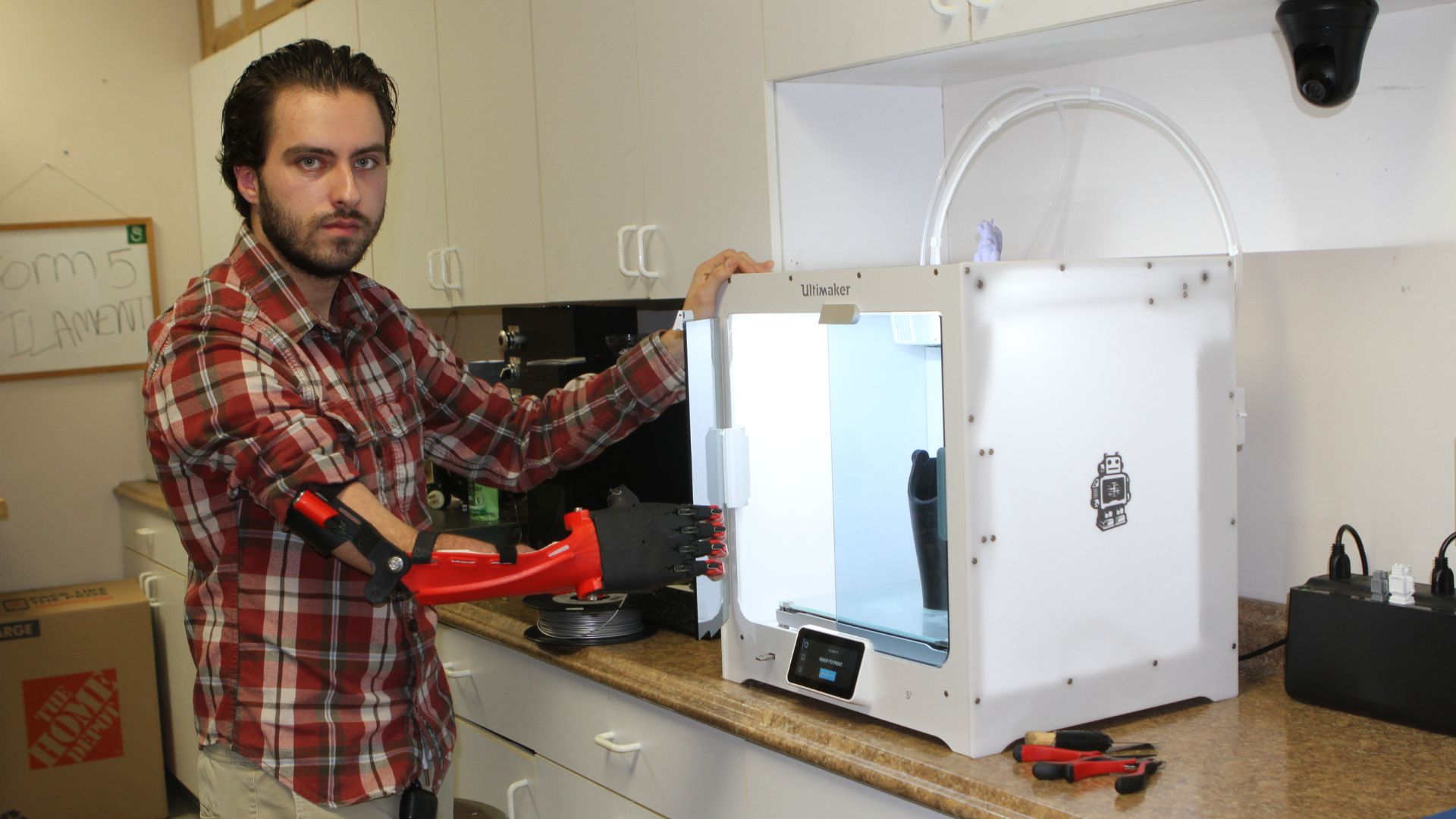
Student Creates 3D-Printed Prosthetics from Recycled Plastic, Turning Waste into Affordable Custom Arms

-
Climate Scientist Who “Proved” Humanity Is Warming the Earth

-
NASA Targets Saturn’s Icy Moon Titan as a Waystation for Interplanetary Travel, Utilizing Its Resources for Fuel and Astronaut Support

-
Researchers Revolutionize Nanotechnology with Rocket-Inspired Modular Nanorobot for Efficient Microscopic Missions



The warming observed in recent weeks represented a significant change from the beginning of the year, when the ocean maintained neutral conditions, and the speed of the transition surprised some analysts because it compressed into a few weeks a process that in previous years took months to consolidate.
The WMO’s climate models now converge on the same conclusion: El Niño is expected to establish itself between May and July, with a high probability of intensification in the second half of 2026.
The alignment of the models is what gives confidence to the forecast. When different climate modeling systems operated by distinct agencies around the world reach the same conclusion, the margin of error decreases considerably, and Moufouma Okia highlighted that the level of agreement between the models at this time is high.
The WMO notes that there are still limitations in forecasts made during this period because of the so-called “spring predictability barrier” in the Northern Hemisphere, a statistical phenomenon that reduces the accuracy of models during the seasonal transition, but even with this caution, the indication of El Niño for 2026 is robust.
How rainfall is expected to behave in Southern Brazil with El Niño
The South is the Brazilian region most directly affected by the increase in rainfall that El Niño causes. The phenomenon alters the position of the subtropical jet stream, directing moist air masses from the Amazon and the Pacific to the states of Rio Grande do Sul, Santa Catarina, and Paraná with greater frequency and intensity than normal.
In practice, this translates to accumulated precipitation above average for consecutive months, a condition that saturates the soil, raises river levels, and creates an environment conducive to floods that in the recent past have caused destruction on a catastrophic scale.
The quarter between May and July will be the initial period of impact. The WMO predicts that temperatures will be above average in large parts of the planet during this interval, and in Southern Brazil, the heat combined with high humidity can result not only in a greater volume of rain but also in a higher frequency of severe events such as thunderstorms, gales, and hail formation.
For states still recovering from the effects of the 2015 El Niño and recent floods, the return of the phenomenon requires advance preparation that includes cleaning drainage channels, reinforcing slopes, and planning evacuations in riverside communities.
What the North and Northeast can expect with the reduction in rainfall
At the other end of the spectrum, the North and Northeast regions of Brazil face the opposite prospect. El Niño reduces rainfall in these areas by altering the position of the Intertropical Convergence Zone, an atmospheric system that normally brings moisture to the country’s equatorial belt and which, during the phenomenon, shifts northward, moving away from Brazilian territory.
The result is a prolonged dry season, a drop in reservoir levels, and water stress that affects both agriculture and urban supply in cities that depend on regular rainfall to keep their collection systems functioning.
The vulnerability of these regions to reduced rainfall is historically documented. Prolonged droughts associated with El Niño have already caused supply crises in the Northeast in previous episodes, and rural communities that practice dryland farming (without irrigation) are the most exposed because a crop lost due to lack of water can mean food insecurity for entire families.
Inmet monitors the conditions and will issue alerts as the phenomenon develops, but preparation in at-risk regions needs to begin before the rains stop falling.
What is known about the intensity of El Niño in 2026
The WMO indicates that the event could be significant throughout 2026, although it does not use the term “super El Niño” as it is not a standardized technical classification.
The final intensity will depend on variables that include the rate of warming of the Pacific in the coming months, the interaction with regional atmospheric circulation patterns, and the influence of warmer oceans which, according to the organization, can amplify the effects of the phenomenon without necessarily increasing its frequency. The next official update from the WMO on the climate scenario is scheduled for the end of May, at which time more recent data will allow for refining the projections.
For Brazil, the uncertainty about the intensity does not diminish the need for preparation. If El Niño is moderate, rainfall in the South will be above average and the drought in the North and Northeast will be noticeable but manageable.
If it is strong, the extremes are amplified and the country could simultaneously face floods in the South and a water crisis in the North, a scenario that requires national civil defense coordination and resources that are rarely available when they are most needed. The difference between a manageable El Niño and a disastrous one lies in the preparation made before it reaches maximum intensity.
And you, do you live in a region that is usually affected by El Niño? Have you noticed a change in the rainfall pattern in your city? Leave your opinion in the comments.


