Portuguese
  Spanish


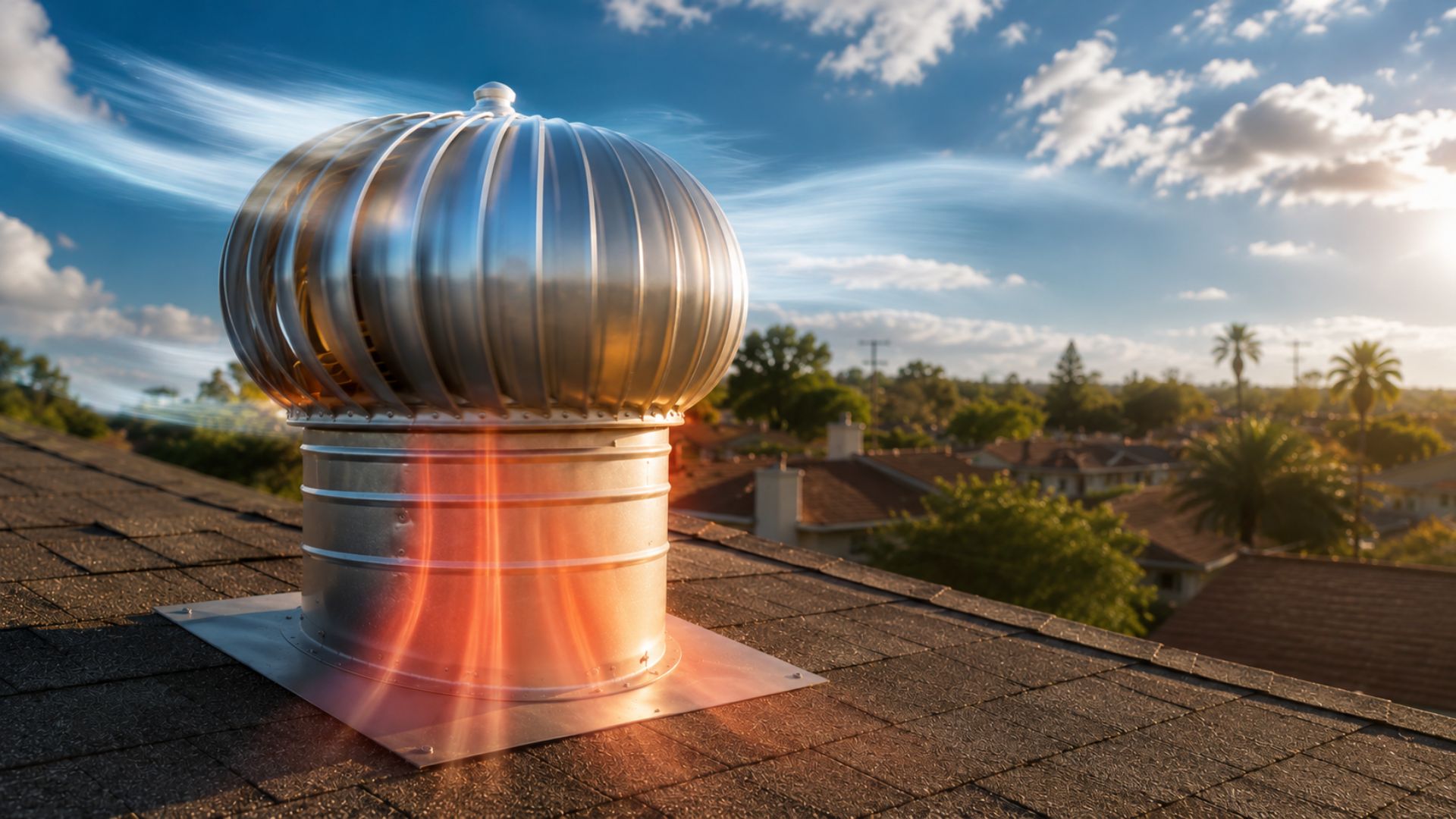


The roof wind turbine, known as whirlybird, was invented in 1910 and cools attics and ceilings using only wind and rising heat, without spending electricity. The device disappeared from constructions due to noise, condominium rules, and stricter codes, but returns to the debate as a low-cost passive solution.
In 1910, engineer Samuel Ewart patented in the United States the roof wind turbine, a rotating device installed on building roofs that extracts hot air from the attic using only the wind’s force and the natural movement of heated air, without consuming a single watt of electricity or relying on any electronic component. Known in English as whirlybird or ventilation turbine, the equipment was for decades a common element in industrial warehouses, storage facilities, agricultural structures, and even residential roofs in the United States and Australia, but today it has practically disappeared from new housing developments.
The question driving the current debate is straightforward: if the wind turbine was so good, why did we stop using it? And, if it is really efficient, is it worth bringing it back? The answer, as technical studies show, is more nuanced than viral videos on the subject often suggest. The device indeed works and has real advantages, but its performance heavily depends on the climate, wind, and correct sizing, and a single unit is almost never enough to cool an entire modern house.
How the roof wind turbine works

The first is Bernoulli’s principle: when the wind passes through the curved blades of the turbine, the air accelerates and loses pressure, creating a low-pressure zone inside the device that sucks the hot air from the attic out. Unlike static ventilation, which just stays idle waiting for the air to escape, the turbine uses the wind’s kinetic energy to actively pull hot air out of the building.
-
California Student Develops AI-Powered System to Detect Elderly Falls at Home, Even in the Dark, Earning Title of America’s Top Young Scientist

-
Workers Discover Ancient Sanctuary with Temples and Roman-Era Inscriptions While Clearing Bomb Debris for Highway Construction

-
Scientists Discover Over 600 Meteorite Glass Fragments in Northern Brazil, Evidence of a 6.3-Million-Year-Old Cosmic Impact with Unfound Crater

-
Philosophy Student Invents Self-Moving Wheelchair Controlled by Body Weight Using Pressure Sensors


The second effect is the so-called chimney effect, the natural tendency of warm, less dense air to rise. In a building with ventilation openings at the eaves and a turbine at the ridge, this ascending air creates a pressure gradient that pushes the air up and out, even when the wind exhaust is not spinning. The third is the Venturi effect, which occurs when air is compressed in the narrow spaces between the rotating blades, increasing its speed and further reducing internal pressure, which accelerates the extraction of warm air.
Why attic heat impacts the electricity bill

During the summer, solar radiation heats the roof surface and turns the attic or ceiling into a true thermal reservoir, with temperatures that can exceed 65 degrees Celsius. This heat does not stay put: it radiates downward, crosses the ceiling, and reaches the habitable spaces, forcing the air conditioner to work longer and consume more energy to maintain the same temperature.
According to the United States Department of Energy, each degree of increase in attic temperature can raise the cooling load by up to 4%. In many homes, the ducts that carry the cooled air pass precisely through this overheated attic, causing the air to heat up again before even reaching the rooms it should cool. The role of the wind exhaust is to break this cycle, removing the hot air before it has the chance to radiate downward and compromise internal comfort.
What studies really show about the wind exhaust
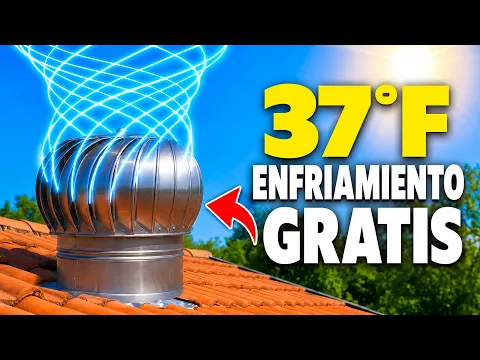

This is where accuracy matters. Videos and promotional materials often cite reductions of up to 37 degrees Fahrenheit, about 20 degrees Celsius, in attic temperature and 14.6% savings on the energy bill. These numbers, however, come from a specific case measured in the San Diego region, California, under very favorable wind and climate conditions, and do not represent a universal result that any house will achieve.
Broader academic studies show much more modest results. A technical review on roof ventilation turbines indicates that, in temperate climates with wind, a 12-inch unit reduced attic temperature by only about 0.56 degrees Celsius and increased ventilation rate by around 15%. Meanwhile, a study from Deakin University in Australia concluded that the airspeed generated by a single 12-inch turbine was so low that it technically classified as still air, insufficient for the thermal loads of a modern home. The message is clear: the wind turbine works, but expectations need to be realistic.
The importance of sizing and the number of units
The central point of the studies is sizing. Most building codes recommend about 1 square foot of ventilation area for every 300 square feet of attic surface. In hot and humid climates, like those in Florida or Texas, many professionals recommend doubling this ratio. In practice, this means that a single turbine is rarely enough, requiring two to six units, depending on the size and characteristics of the construction.
In terms of airflow, a standard 12-inch wind turbine moves between 250 and 350 cubic feet of air per minute with wind of just 8 kilometers per hour, while a 14-inch unit raises this number to 350 to 500 cubic feet per minute. Since the device does not consume electricity, any savings in cooling is net profit. But the actual performance depends on the setup being correctly calculated for the roof area, with sufficient air inlets in the eaves to feed the flow.
Reasons that removed the wind turbine from constructions
Several factors explain the decline of the wind turbine in modern constructions. The first is mechanical: the rotating head, which is the defining feature of the device, is also its weak point. Over time, the bearings can degrade due to moisture, dust, or lack of lubrication, producing squeaks and noises that transmit through the roof structure to the rooms below. Units made with cheap materials are especially prone to this, which has given the equipment a reputation for being noisy and unreliable.
There is also the aesthetic and regulatory problem. The wind turbine is quite visible from the street, and in the real estate market, appearance influences property value. Homeowners associations and condominiums in various places have restricted or prohibited the device for breaking the clean and uniform line of roofs in modern developments. Additionally, as houses have become more airtight and efficient, stricter energy codes have started requiring mechanical ventilation systems with controlled air exchange rates, leaving passive turbine ventilation in a regulatory gray area, as its performance depends on uncontrollable variables like wind and temperature.
When it is worth installing a wind turbine today
The decision to use a wind turbine depends entirely on where a person lives and what they intend to achieve. In hot and windy climates, like much of Brazil, coastal regions, or inland areas with strong sunlight, the device remains one of the most economical ways to reduce cooling load. A unit costs relatively little in material, and the installation pays for itself in a few years with energy savings, in addition to helping protect the roof structure against moisture and prolonging its lifespan.
On the other hand, in cold climates or houses with modern high-performance insulation, the wind turbine is probably not the best option. In harsh winter, moisture in the mechanism can even freeze the blades, and in airtight environments with mechanical ventilation already installed, adding a passive extraction point can unbalance the pressure that the system was designed to maintain. For many homeowners, especially those building new homes, a full-length ridge vent distributed across the entire roof may offer more ventilation area without moving parts, noise, and without conflicting with condominium rules.
The roof wind turbine is a fascinating example of passive engineering that has spanned more than a century: simple, cheap, and capable of cooling environments without consuming energy. But technical honesty requires acknowledging that it is not a magic solution. Its best results appear in hot and windy climates, with correct sizing and multiple units, while in other contexts, alternatives like ridge ventilation may be more efficient and discreet. Bringing it back makes sense, as long as expectations are calibrated by the reality of the data.
Have you ever had or thought about installing a wind turbine on the roof of your house or warehouse? Do you think it’s worth it, considering the climate of your region, or do you prefer to bet on other ventilation solutions? Leave your comment, share your experience with the heat in the attic, and share the article with those who are building, renovating, or looking to reduce the energy bill sustainably.