Portuguese
  Spanish


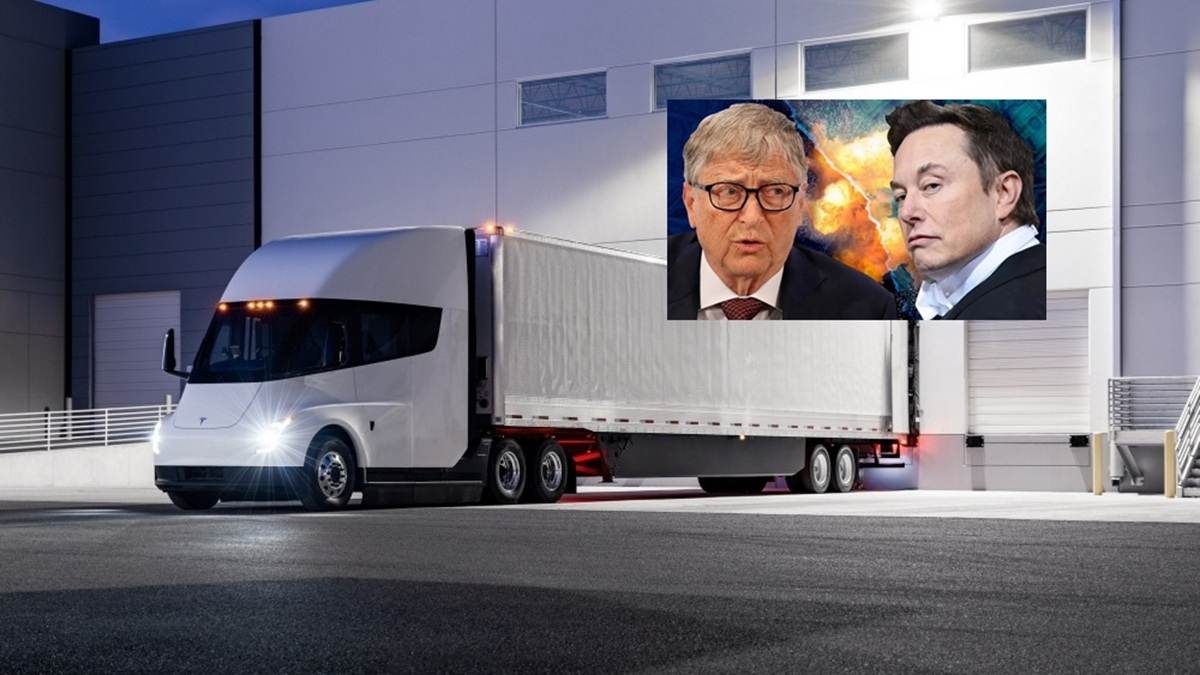


Elon Musk Promises Mass Production of Tesla Semi Again After Bill Gates’ Criticism, but History of Delays Raises Questions About the Future of the Electric Truck
As soon as someone claims something is impossible, Elon Musk tries to prove the opposite. Electric trucks, like passenger cars, are seen as the next step in road freight transport.
Tesla has a big bet in this sector: the Semi. The battery-powered vehicle promises to perform the same work as a diesel truck. After years of waiting, Elon Musk has spoken about it again.
The CEO has resumed leadership of Tesla after a brief political foray. Now, he is directing the company’s efforts toward two fronts: autonomous driving technology and the Semi.
-
Chevrolet’s Parent Company to Invest Billions in Brazil to Modernize Factories, Update Cars, and Accelerate Hybrid Launch by 2028

-
Practical Driving Tests in Brazil Surge by 23.5%, Exceeding 2.2 Million by 2026, as New Rules Make the Process Cheaper and Simpler
-
Brazil’s Lula Government Allocates $463 Million Quota for Electric Car Parts, Waives Import Tax Until December, Sparking Competition Among BYD, Automakers, and Unions as Consumers Question Impact on Prices and Local Industry

-
Thinking of Installing LED Headlights? Why Replacing Halogen Bulbs is Still Banned, the Glare Risks Authorities Worry About, and How a New Proposal Could Allow Certified, Safe Installations


The truck has been in development for over a decade, but it has never been produced on a large scale. Despite numerous public appearances, the model has yet to reach the roads in significant numbers.
Promises and Constant Delays
Unfulfilled promises have accumulated criticism. The Semi should have been available for years, but only a few units have been manufactured.
These vehicles have traveled millions of kilometers in testing. Some companies use them daily, proving their practicality.
Even so, mass production remains the critical point that has not been achieved.
This history of delays has strengthened skepticism. The Tesla Roadster, announced repeatedly, still hasn’t arrived.
Autonomous driving, promised as a revolution, is also still on hold. Therefore, every new statement from Musk about the Semi raises doubts. Many wonder if it will be another broken promise.
Gates Joins the Discussion
The latest criticisms came from Bill Gates. The founder of Microsoft highlighted his disbelief in the viability of electric trucks.
He stated that, even with advancements in batteries, electrification will not be practical for heavy long-distance vehicles, cargo ships, and passenger planes. For Gates, electricity works for short distances but does not solve the challenges of heavy transportation.
This statement directly impacted the Semi. Gates argued that other solutions would need to be sought to meet global transportation demands.
His perspective reinforces doubts about Tesla’s truck, which has not yet reached the market in a concrete way.
Musk Promises Again
Musk was quick to respond. Using the social network X, he stated that mass production of the Tesla Semi will begin next year. However, this is not the first time the executive has made this promise.
The constant repetition creates an impression of uncertainty. Still, Musk maintains his defiant style and promises to deliver what many say is impossible.
If this time will be different, remains to be seen. In a few months, the market will know if the Semi will finally leave the factory or continue as an eternally promised project.