






 Portuguese
  Spanish
  4 min of reading
  28 comments


In Impactful Video, Elon Musk Presents an Autonomous Tesla, Highlighting the End of the Need for Drivers. Tesla Technology Promises Safer, Cheaper, and 24/7 Travel, Challenging Companies Like Uber and 99. The Future of Urban Transport May Be About to Change Radically. Would It Be the End of App Drivers?
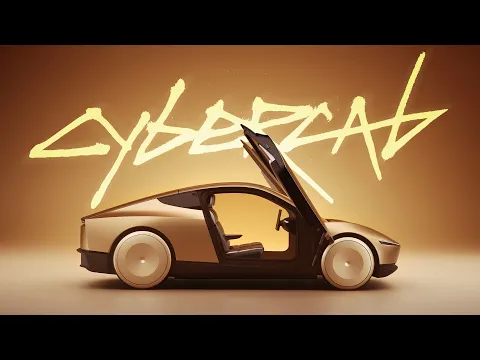
Elon Musk unveiled the Cybercab, Tesla’s first fully autonomous robo-taxi, during the “We, Robot” event in Hollywood.
Without a steering wheel or pedals, the vehicle promises to transform urban transport, challenging companies like Uber and 99.
Production is expected to start in 2026, with an estimated price of US$ 30,000. Mass adoption faces regulatory and infrastructure challenges.
-
Two new 300cc models from QJ Motor are expected to arrive in Brazil as SBM to target the CB 300F and shake up the low-displacement market, with more power and liquid cooling than Honda.

-
Camaro may reappear in 2027, but not as you remember: Chevrolet prepares the return of the icon with four doors, manual transmission, and an extreme performance version to face the new era of sports cars.

-
Space technology used to search for water on Mars is now hunting for invisible leaks under the streets of São Paulo, using satellites, AI, and chlorine signals to help Sabesp recover up to 6.7 billion liters of water.
-
Japan sends ship to extract mud rich in rare earths at nearly 6,000 meters deep in the Pacific, attempts to lift 350 tons per day from the seabed, and transforms sediments near Minamitori Island into a strategic weapon to reduce dependence on China.


The eccentric billionaire and visionary behind revolutionary companies like Tesla, SpaceX, and Neuralink caused a global stir.
In an impactful video published on X (formerly Twitter), Musk revealed to the world a Tesla capable of navigating on its own, without human interference.
Is this the beginning of the end for companies like Uber, 99, and other transport platforms that rely on drivers? The demonstration of the highly sophisticated technology is a milestone in urban mobility and raises uncomfortable questions about the future of work in an essential sector.
Autonomous Tesla and the Transportation Revolution
During the presentation, Elon Musk, behind the wheel (or rather, out of it) of an autonomous Tesla, showcased to the world the impressive efficiency of the advanced autopilot system.
The car navigated through busy streets, made precise turns, and obeyed all traffic signals without any manual intervention.
According to Musk, the future of transport is inevitable: millions of autonomous Teslas will be on the roads in the near future, transforming urban mobility into a cheaper, more efficient, and safer service.
However, this promise comes with challenges. Companies like Uber and 99, which dominate the urban transport market, rely directly on partner drivers.
With the advancement of this technology, questions about the replacement of human jobs grow stronger and generate global concern.

Impact on Companies Like Uber and 99
As demonstrated by Tesla, autonomous technology promises to offer safer and cheaper rides, which could deeply shake the foundation of app-based transport companies.
Currently, platforms like Uber and 99 connect passengers to human drivers, who are responsible for operating the vehicles.
The business model of these companies depends on human labor to exist. But if autonomous vehicle technology becomes popular and proves viable, this scenario could change radically.
According to Musk, autonomous Teslas will eliminate the need for drivers, providing cheaper, more efficient transport services operating 24 hours a day, 7 days a week.
On the other hand, experts warn that the arrival of this technology still depends on regulation, social acceptance, and adaptations in urban infrastructure.
A Vision of the Future for Tesla
Elon Musk is not only the leader of Tesla. He is also at the helm of companies like SpaceX, Neuralink, and The Boring Company.
All share a common mission: to develop futuristic technologies to solve real societal problems.
In Tesla’s case, the focus has been on creating electric vehicles and now, autonomous ones. This initiative goes far beyond simple automation: it represents the pursuit of cleaner, more accessible, and efficient transport globally.
As Elon Musk highlighted on his social networks, autonomous Teslas will not only reduce travel costs but also eliminate risks associated with human errors, such as distraction and drunk driving.
Autonomous Technology: Between Challenges and Opportunities
Despite the optimistic vision, transitioning to a world with fully autonomous cars faces considerable obstacles. Among the main challenges are:
- Regulation: Many countries still lack legislation for autonomous cars. Approving laws that allow the circulation of these vehicles is a lengthy and complex process.
- Infrastructure: Cities need to adapt their streets, traffic lights, and signaling systems to accommodate autonomous vehicles.
- Security: Public acceptance is still a challenge. Technological failures and accidents involving autonomous cars create apprehension among users.
- Jobs: With the mass adoption of this technology, millions of app drivers and professionals related to the automotive industry may lose their jobs.
The Future of Work in the Transport Sector
According to analysts, the advancement of autonomous technology is inevitable, but it also requires transition.
Many workers will need retraining to adapt to a market that prioritizes technology and automation.
On the other hand, new professions will emerge, focused on the maintenance and development of autonomous technology itself.
Conclusion
Elon Musk not only introduced an autonomous Tesla: he issued a challenge to the world. Is this the end of app drivers?
As technology rapidly advances, Uber, 99, and other companies will have to reinvent themselves to survive.
The future of urban transport will be shaped by innovations like this, but the path ahead still requires adaptation and discussion.
And you, would you use a self-driving car or do you still trust a human driver more? Share your opinion below!


Ridículo. Esse cara quer acabar com a mão de obra humana. Além de que, quem conhece o brasil, sabe que um carro autônomo não seria capaz de andar nesse país. Becos, vielas, buracos, morros, ****.. aqui é difícil dar certo. Eles querem robotizar tudo que é mão de obra, quero ver quem vai consumir os produtos, como a economia vai gerar, já que ninguém terá emprego.
Cruzes que Jesus volte logo e nos deixe longe dessas tecnologias, pois o que estar por vir é muito melhor do que ouro e prata .
É a cidade que Jesus foi preparar para nós morar ETERNAMENTE. ELE DEVE ESTAR PREPRANDO PARA O ANTICRISTO SÓ PODE
Uma coisa não substitui outra. Teremos os carros sem motorista, com motorista, aínda teremos os bêbados na estrada, teremos os barbeiros, teremos os carros sem motorista sofrendo acidentes. Tudo continuará. Tivemos a TV e o rádio continua. Temos celulares que usam a tecnologia do rádio etc
..etc…