






 Portuguese
  Spanish
  4 min of reading
  6 comments





Even In The Face Of Explosions And Delays In Starship Testing, Elon Musk Sticks To SpaceX’s Bold Schedule And Anticipates Details Of The Ambitious Plan That Promises To Transform Mars Into The Next Permanent Destination For Humanity In A Few Years.
Elon Musk plans to take humanity to Mars in 2026 through SpaceX, which aims to create the first human colony on the Red Planet.
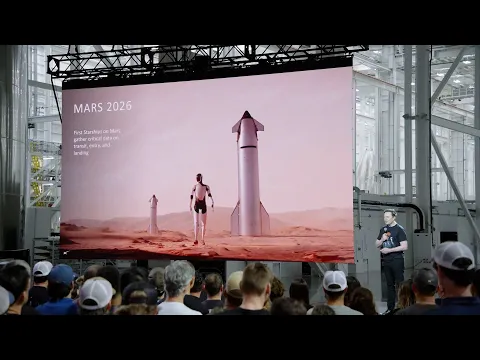
Despite the recent explosions of the Starship spacecraft, the billionaire remains optimistic and revealed during an official presentation that he intends to launch the new version of the rocket as early as 2025, with a landing scheduled for Mars in 2026.
According to SpaceX, the initial mission of Starship will be to send uncrewed vehicles to collect essential data on entry, descent, and landing, which are fundamental steps for future trips with humans and cargo to the Red Planet.
-
Federal Police involved in the case to identify the person responsible for hacking the Civil Defense system, which sent ten false alerts, frightened residents of different capitals, and turned messages about real risks into notifications with “misanthropy” and even alien attacks.

-
Extreme drought causes ghost village to reappear at the bottom of the reservoir that supplies Athens, revealing houses, a school, and ruins swallowed since the 1980s as the lake shrinks and exposes the water crisis threatening the capital of Greece.

-
Space technology used to search for water on Mars is now hunting for invisible leaks under the streets of São Paulo, using satellites, AI, and chlorine signals to help Sabesp recover up to 6.7 billion liters of water.
-
Japan sends ship to extract mud rich in rare earths at nearly 6,000 meters deep in the Pacific, attempts to lift 350 tons per day from the seabed, and transforms sediments near Minamitori Island into a strategic weapon to reduce dependence on China.


This date is strategic, as the alignment window between Earth and Mars occurs every 26 months, with the next ideal opportunity being between November and December 2026.
To realize the plan, SpaceX will develop Version 3 of Starship, a rocket that is 124.4 meters tall and capable of supporting the interplanetary journey.
Elon Musk stated that the goal is to conduct the first launch of this version in 2025, thus ensuring that the spacecraft is ready for the Martian mission the following year.

Colonization Of Mars With Robots And Humans
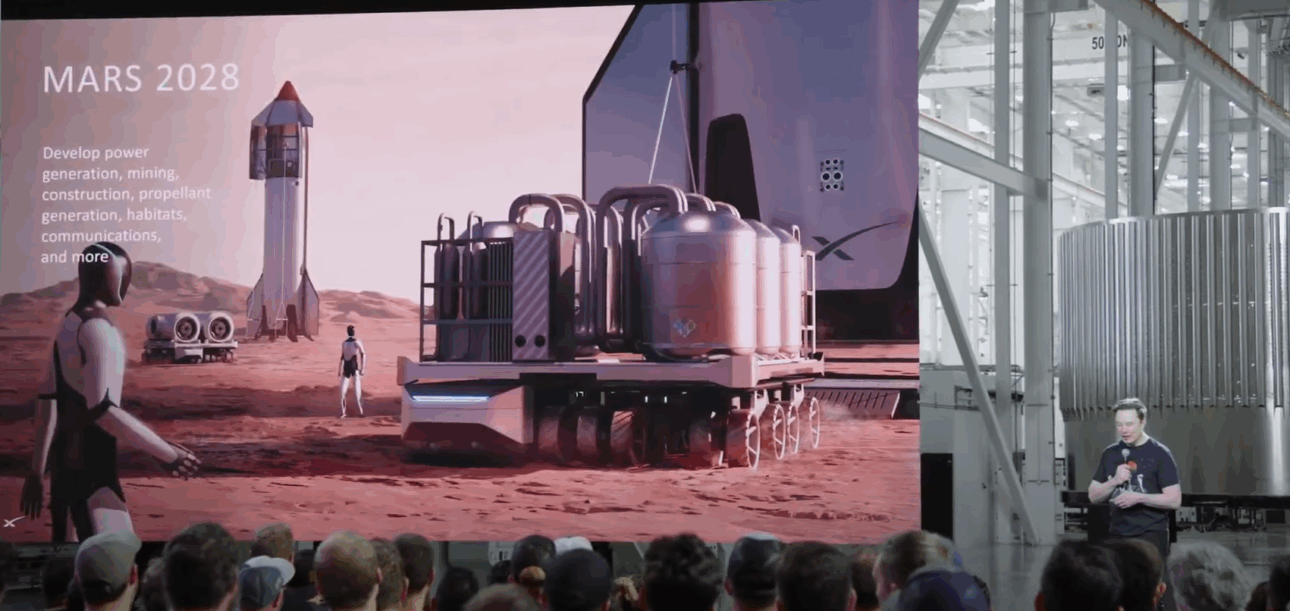
The ultimate goal goes beyond a simple landing: the colonization of Mars, starting with the initial dispatch of Tesla’s Optimus humanoid robots to explore and prepare the terrain.
Musk estimates a 50% chance of success in sending Starship to Mars in 2026, emphasizing that the first missions will be pioneering, paving the way for future expeditions with humans aboard.
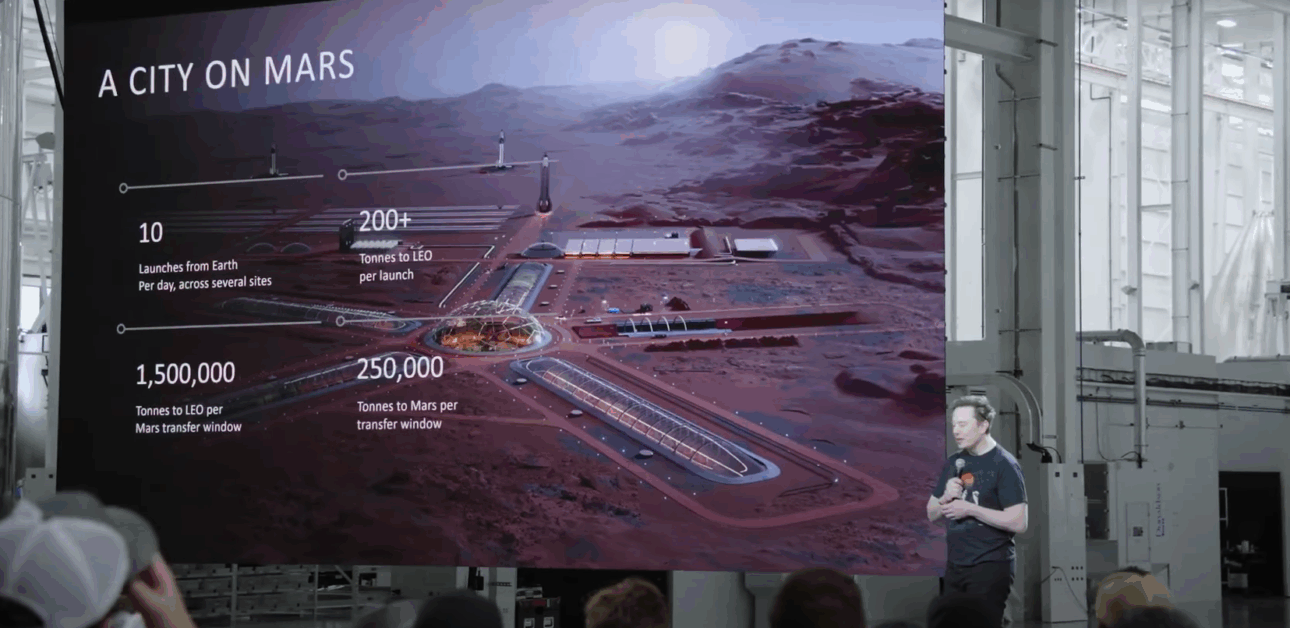
Between 2028 and 2029, the forecast is to send about 20 Starships transporting astronauts to the red planet, starting construction of the basic infrastructure for Martian life.
The chosen location for the first human colony is the area known as Arcadia Planitia, a vast volcanic plain in the northern hemisphere of Mars, considered ideal for establishing permanent habitats.
According to SpaceX, the first human explorers will be tasked with surveying local resources, preparing landing zones, installing power generation systems, and building the first habitats, thereby laying the foundation for a permanent presence on the planet.
Bold Projections And Technological Challenges
The company’s projections are bold: between 2030 and 2031, 100 Starships are expected to arrive on Mars, followed by another 500 in 2033, signaling a rapid and significant escalation of colonization.
However, the challenges are enormous.
Starship has conducted nine launches since 2023, with the last three concluding in explosions, raising doubts about SpaceX’s ability to execute its aggressive strategy in the short term.
Elon Musk acknowledges the difficulties but emphasizes that each launch brings essential learnings to make life multiplanetary a reality.
In addition to technical issues, SpaceX will need to develop an in-orbit refueling system, which has yet to be tested, that is critical for Starship to complete the journey to Mars.
Another crucial point will be NASA’s Artemis 3 mission, scheduled for 2027, which will use Starship as the lunar landing module.
This event will be an important gauge to assess the company’s ability to meet deadlines and technological demands.
The pressure is high, and the tight schedule requires constant innovation and precision at every stage of the mission.
The Vision Of A Multiplanetary Future
With the possibility of launching thousands of people to another planet, SpaceX not only aims to expand the frontiers of space exploration but also to turn the idea of life beyond Earth into something tangible and concrete.
This ambitious vision challenges the current understanding of space travel and opens a debate about the scientific, technological, and social impacts of interplanetary colonization.
How should Brazilian society and the world prepare for this near and revolutionary future? And you, do you think that the colonization of Mars will soon be a reality, or are we still far from this dream?




O cara não consegue nem lançar um foguete para ir a lua , que o foguete explode imagina querer ir a Marte isso é uma piada vamos rir kkkkkkkkkkk
Sou voluntário para ir na 1a viagem de colonização de Marte., alguém sabe se existe um cadastro de voluntários aberta. Gostaria de participar desta conquista.
Jamais,nunca o homem chegará a Marte isso é impossível o corpo humano não tem estrutura nenhuma para enfrentar outro clima isso é balela conversa fiada,ele pode ter as riquezas todos os conhecimentos que for, más nunca jamais o homem chegará nem perto desse planeta e digo mais talvez essa viajem não dure nem 30 minutos,o Elon Musk é só mais um louco ambicioso por dinheiro entre milhares de pessoas que existe na terra,ele pagará um preço muito caro por querer mexer nas coisas de Deus escrevam o que estou falando não só ele más muitos perderá suas vidas nessa “aventura” ele sofrerá grandes consequências, é triste dizer isto porém é a verdade.