






 Portuguese
  Spanish




Project Documents Every Step of Building an Off-Grid Cabin on a Volcanic Island, Revealing Carpentry Techniques, Rainwater Harvesting, and Adaptation Strategies Used by the Builder Over 100 Days
A man decides to take on 100 days on a volcanic island to build a wooden cabin, seeking to test survival, sustainability, and adaptation techniques in an environment without external support. The recording made by Quantum Tech HD and Wild Gnomos shows every step.
The proposal involves transforming raw wood into a complete, functional, and durable structure.
Therefore, the setting becomes a constant challenge marked by unstable weather, uneven terrain, and total lack of infrastructure.
-
Viral Video of Giant Gold Nugget in Brazil’s Oiapoque Revealed as Painted Rock by French Guiana Miner

-
18th-Century Treasure Uncovered in Brazilian Amazon: 20 Réis Coin and Dutch Pipes Found at Construction Site
-
New York Resident Uncovers Complete Mastodon Jawbone in Backyard After Spotting Teeth Emerge from Ground
-
Young Treasure Hunter from Brazil’s Balneário Camboriú Finds $22,000 in Jewelry with Metal Detector, Aims for $1 Million, and Returns iPhone Found in Ocean


Every move requires quick calculations, as nothing can be bought or adjusted afterward.
The experience incorporates its own rhythm. The builder needs to understand the local timing, observe winds, notice soil moisture, and follow sudden changes in the landscape.
This process becomes a kind of outdoor lab, full of small tests and errors that are part of the learning experience.
The daily routine brings real limitations but also opens space for creativity. Moreover, it allows the viewer to see how simple solutions can solve complex problems in a harsh and relentless volcanic territory, something that appears throughout the video.
Why the Elevated Foundation Changes the Cabin’s Safety
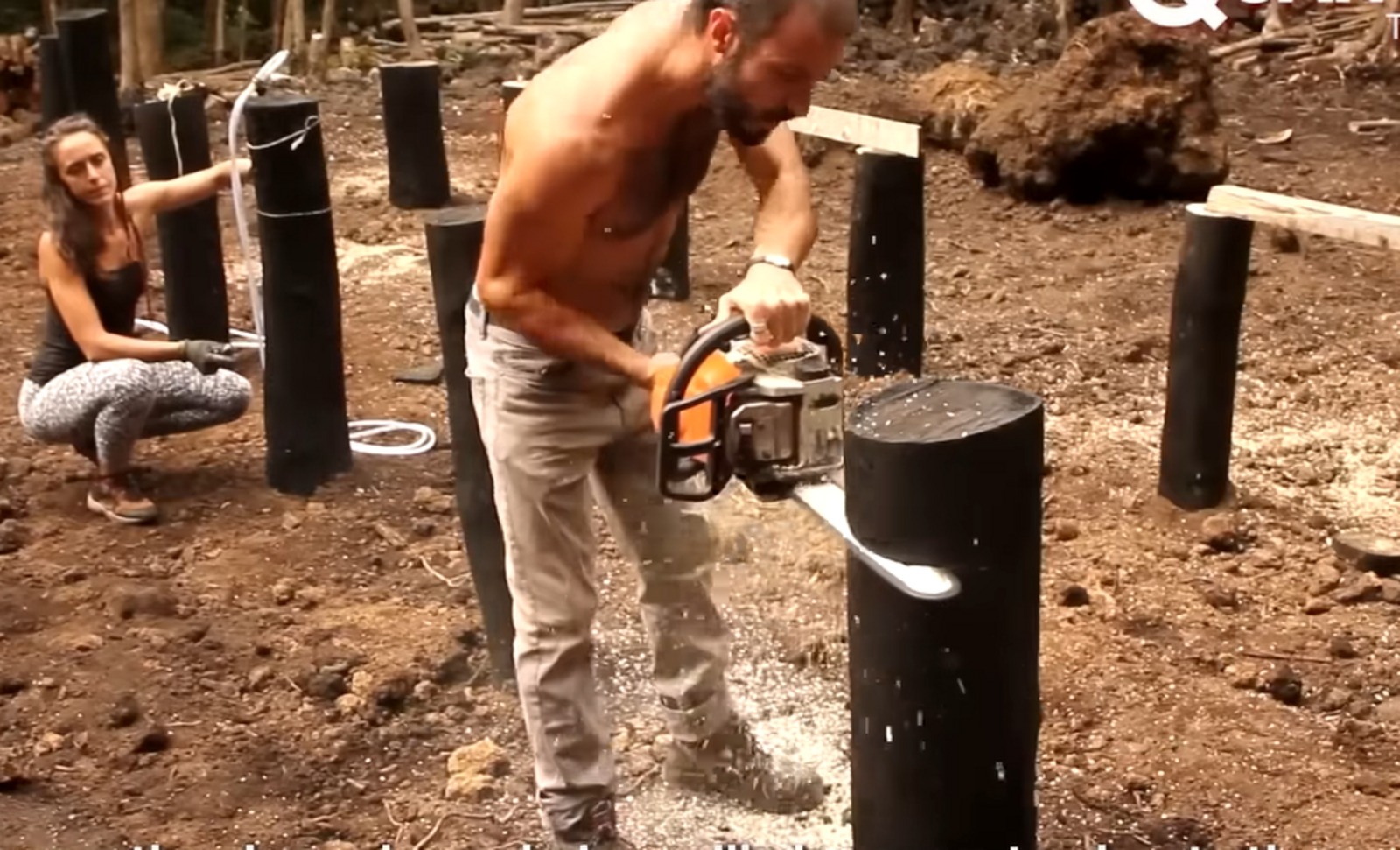
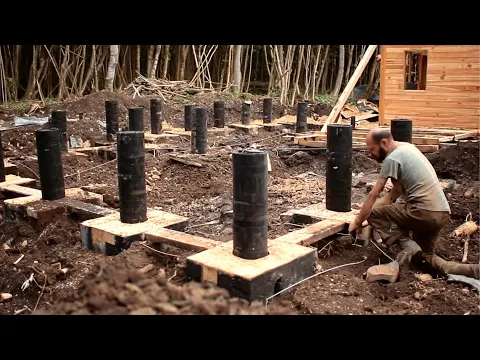
The construction starts with the elevated foundation, made of charred wooden pillars. The technique reduces moisture, deters pests, and prolongs the durability of the pieces.
The method functions as a natural shield, creating a protective layer and increasing structural resistance.
The volcanic soil presents instability and rapid thermal variations. Therefore, distancing the base from the ground becomes essential.
The elevated foundation prevents direct impacts and ensures stability even when the weather changes abruptly.
The result is simple in appearance but has detailed logic. Each charred pillar has a calculated position, as small errors can compromise the entire cabin. This care reinforces the intention of a long lifespan.

Off-Grid Systems and Rainwater Use
The off-grid proposal appears right on the sloped roof, which captures rainwater and directs it to lateral reservoirs.
This solution ensures minimum supply without relying on public networks or extra equipment.
The system demonstrates how autonomy can be built with basic tools. Moreover, the positioning of the gutters and the angle of the roof reinforce the efficiency of the setup, allowing the cabin to function even during periods of little rain.
The internal structure receives natural light to save energy and utilizes strategic openings. The organization mode avoids waste and favors air circulation, reducing moisture that often affects volcanic places.
The off-grid daily life demands adaptation. The builder adjusts tasks according to the rhythm of the environment, as calculated improvisation becomes key to keeping everything running without significant failures.
The Carpentry Techniques Applied During the 100 Days
The video showcases various carpentry techniques that shape the walls, joints, and beams. The local wood is worked with precise cuts and firm joints, creating a structure capable of withstanding strong winds common in volcanic islands.
The sloped roof is assembled with manually adjusted pieces, ensuring firmness and good drainage. Therefore, the final design combines rustic aesthetics with climate efficiency, without losing the simplicity of the process.
One detail stands out: the use of wood scraps to create internal furniture. The builder produces counters and shelves from trimmings that would have been discarded, reinforcing the idea of utilizing all available resources.
This logic reduces waste and creates visual unity. Additionally, it follows a philosophy of respect for the environment, a distinctive characteristic of the project showcased by the creators.
Curiosities and Lessons That Arise During the Work
Some points stand out. The first involves adaptation to the volcanic climate, as the cabin is designed to withstand rain, winds, and more extreme temperatures.
Another point is the intelligent use of wood, treated and reused in different parts.
The off-grid philosophy consolidates in practice, showing how autonomy can be built with simple planning.
Therefore, the project exceeds the idea of shelter and transforms into a study on coexistence with nature.
The solo construction, done by a single person, impresses. The intense rhythm of the 100 days reinforces discipline and organization, which keeps the evolution of the work constant, even with small obstacles and delays.
Why the Video Attracts So Many People Interested in Survival
The mix of adventure, carpentry, and alternative living attracts a diverse audience. The viewer witnesses everything from physical effort to the mental aspect of the process, tracking the evolution from the first wood cut to the completed cabin.
The content sparks curiosity because it shows how someone manages with minimal resources. Additionally, it inspires people interested in sustainability, handcrafted cabins, and a simple lifestyle.
The video presents a complete path for those dreaming of autonomy away from urban centers. Therefore, it becomes a gateway to other projects by Wild Gnomos and creators who document ecological constructions in remote settings.
The experience shows that adapting life to the environment, and not the other way around, can yield creative and functional solutions in isolated regions.
With information from O Antagonista.


