Portuguese
  Spanish


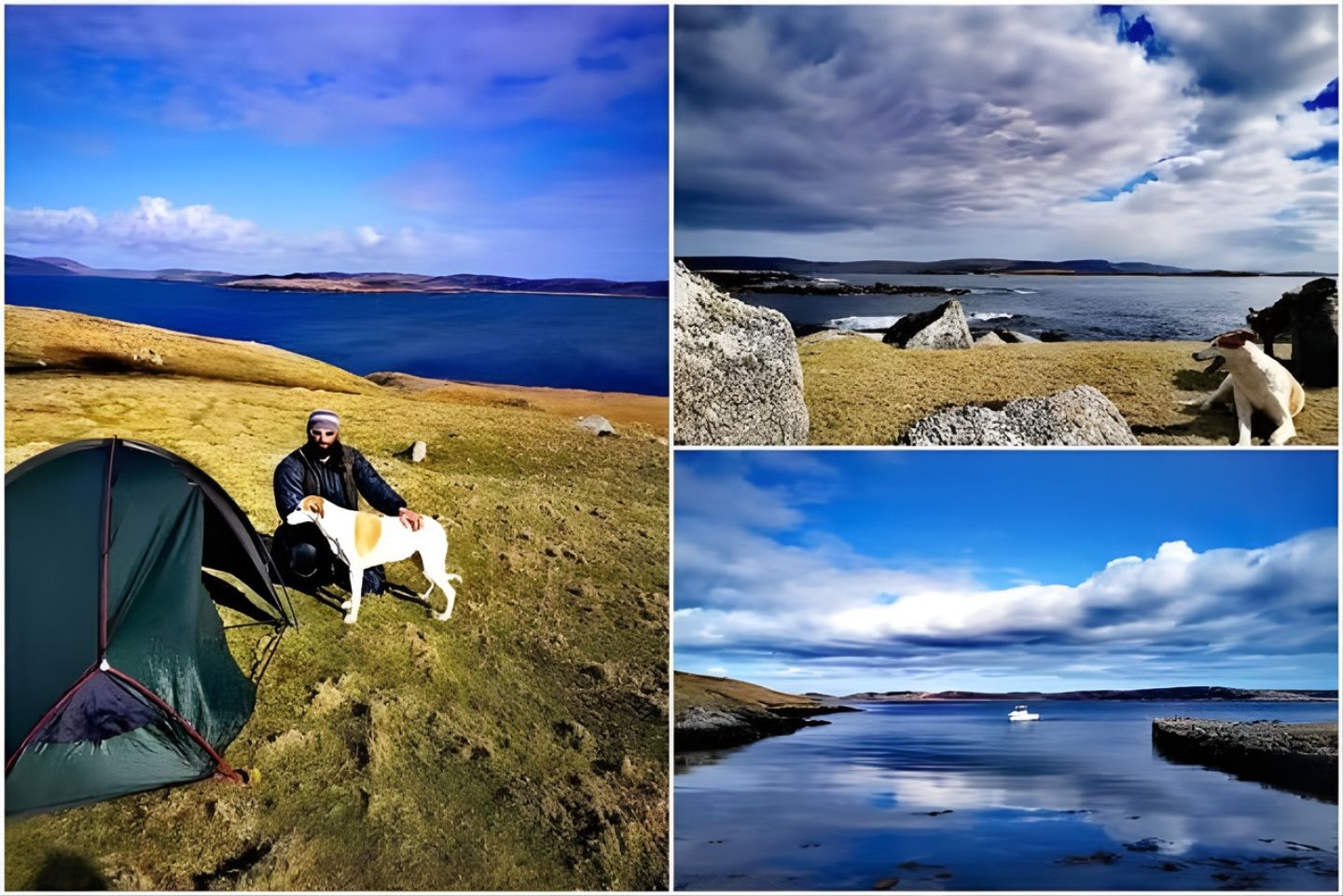


Man Is Isolated on Uninhabited Island in Scotland During Lockdown, Living for Months Without Electricity and Without Neighbors, With Only His Dog for Company.
The 2020 pandemic provoked unexpected phenomena around the world, but few episodes were as striking as what occurred on a small remote island in Scotland. Far from the coast, without electricity, without houses, without roads, and without any human structure, a mass of land called Hildasay, part of the Shetland archipelago, became the makeshift home of a man who never planned to live there. The former British parachutist Chris Lewis, then 40 years old, got stuck on the site for months after the lockdown began, turning what was supposed to be just another stop on his walk along the UK coast into a period of extreme isolation that caught the international media’s attention.
The story gained worldwide attention after reports from The Scotsman, BBC Scotland, and other British outlets documented how Lewis, accompanied only by his dog Jet, had to completely adapt his routine to survive on an uninhabited island. Life there is shaped by the extreme geography: steep cliffs, constant wind, absence of trees, unpredictable weather, and the absolute silence of a territory where even phone networks do not fully reach. Under normal circumstances, no one lives on Hildasay. But, between 2020 and 2021, the island became Lewis’s involuntary home, revealing one of the most remarkable examples of real isolation in the 21st century.
The Unexpected Arrival on the Uninhabited Island
Chris Lewis did not go to the island in search of permanent isolation. Before the pandemic, he was undertaking a charity walk around the British coast, a journey that had already taken him more than two years of continuous travel. In March 2020, upon arriving in Shetland, the health crisis exploded, and authorities asked everyone to stay where they were.
-
Brazilian Airport to Receive $2.8 Million Investment, Completion Expected Within a Year

-
UN Warns of AI’s Environmental Impact and Calls for Greater Corporate Transparency

-
Former Atacadão Employee Turns Online Cake-Baking Lessons into a Confectionery Brand with Factory, Store, Delivery, and Nearly $400,000 in Revenue
-
Brazilian Startup Sells Nearly 9 Million Surprise Bags of Near-Expiry Food, Prevents Thousands of Tons of Waste, Aiming for $42 Million Revenue by 2026




With boats canceled, hotels closed, and shelters non-operational, Lewis received permission from local residents to stay temporarily on Hildasay, which is about a kilometer from the neighboring island, Whalsay.
What was supposed to be a brief stop turned into months of nearly total isolation. Without infrastructure and without easy access to the mainland, Lewis saw his life change abruptly. The island, usually visited only by researchers and conservationists, became both his refuge and his greatest challenge.
The Routine in One of the Most Isolated Places in the United Kingdom
Living on Hildasay required immediate adaptations. The absence of electricity forced Lewis to rely solely on campfires for cooking and heating. The island has only old stone structures, known as “crofts,” which he partially used as shelter, supplementing with sturdy tarps and materials he found throughout the territory.

Food became a constant concern. Chris collected rainwater, fished in the rocky areas, and foraged for natural foods, in addition to relying on sporadic donations from Whalsay residents who left supplies in small boats when the weather allowed. Strong winds and rough seas made any crossing risky, often making transport impossible for days.
By his side was his dog Jet, who not only provided daily companionship but also offered a natural alert to weather changes, strange noises, and the approach of wild animals. The presence of the dog was, according to later reports, one of the emotional keys to maintaining mental stability in a completely isolated environment.
The Extreme Weather as a Constant Challenge
Weather reports from Shetland show that the archipelago is one of the windiest places in the world. Hildasay, with no significant topography for protection, recorded winds above 100 km/h in some storms.
The combination of intense cold, horizontal rain, and dense fog created conditions similar to those found in high-latitude expeditions.
In addition to the weather, the lack of communication amplified the isolation. The cell signal reached the island only at specific points and often vanished during storms, leaving Chris without contact for long periods. Any medical problem, accident, or urgent need would require waiting for external help — something that could only happen when the weather allowed a boat to approach.
The Relationship with Nature and the Psychological Impact
The isolation on Hildasay also brought a profound emotional aspect. Interviews given by Lewis after his departure from the island show that living there forced him to face long periods of introspection. He describes the experience as transformative, marked by a paradoxical sense of constant danger and absolute peace.
The territory of the island is home to a wide variety of seabirds, such as puffins, fulmars, and skuas, entire generations that live without any human contact.
By daily observing the local wildlife, Lewis developed an intimate relationship with the environment, transforming the island into more than just an emergency shelter — it became a space for emotional balance and contemplation.
The Rescue and the Story That Caught International Attention
When restrictions began to ease and normalcy gradually returned to Scotland, Chris left Hildasay and resumed his walk, which was only completed later, in 2022. However, the time on the island profoundly marked his journey.
Reports from the British press showed impressive images of the makeshift shelter, worn clothes, the dog Jet running freely across the island, and the turbulent sea surrounding the small stretch of land on all sides.
The story resonated internationally for representing, with rare clarity, what it means to live in absolute isolation in the modern world. For many, Hildasay became a symbol of a lifestyle that seems impossible in the 21st century but became a reality for one man and his dog during the most unexpected moment in recent history.
The Legacy of Hildasay and Life Outside the System
Today, Chris Lewis’s account is considered one of the most authentic episodes of remote living of the decade. The experience globally reinforced the fascination with self-sufficiency and voluntary isolation — or, in this case, forced — and reignited debates about resilience, mental health, and the impact of complete withdrawal from society.
The island remains uninhabited, silent, and isolated, but its story has gained a new chapter thanks to a man who never imagined living there.