






 Portuguese
  Spanish


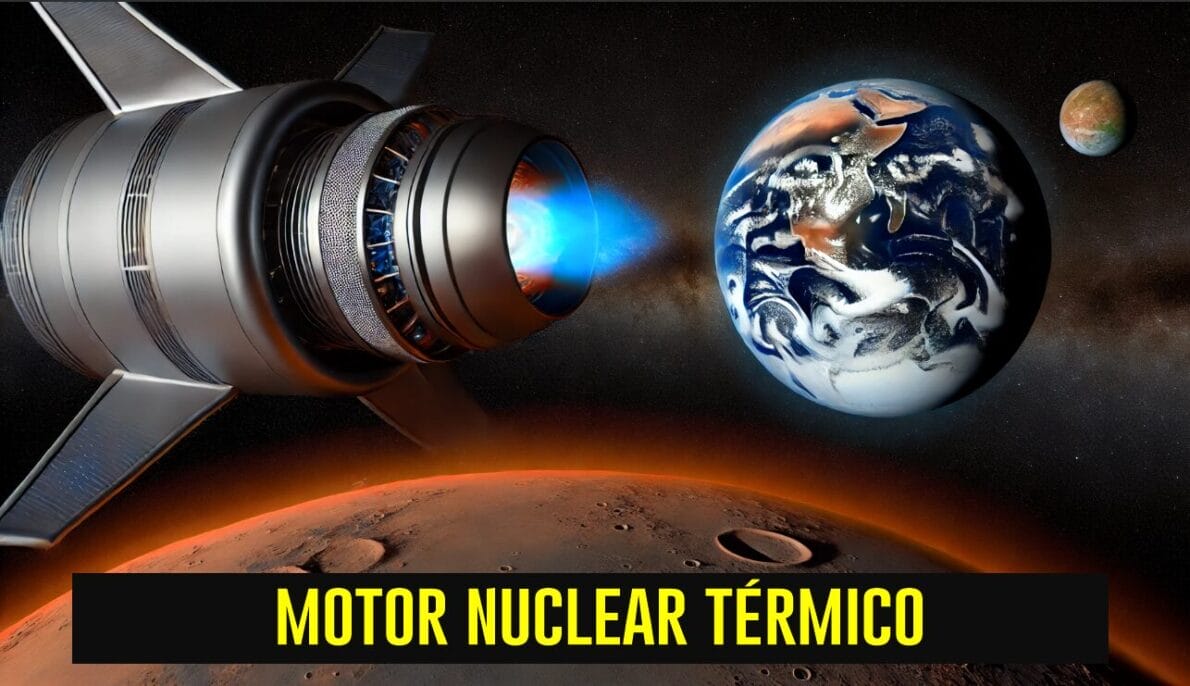

With Advanced Technology, Company Creates Nuclear Thermal Engine That Cuts Travel Time to Mars by Half. Understand How This Engine Promises to Accelerate the Future of Interplanetary Missions!
A Ultra Safe Nuclear Corporation (USNC) has developed a new nuclear thermal engine that can significantly reduce travel time to Mars. With this advancement, USNC expects astronauts to be able to travel to the Red Planet in just three months and return to Earth in the same period, cutting current travel time estimates in half.
This achievement is made possible by using high-assay low-enriched uranium fuel, known as HALEU, in ceramic microspheres, resulting in a lighter and safer nuclear reactor for space travel.
Propulsion With the Nuclear Thermal Engine: An Old Idea With New Directions
Nuclear propulsion is a concept that has been explored for decades, especially in military and industrial contexts, such as in submarines. However, its application for spacecraft is still limited, and most projects developed to date have never gone beyond the experimental testing phase.
-
Anti-poaching patrol in Thailand accidentally discovers hidden cave with 2,000-year-old petroglyphs, geometric engravings, and mysterious three-finger patterns on sandstone walls.

-
Russia Deploys Largest Nuclear Icebreaker in Arctic Capable of Breaking Through Three-Meter-Thick Ice

-
TCL Launches Energy-Efficient Refrigerator in Brazil, Promising 70% Less Consumption Than Competitors

-
Project Daedalus: The 190-Meter Spacecraft Aiming to Reach Another Star with Nuclear Fusion and a 50-Year Fuel Supply




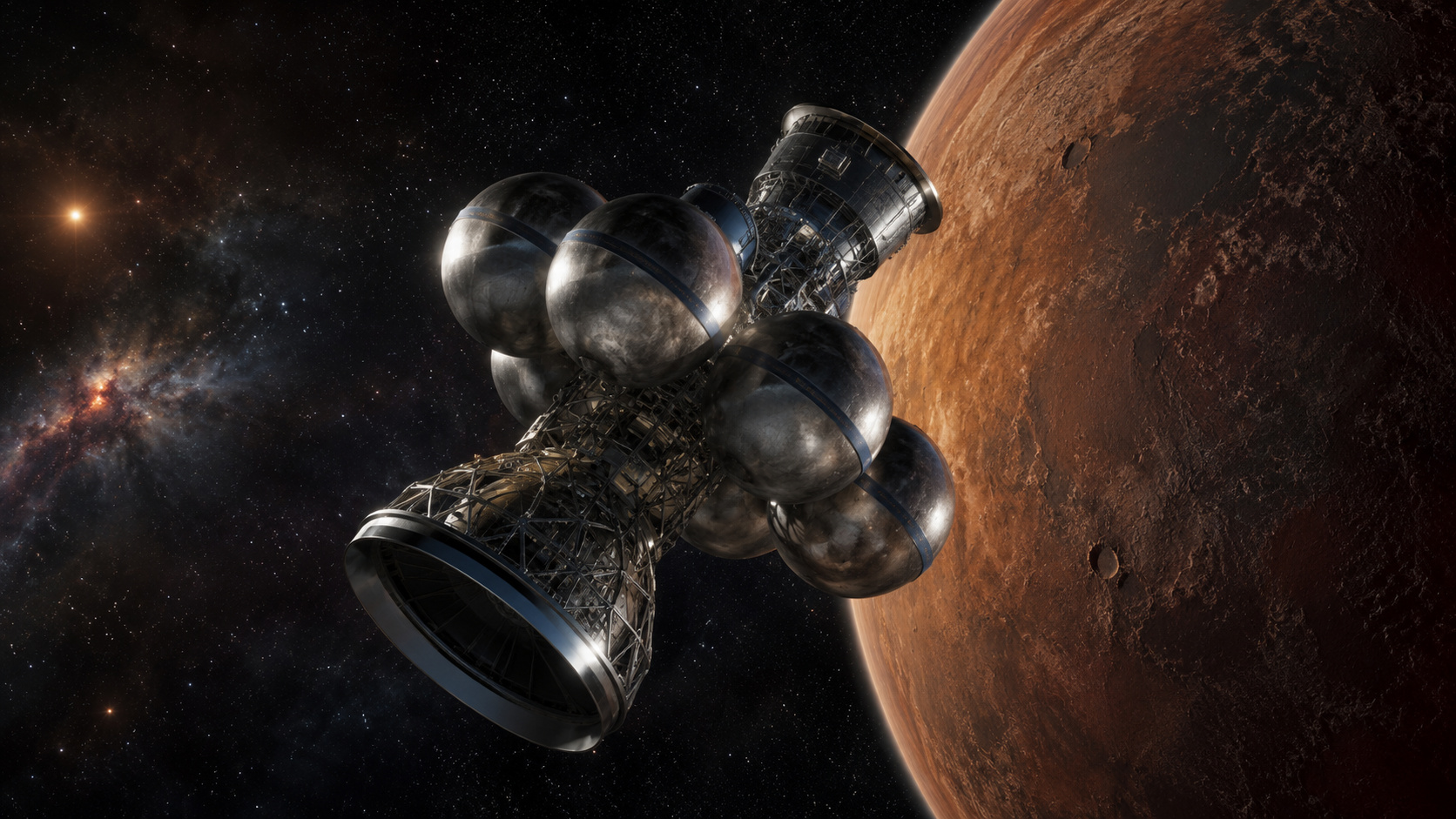
Unlike conventional engines, which rely on the combustion of liquid oxygen or similar fuels, the nuclear thermal engine uses the heat generated by nuclear reactions to propel rockets at extremely high speeds. This advancement can make missions to Mars more accessible and safer, taking us to a new level of exploration.
Recently, Elon Musk also highlighted the importance of nuclear propulsion for space travel, warning about the risks of exposure to cosmic radiation during prolonged journeys. A faster trip could reduce astronauts’ exposure to these radiation levels, contributing to crew safety.
Safety and Efficiency of HALEU Fuel
One of the biggest concerns in using nuclear fuels is, naturally, safety. However, HALEU is considered a less dangerous alternative compared to other nuclear fuels, and the U.S. Department of Energy has carefully analyzed this issue. Additionally, the risks of exposure to cosmic radiation during long space journeys may indeed outweigh the risks associated with using HALEU.
The ceramic capsule containing the HALEU is designed to prevent the release of radioactive particles, providing an additional layer of safety. This factor, along with the fuel’s high efficiency, represents a powerful combination for future long-distance space missions.
Application of Nuclear Technology in Various Areas
USNC plans to utilize the same HALEU fuel technology in its terrestrial microreactors. The company, divided into two units — USNC-Tech, which focuses on space reactors, and USNC-Power, which develops terrestrial solutions — aims to use this technology in an integrated manner. This approach allows the transfer of nuclear innovations from one sector to another, expanding applications in both space and terrestrial scenarios.
According to Paolo Venneri, CEO of USNC-Tech, the ability to transfer technology between terrestrial and space applications represents a significant advancement for the company. The nuclear engine developed by USNC provides twice the thrust of conventional chemical engines and maintains greater operational stability due to the safe encapsulation of the fuel.
Potential Impacts of Nuclear Propulsion in Space Exploration
The new nuclear thermal engine from USNC promises to be a game-changer for space exploration. The speed and efficiency limitations of chemical rockets are already at the edge of their capacity, and nuclear propulsion presents itself as the best solution to overcome these barriers.
Moreover, this technology could contribute to future exploration missions not only to Mars but also to other celestial bodies. The ability to send and return astronauts quickly will open new possibilities for scientific research and the development of advanced technologies beyond Earth.
The USNC project represents a significant step toward faster, safer, and more efficient space exploration. If this technology is successful, nuclear propulsion could redefine humanity’s boundaries in space. Exploring the safety, speed, and stability that the nuclear thermal engine offers, the dream of crewed missions to Mars seems closer to becoming a reality.


Eu penso que as agências espaciais deveriam vasculhar os comentários de antigos como este,no qual se manifesta uma grande quantidade de especialistas que tecem comentários técnicos sobre o assunto com altíssimo grau perspicácia na área e fazerem contatos com esses especialistas anônimos que estão ávidos por destilar seus conhecimentos. Parabéns a todos😉🤣
Burraldos, NÃO SE FALA em Empuxo no VÁCUO!!
O único combustível seguro será qdo conseguirem transformar a radiação espacial em combustível seguro pq ela tem em todo espaço sideral