Portuguese
  Spanish


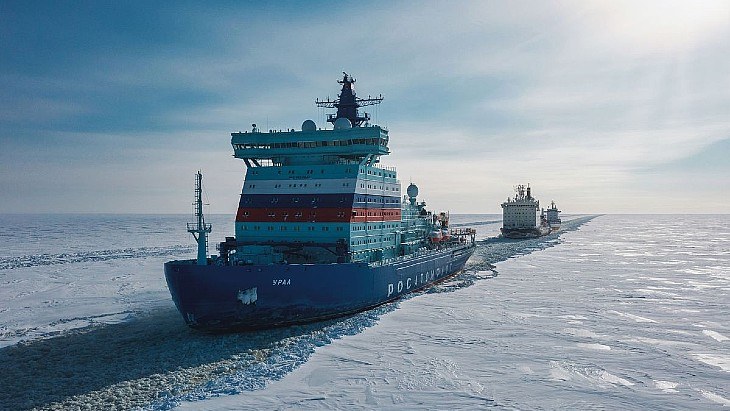
Russia has launched another colossus of its nuclear-powered icebreaker fleet into the Arctic ice, ships capable of breaking through layers of ice several meters thick and keeping open, year-round, a maritime route increasingly coveted as the melting ice transforms the top of the planet into a new economic and military board.
Few ships in the world are as impressive as a nuclear icebreaker. These are colossal vessels, with reinforced hulls and a bow designed to climb over the ice and crush it with their own weight, paving the way for other ships to cross regions that would otherwise be impassable. And Russia is, by far, the greatest power in this type of vessel.
What sets these giants apart is the energy source: an onboard nuclear reactor that generates the enormous power needed to break through the ice without needing to refuel for a long time. It’s the same technology as an atomic submarine, applied to a ship whose mission is to open roads in the frozen sea.
Machines made for the impossible
The engineering of these ships is extreme. The hull is made of special steel, thick enough to withstand the constant impact against the ice, and the bow is shaped to make the ship slide over the frozen layer, using the weight of tens of thousands of tons to break it. The most powerful can clear a path through ice several meters thick without stopping.
-
TCL Launches Energy-Efficient Refrigerator in Brazil, Promising 70% Less Consumption Than Competitors

-
Project Daedalus: The 190-Meter Spacecraft Aiming to Reach Another Star with Nuclear Fusion and a 50-Year Fuel Supply

-
Giant 2.2 km Device Sweeps Plastic from Pacific Ocean, Cleaning an Area the Size of a Football Field Every 5 Seconds to Contain World’s Largest Ocean Garbage Patch
-
Brazil’s Public Health System Launches Study on Semaglutide’s Impact on Obesity




The nuclear reactor is what makes all this possible. Continuously breaking ice requires an enormous amount of energy, and a ship powered by common fuel would need to refuel all the time, something unfeasible in the isolation of the Arctic. With the atom, the icebreaker can operate for long periods far from any port, at the end of the world.
Building such a machine is a privilege of very few countries, and Russia maintains the largest and most advanced fleet of nuclear icebreakers on the planet, the result of decades of investment in a region it considers strategic.
The race for the Arctic
Behind the ship lies a huge geopolitical dispute. Global warming is melting the Arctic ice, and this, as paradoxical as it may seem, has opened up business opportunities. Maritime routes that were once impassable become navigable for longer periods, and the region’s subsoil holds gigantic reserves of oil, gas, and minerals that become more accessible.
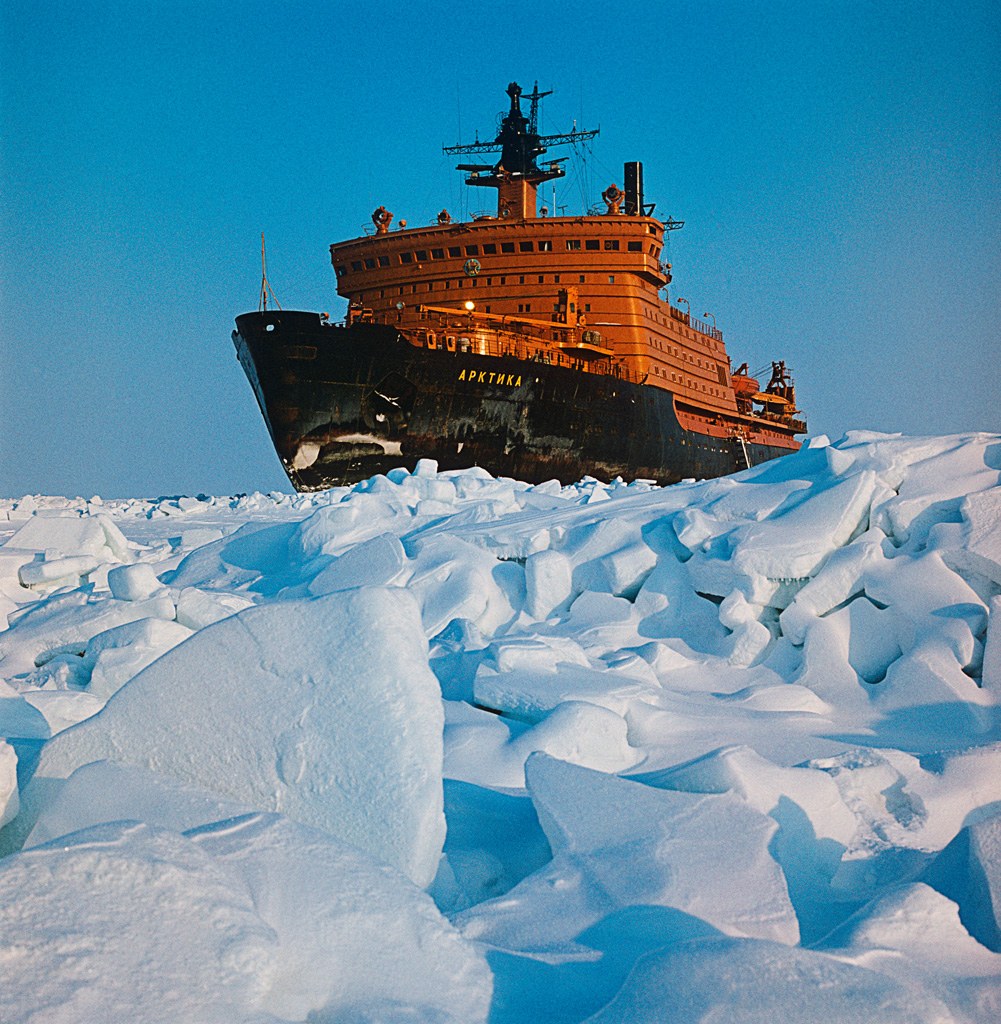
The jewel of this race is the so-called Northern Sea Route, a corridor that runs along the Russian Arctic coast and can drastically shorten the journey between Asia and Europe compared to the traditional route through the Suez Canal. For Russia, controlling and keeping this route open is a strategic and economic card of enormous value.
Nuclear icebreakers are precisely the tool that makes all this possible. Without them, the route would close in winter; with them, cargo ships can cross the Russian Arctic year-round, escorted by these machines that clear the path in the ice. It is mobile infrastructure for a frontier that is literally opening up with the climate.
Atom-powered giants
The scale of these vessels is hard to imagine. The largest Russian nuclear icebreakers exceed 170 meters in length and displace tens of thousands of tons, with reactors capable of generating enough power to light up a city. All this to fulfill a single mission: not to let the ice win.
There are even larger projects in development, a new generation designed to escort entire convoys of cargo ships and gas carriers along the Northern Sea Route throughout the year. Russia treats these ships as national strategic infrastructure, as important as a port or a railway, because the economic viability of the entire Russian Arctic depends on them.
A board that heats up
Russia’s movement does not go unnoticed. Other countries with interests in the Arctic, from the United States to the Nordic neighbors and even China, which declares itself an almost Arctic power, watch closely and rush not to be left behind in the race for the region. The difference is that no one has a fleet of nuclear icebreakers like Russia’s.
There is, of course, the dark side of this story. Economically exploiting an Arctic that is melting due to the climate crisis is, for many, a worrying sign of the times: the melting that threatens the planet becomes an opportunity for profit and power, instead of an alarm. It is a paradox that accompanies the entire race for the region.
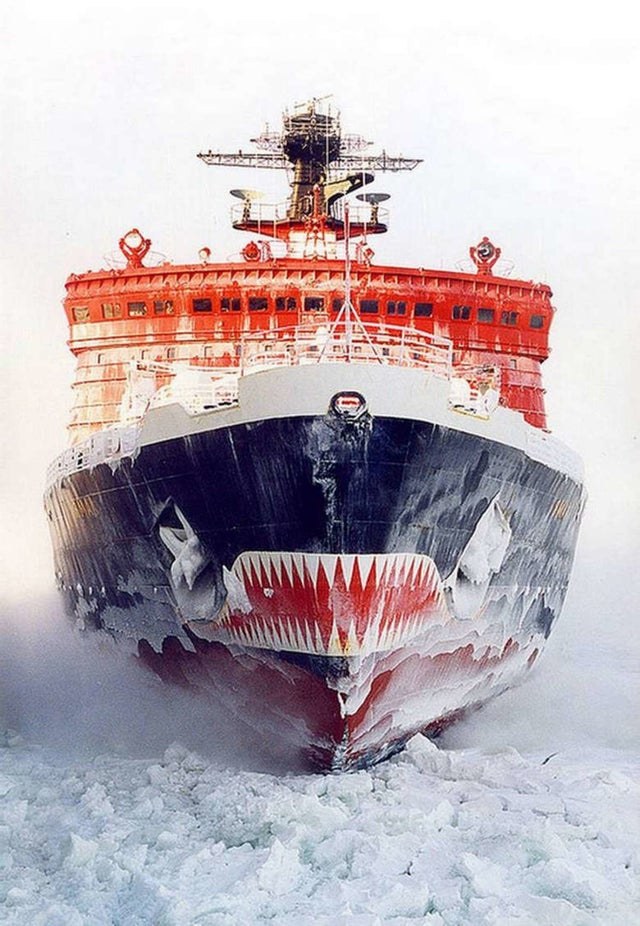
One way or another, the Arctic has ceased to be a frozen and forgotten desert to become one of the most contested frontiers of the century, and nuclear icebreakers are the pieces that literally open the way for this dispute. Each new ship reinforces Russia’s dominance over the top of the world.
For the rest of the world, the warning is clear. Russia’s advantage in the ice gives the country almost exclusive control over a route that could reorganize global trade, and catching up would require years and billions of investment from any competitor. In the melting Arctic, those who have icebreakers rule, and few do.
It is impressive and unsettling at the same time: a steel monster powered by the atom, breaking ice at the end of the planet, a symbol of a race in which the world’s melting has become, for some, a great business opportunity.
Should the melting Arctic be treated as a business opportunity or as the climate alarm it truly is?