Portuguese
  Spanish


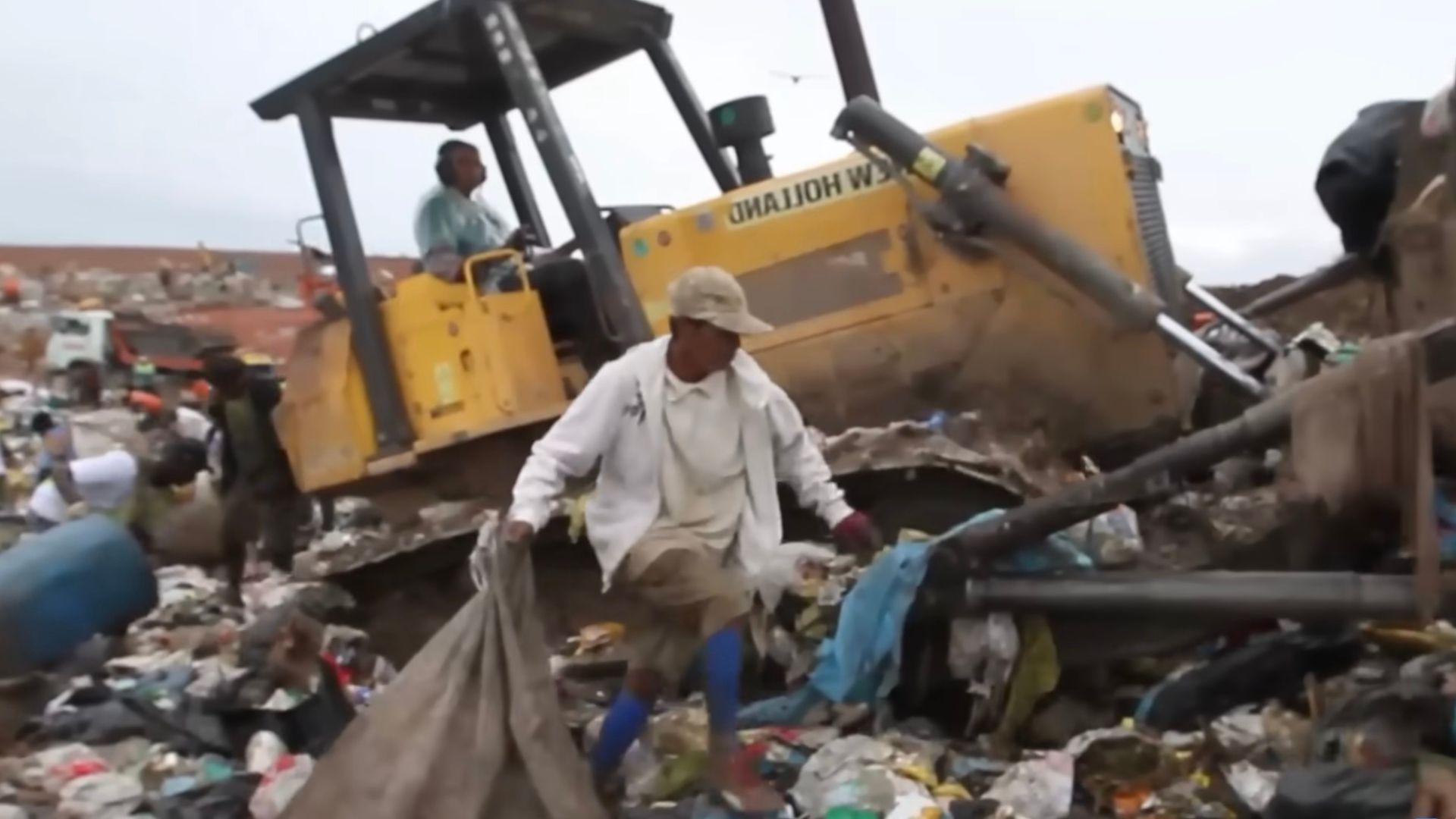


After Taking Over A Company With R$ 700 Million In Debts, Entrepreneurs Create Ecoparks That Serve 40 Million Brazilians And Revolutionize The Waste Sector In The Country
Waste Has Always Been One Of The Biggest Problems In Brazil. For decades, tons and tons of waste were discarded in open dumps, contaminating rivers, soil, and even the water that reaches Brazilian homes. Even with the advancement of sanitary landfills, the country still faces an alarming reality: more than 3,000 dumps remain active.
For governments, this situation represents an endless environmental liability. For society, it is a permanent nuisance. However, for two Brazilian entrepreneurs, this scenario revealed a billion-dollar opportunity.
While most saw dirt and losses, Milton Pilão and Smar Machado Assali saw a perennial and strategic market. In 2013, when both had already accumulated fortunes and could have been retired, they decided to do something that seemed insane: buy a bankrupt company, in debt by almost R$ 700 million, just to gain access to what no one wanted — the waste.
-
At 17, she hand-painted her first watercolor design for school uniforms; her brand grew without investors, sold 135,000 pieces, and aims for $3 million in revenue by 2026.

-
Shell Discovers Intact Early 19th-Century Wooden Shipwreck in the Gulf of Mexico at Over 1,300 Meters Deep
-
Brazilian Entrepreneur Turns Door-to-Door Jewelry Sales into a Family Business Empire with Over 70 Stores

-
$75 Million Bridge in Brazil Opens to Connect Cities, Create Jobs, and Cut Travel Time from 30 to 2 Minutes; Spanning 1.24 km, It’s Among the Country’s Largest and Ends Decades of Ferry Queues.




Thus was born the Horizon empire, a company that today generates more than R$ 1 billion a year, recorded an adjusted net profit of R$ 184 million in 2024, and reached a market value of R$ 6.5 billion.
But how did this transformation happen?
The Risky Bet: From A Bankrupt Company To A Leader In The New Green Economy
Before entering the waste sector, Milton Pilão was already an heir and CEO of Pilão S.A., Machinery and Equipment, founded in 1955. In the 1970s, the company developed revolutionary technology to prepare paper pulp with short eucalyptus fibers, allowing the production of high-quality printing and writing paper. This innovation was exported to more than 40 countries.
Later, Milton sold the company to the Austrian giant Andritz and accumulated a fortune.
On the other side was Smar Machado Assali, former owner of Gomes da Costa, the largest canned fish company in Latin America. In 2008, he sold the company to the Calvo group and also pocketed millions.
Even so, both decided to return to the market. On an international trip, they attended a lecture that featured names like George Soros and Bill Gates. It was there that they heard the phrase that would change everything: the businesses of the future are water, energy, and waste.
Upon returning to Brazil, they analyzed the three sectors. Energy was already consolidated. Water and sewage required huge investments and faced strong state presence. The waste sector remained — and what they discovered was shocking.
Brazil was at least 30 years behind the rest of the world. While Brazilian companies only collected and buried waste, European companies were transforming waste into energy, biogas, fuel, fertilizer, and carbon credits.
Therefore, they realized something essential: waste is not a passive, it is raw material.
The Purchase Of Hastech: Risk Of R$ 700 Million And An Arbitration Of R$ 35 Million

The major obstacle was simple: those who controlled the landfills did not sell. A landfill occupies 2 to 3 million square meters, takes about 8 years to be licensed, and has a useful life of 20 to 30 years. It is, therefore, a strategic asset with a very high barrier to entry.
Then came Hastech, a company in debt by nearly R$ 700 million. Between 2007 and 2009, the company made nine acquisitions to build an integrated sanitation giant. However, the plan failed. The company became a disorganized conglomerate, with no synergy and highly indebted.
In A Move Considered Madness By The Market, Milton and Smar bought the company.
Three months later, they faced the first major blow: they lost a R$ 35 million arbitration. Even with favorable legal opinions, they had to pay the amount.
Still, they did not back down. They sold non-strategic areas, cut costs, renegotiated debts, and focused 100% on the landfills.
The Birth Of Ecoparks And The Billion-Dollar Turnaround
In 2016, after years of restructuring, the company abandoned its old name and became known as Horizon. From that moment on, it began to implement waste valuation ecoparks.
An ecopark goes far beyond a landfill. It integrates:
- Mechanized sorting units
- Biogas plants
- Production of biomethane
- Generation of clean energy
- Fuel derived from waste (CDR)
- Treatment of leachate that turns into reuses water
- Production of organic fertilizer
- Recycling of materials
- Carbon credits
In practice, municipalities pay to send their waste to ecoparks. Then, Horizon transforms this waste into multiple revenue sources.
The model has proven to be highly scalable. In 2021, Horizon had an IPO that moved R$ 1.54 billion and valued the company at approximately R$ 1.6 billion.
Currently, the company operates 18 ecoparks distributed across 12 states, receives over 10 million tons of waste per year, and serves directly or indirectly about 40 million Brazilians.
Additionally, its shares have already appreciated over 150%.
A Business That Never Ends

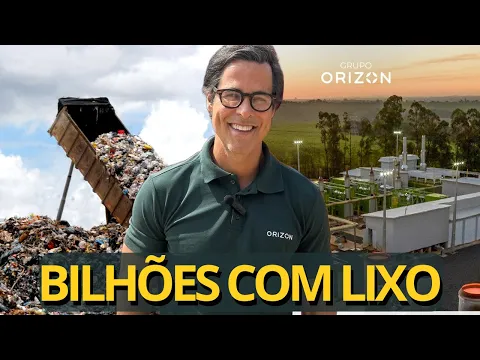
The information was shared by the channel that detailed the trajectory of Horizon and its impressive numbers, highlighting how the waste sector has become one of the largest bets of the new green economy in Brazil.
While crises come and go, waste continues to be generated every day. Therefore, it is a perennial, predictable, and growing market.
Milton and Smar understood something fundamental: those who control waste control one of the most constant flows of the economy.
They took a risk by buying a company with R$ 700 million in debts. They paid an additional R$ 35 million after losing arbitration. They faced skepticism. However, they transformed waste into an empire valued at R$ 6.5 billion.
Because, in the end, waste is not the end of the chain. It is just a resource in the wrong place.
And You, Would You Have The Courage To Invest In Something Everyone Considers A Problem?
Source: Next Business