






 Portuguese
  Spanish
  5 min of reading
  0 comments


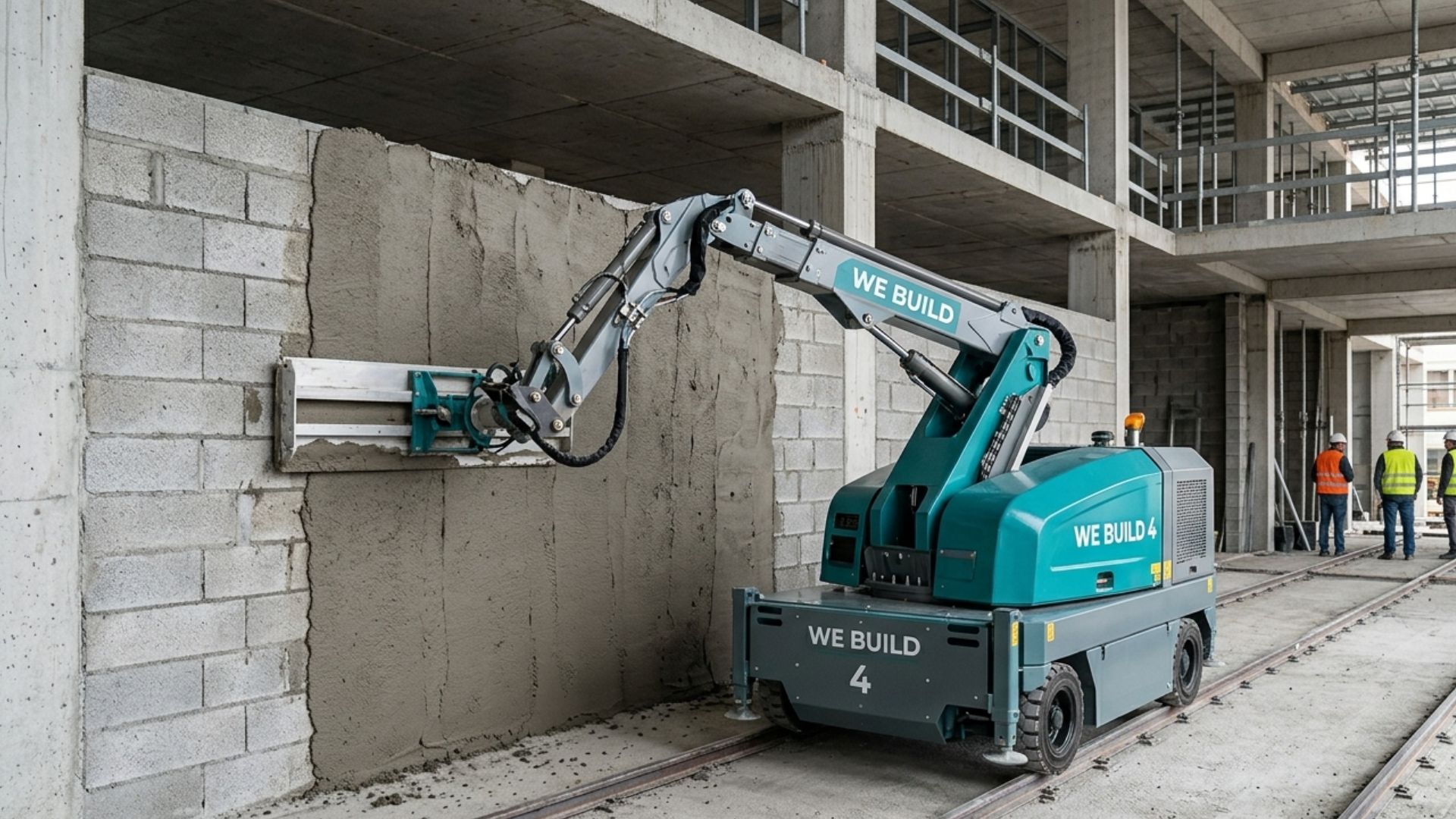
Weibuild’s plastering robot applies, levels, and finishes in a single pass, reaching up to 708 m² per day and accelerating construction automation.
According to Weibuild, the Chinese company’s plastering robot performs four processes in a single pass over the wall: cement pumping, application, leveling, and finishing. The system operates at a speed of 50 square meters per hour and has already recorded 708 square meters in a single day of operation.
For comparison, an experienced bricklayer applies between 30 and 50 square meters of plaster per day, depending on the complexity of the surface and site conditions. Weibuild’s robot achieves this volume in one to two hours, with vertical precision of ±0.015 degrees and an error of less than 3 millimeters over 10 meters in height, in addition to a precision of ±1 millimeter in joints between adjacent passes.
Plastering robot automates one of the oldest and most difficult tasks in construction
Plastering is the layer of cement applied over the wall structure to level, protect, and prepare the surface for the final finish. It is one of the oldest tasks in construction and also one of the most resistant to automation over the past decades.
-
Near Amsterdam, residents buy land and discover they must also build streets, manage drainage, handle waste, and grow food on half their plot.

-
Brazil’s WEG to Open New Factory in China by 2027, Expanding Production of Large Rotating Electric Machines and Low to Medium Voltage Motors in Rugao

-
Chinese Shipyard Secures $1 Billion in Orders for Low-Carbon Container Ships Amid Global Fleet Renewal Efforts
-
Brazilian Planned Community Provides Housing for Over 420 Formerly Homeless, Aims to Reach 1,900 Residents


This is because manual plastering requires real-time perception and adaptation. A bricklayer continuously adjusts the pressure of the trowel, the thickness of the layer, the angle of application, and the speed of movement as they react to the cement’s moisture, ambient temperature, and masonry irregularities.


Cement projection machines have existed for decades, but they still rely on human operators to guide the nozzle and level the material. The difference with the Weibuild plastering robot is that it eliminates these two manual steps, automating application and leveling with industrial consistency.
SLAM system and artificial intelligence allow precision that bricklayers cannot maintain all day
The accuracy of the system depends on the combination of SLAM, short for Simultaneous Localization and Mapping, and what the company calls the AI Artisan System. This set allows the robot to scan the environment in real-time, create a three-dimensional map of the wall, and plan the ideal coverage trajectory.
In practice, the robot does not rely on the traditional cement guide strip installed before plastering, a reference that masons use to maintain leveling. The system independently identifies the geometry of the wall, calculates the ideal application, and performs the work with much higher repeatability than humans.
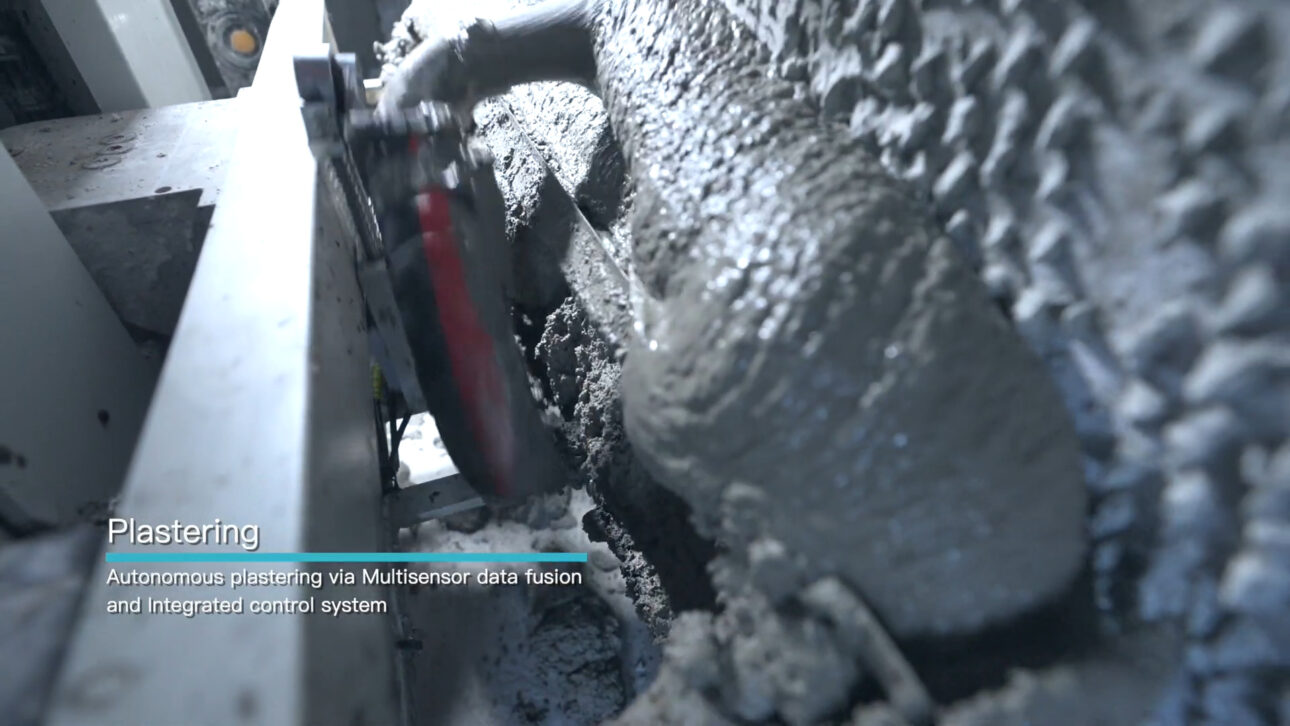
This gain in precision is even more relevant because no worker maintains the same technical standard throughout an entire day of work. Accumulated fatigue compromises manual consistency, while the plastering application robot maintains the same standard from start to finish of the operation.
AI Artisan System learned from experienced masons to reproduce real construction movements
The AI Artisan System was developed to go beyond robotic systems programmed only with fixed rules. In conventional controls, each situation needs to be translated into explicit instructions. If the wall has a certain curvature, the system responds with a certain pressure, angle, and speed.
The problem is that real walls present too many variations to be anticipated by a closed list of rules. There are masonry irregularities, differences in moisture absorption, temperature changes, and variations in cement viscosity throughout the work.
According to Weibuild, the model was trained with the movements of experienced masons, learning execution patterns and micro-adjustments made almost unconsciously by qualified professionals. Thus, the system does not just replicate an application rule but a constructive behavior refined by practical experience.
Speed of 300 to 700 m² per day changes deadline and cost calculation in construction
The difference between the robot’s normal daily volume, around 300 square meters per day, and the record of 708 square meters shows that the system can scale under favorable construction conditions. This is not just a marketing figure but a direct indicator of productivity in real construction sites.
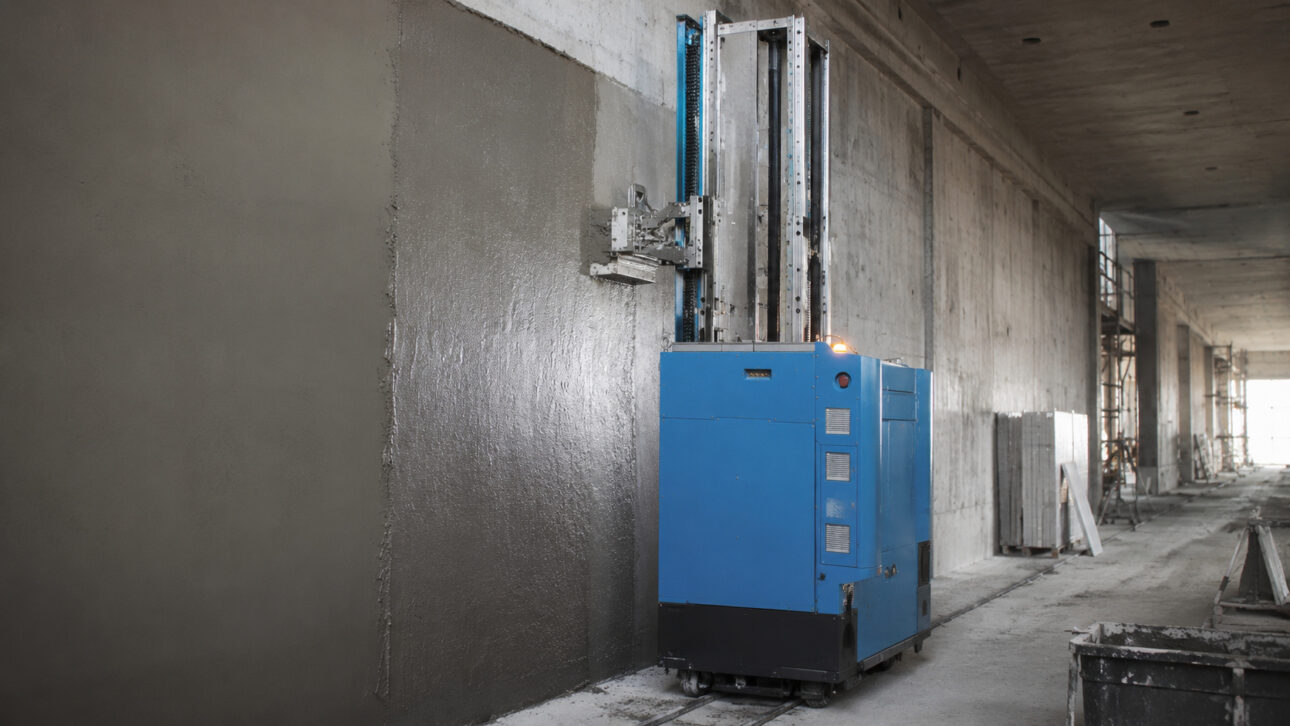
To put it in context, an apartment of 100 square meters usually has between 200 and 250 square meters of internal walls that require plastering. This means that the robot can perform in a single day the equivalent of the complete internal plastering of an entire apartment.
A team of two bricklayers would normally take three to four days for the same area. In terms of cost, the comparison involves the team’s salary for several days versus the operational cost of the robot for a single day, plus the necessary supervision to oversee the execution.
Plastering Robotics Grows in Europe Driven by Labor Shortage
Weibuild primarily operates in the Asian market, but the technology is already advancing in Europe. According to the text, the European market for plastering robotics grew 43.8% in 2024 and is expected to expand 14.6% per year until 2034, driven by the lack of skilled workers in construction.
Germany appears as the most developed market, with an estimated value of US$ 24.15 million in 2025 and a projected annual growth of 12.5%. The aging workforce, the lower entry of new professionals into the sector, and the pressure for more residential and infrastructure projects create a perfect environment for automation.
The economic logic is straightforward. Europe combines high salaries, strict quality standards, and a growing labor shortage, a combination that favors the replacement of repetitive work with high-performance automated systems.
Plastering Robot Still Does Not Replace Bricklayers on Complex Surfaces and Special Projects
Despite the progress, the plastering robot still does not solve everything. It has been trained to operate mainly on conventional flat surfaces, such as walls and ceilings of standardized residential and commercial projects, where most of the service volume is.
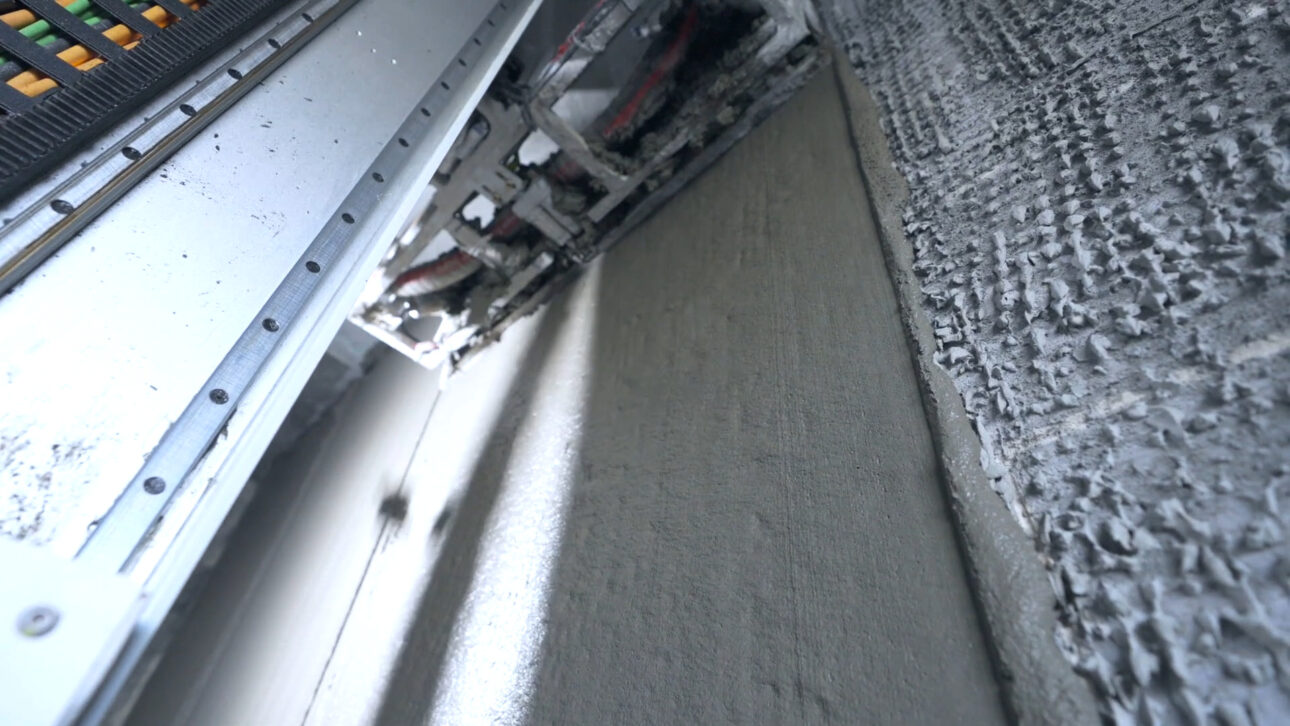
Curved surfaces, irregular niches, complex corners, architectural moldings, and ornamental elements still require manual work.
In historical heritage restoration projects, for example, human judgment remains indispensable due to irregular geometries and the need for specific compatibility between materials.
What automation does, in this case, is redistribute skilled labor. Instead of occupying experienced masons for weeks with repetitive plastering, the system frees these professionals for parts of the project where human knowledge is still decisive and difficult to replace.
Weibuild robot shows how artificial intelligence is entering the construction industry for good
The advancement of the Chinese plastering robot shows that automation in the construction industry has moved beyond just transportation, cutting, and lifting tasks. Now it enters one of the most sensitive stages of finishing, precisely one that depended on manual sensitivity and practical experience.
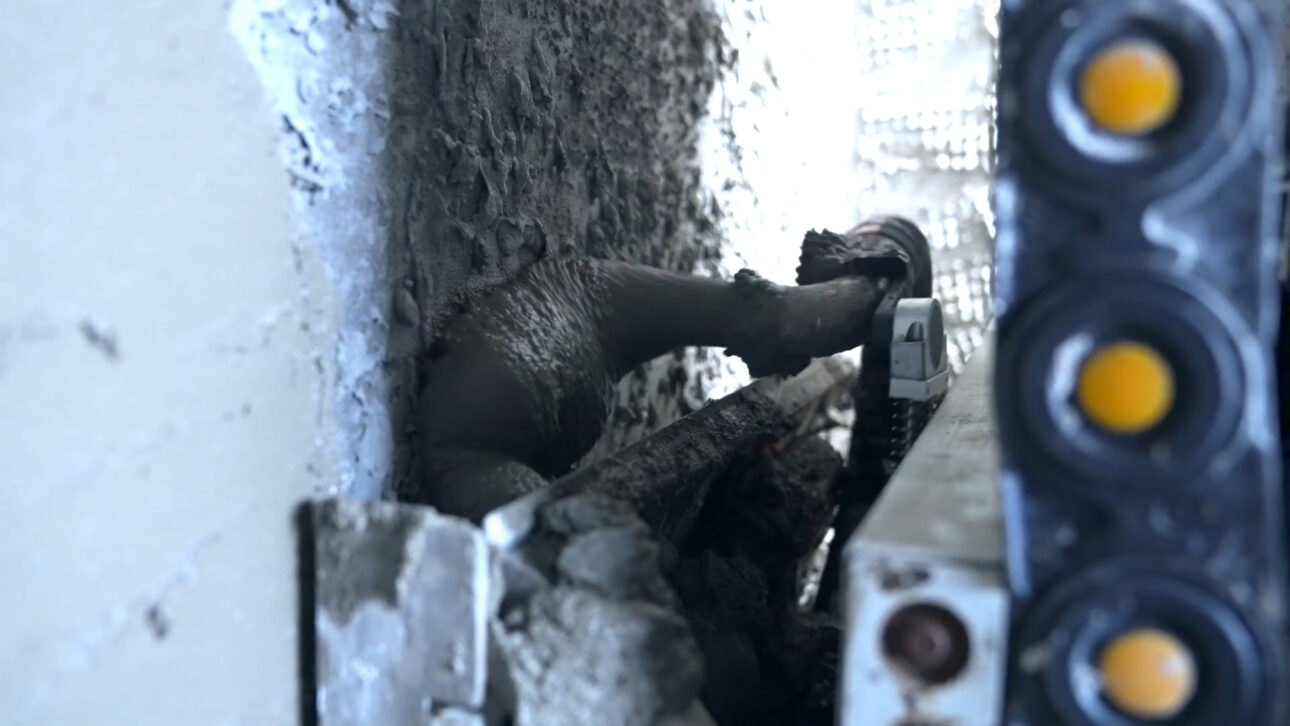
By combining artificial intelligence, three-dimensional mapping, autonomous navigation, and reproduction of movements of experienced professionals, Weibuild transforms plastering into a process with industrial standards, repeatability, and speed difficult to achieve with human teams.
For a sector pressured by costs, tight deadlines, and a lack of qualified workers, this technology is not just an innovation. It may mark the transition from traditional manual plastering to a new phase of heavy automation in project finishing.




-

-

4 people reacted to this.