






 Portuguese
  Spanish


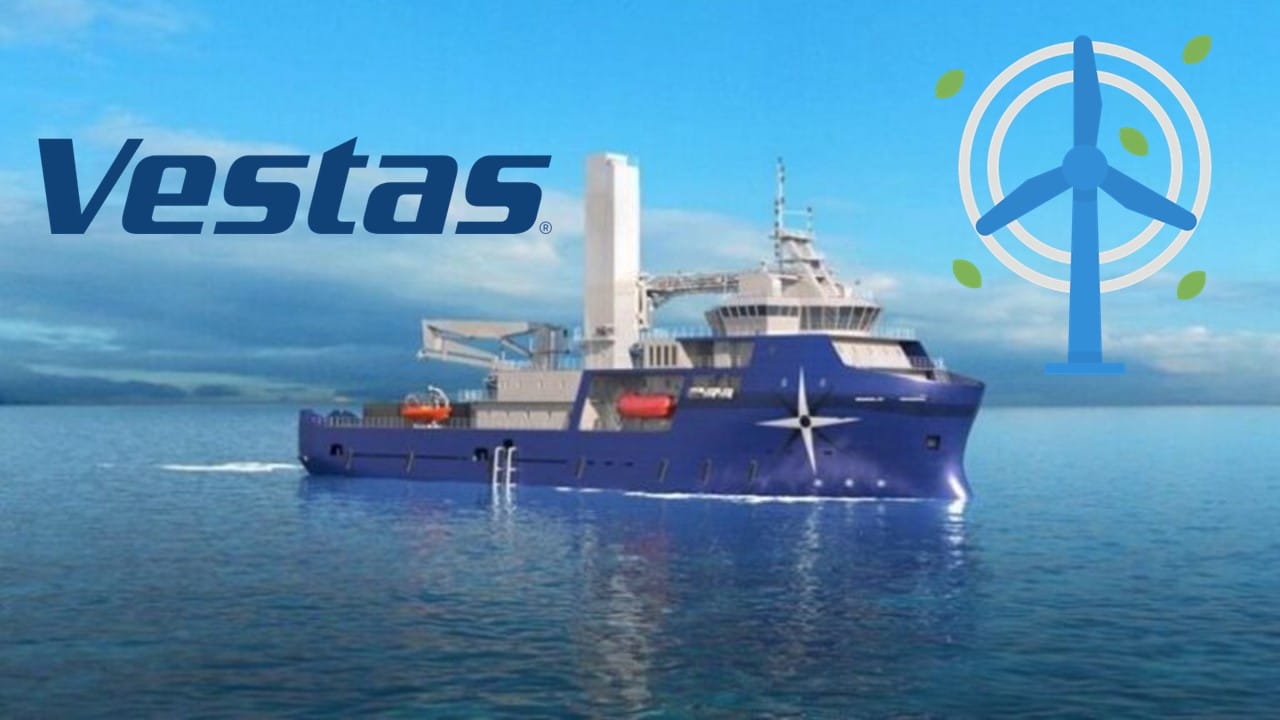

The Ship Is Currently Under Construction at Marco Polo Shipyard in Batam, Indonesia
The offshore wind energy industry is about to be boosted by an innovative collaboration between Marco Polo Marine and Vestas, consolidating an agreement for the construction of a revolutionary Commissioning Service Operations Vessel (CSOV), as published by MarineLink. This critical milestone promises to redefine the offshore wind energy landscape in the Asia-Pacific region.
Commitment to Efficiency: The New CSOV from Marco Polo Marine
The new CSOV, currently under construction at Marco Polo Shipyard in Batam, Indonesia, represents a strong commitment to operational efficiency. With a capacity for 110 people, the vessel will be deployed at various offshore wind farms in the Asia-Pacific region over three years. The focus on minimal annual utilization highlights not only Marco Polo Marine’s strategic vision but also the pursuit of sustainable and efficient operations.
Innovation and Environmental Sustainability: Technology Aboard the CSOV
The 83-meter-long CSOV from Marco Polo Marine is not just a vessel, but a technologically advanced platform. Equipped with a working walkway and a 3D motion-compensated crane, the vessel leads innovation in the industry. Additionally, the hybrid energy storage systems incorporated will reduce carbon emissions by up to 20%, aligning with the strictest environmental standards. This sustainable approach positions the CSOV as a benchmark in the transition to cleaner energies.
-
Giant Batteries Take Center Stage in Chile Auction as Company Offers 960 GWh of Solar Energy for Nighttime Use, Aiming to Stabilize Solar Power Supply

-
After a Year of Success in Switzerland, Solar Railway Attracts Italy’s Interest for Clean Energy Transformation
-
Robots Clean Solar Panels in Desert Power Plants Without Water, Preventing Energy Losses
-
Brazil’s Offshore Wind Energy Potential Worth $1 Trillion Stalled by Long-Delayed Agreement



Growing Demands and Projections for Offshore Wind Energy in Asia
Citing the report from the Global Wind Energy Council (GWEC), Marco Polo Marine highlights the growing demand in Asia, predicting a shortage of specialized vessels for offshore wind installations. With ambitious installation projections of 10 GW in 2026 and nearly 15 GW by 2030 in the region, the collaboration with Vestas emerges as a strategic response to meet this growing demand. This is merely the beginning of a journey that could see the region achieve an impressive 613 GW of offshore wind installations by 2050.
In this context of expected growth, Marco Polo Marine positions itself not only as a leading company but as a driver of transformation in the offshore wind energy industry. This agreement not only addresses immediate demands but anticipates and shapes the future of sustainable energy in the Asia-Pacific region.







