






 Portuguese
  Spanish
  4 min of reading


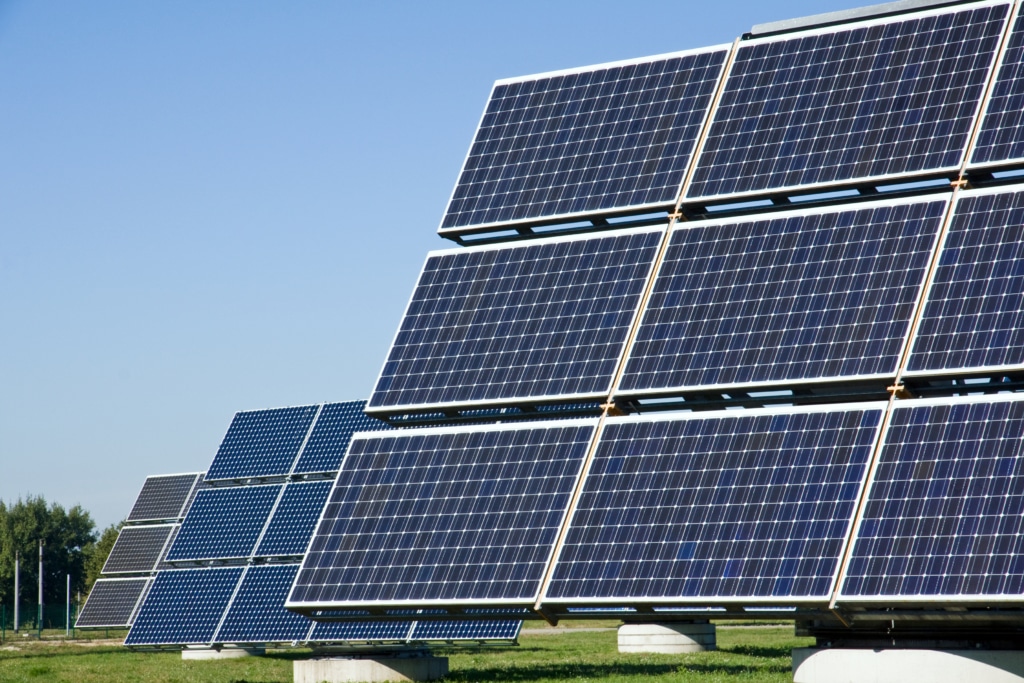
According to Data from Absolar, in 2021 there Were More than R$ 35.6 Billion in New Investments in Solar Power Plants
With the growing demand for distributed generation, solar energy has just reached the milestone of 7 GW of installed capacity on rooftops, facades, and small residential, commercial, industrial, and rural land in Brazil, which is equivalent to half of the total capacity of the Itaipu hydroelectric plant, according to a mapping by the Brazilian Photovoltaic Solar Energy Association. Also read this news: Photovoltaic Solar Power Plant Installed on the Roof of Udiaço’s Factory is the Largest in the State of São Paulo
- New Bioxxi Factory in Recife Opens 350 Job Positions for Nursing Technicians, Nurses, Machine Operators, and General Services.
- Oil States Signs New Contract with Petrobras for Maintenance and Offshore Inspection of 5 FPSOs
- The Largest Steel Industry in Latin America Calls for Candidates Without Experience for Positions and Free Courses with Certificates in Electrician, Operator, and More, Issued by SENAI
- Brasfels Shipyard, in Angra dos Reis, Negotiates with Sete Brasil to Resume Work on the Urca and Frade Drilling Rigs
- Company Bets on Home Office (Remote Work) and Opens 100 CLT Job Positions, with IMMEDIATE Start, for High School, Technical, and College Candidates in São Paulo
Growth of Solar Energy Use
According to the entity, Brazil currently has more than 611,000 connected photovoltaic solar systems, with cost savings and environmental sustainability benefiting over 765,000 consumer units. Since 2021, more than R$ 35.6 billion has been invested in solar energy projects, which have generated over 210,000 jobs during this period, spread across all regions of Brazil.
Although it has made progress in recent years, Brazil – which holds one of the best solar resources in the world – remains behind in the use of its own solar energy generation. Of the more than 88 million electric energy consumers in the country, only 0.8% currently use solar power to produce clean, renewable, and competitive electricity.
-
Brazilian scientists are simultaneously advancing two research projects on clean hydrogen and driving solutions that could transform the energy matrix, enhance industrial competitiveness, and accelerate large-scale emission reduction targets.

-
Advancement in renewable energy: A R$ 150 million project launched by Petrobras and Finep aims to create state-of-the-art electrolyzers for green hydrogen, strengthening national research and preparing Brazil to compete in a billion-dollar energy market.
-
Illiterate or semi-literate grandmothers were trained to repair solar systems, open rural workshops, and light up homes that still depended on kerosene.
-
The world has bet on green hydrogen as the fuel of the future, but now faces the side effect: producing 1 kilogram requires about 9 liters of ultrapure water, and the largest projects on the planet are precisely in the driest regions of the Earth, where water is already scarce for people.





Approval of the Legal Framework
For Absolar, the approval by the National Congress of the legal framework for renewable energy generation, proposed by Bill (PL) No. 5.829/2019, will strengthen the diversification of the Brazilian electrical matrix and the security of electric supply, during times of water crises and increasing electricity bills. Bill No. 5.829/2019, authored by federal deputy Silas Câmara and reported by federal deputy Lafayette de Andrada, will guarantee in law the consumer’s right to generate and use their own electricity from clean and renewable sources.
The text was approved in the Chamber of Deputies in August and was sent for consideration in the Senate plenary. The sector’s expectation is that the proposal will be voted on and sanctioned before the end of 2021. According to Absolar, photovoltaic solar energy technology is present in 5,369 municipalities across all Brazilian states, with the leading states in installed capacity being: Minas Gerais (1,304 MW), São Paulo (888 MW), Rio Grande do Sul (849 MW), Mato Grosso (534 MW), and Paraná (383 MW).
Also check this news: Use of Photovoltaic Solar Energy in Residences Grows 2,000% in Brazil
Brazil has one of the most renewable energy matrices in the world. About 48% of it is composed of renewable sources. The global average is 14%. The data were presented by the Secretary of Planning and Energy Development of the Ministry of Mines and Energy (MME), Paulo César Domingues, during the program Brazil in Focus, which aired on the 10th. According to him, when it comes to electricity, the numbers are even higher: 85% of the Brazilian electricity matrix is renewable compared to only 20% of the global average.
He added that, although Brazil is still very dependent on hydroelectric plants (85% of electric energy is sourced from water), the country has been diversifying its matrix. In terms of solar energy, Brazil already has 10 gigawatts of installed capacity. “This is equivalent to 70% of Itaipu’s installed capacity,” he said. According to Domingues, in three years there has been a 200% increase in centralized solar energy (solar power plants). In contrast, when it comes to distributed solar energy (panels on rooftops), the growth is 2,000%. Another energy source that has been growing in Brazil is wind energy. There are now more than 700 installed power plants throughout the country. Today, wind energy accounts for 11% of the Brazilian energy matrix.




Be the first to react!