Portuguese
  Spanish


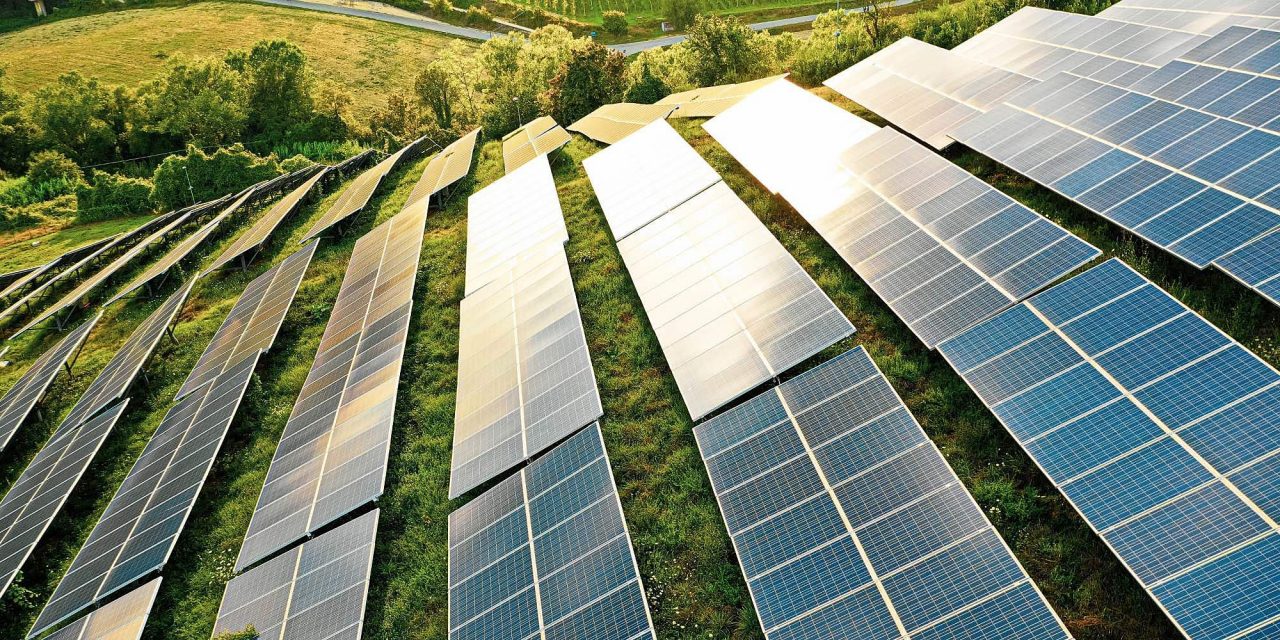

A Survey By Absolar Showed That The Solar Power In Large-Scale Plants And Small And Medium Systems Reached 9 GW
Data released by Absolar – Brazilian Association of Photovoltaic Solar Energy, showed that Brazil reached a historic mark of 9 GW of operational capacity in large-scale photovoltaic plants and with small and medium systems installed on roofs, façades, and land. The survey also indicated that the source brought in more than R$ 46 billion in investments and generated many jobs in the country. Source: Solar Energy – Sector Should Generate 147 Thousand New Jobs In 2021, With About R$ 22.6 Million In Investments
- Senac Offers 5 Thousand Slots In Free Distance Learning Courses In Management, IT, Commerce, And More In Paraná
- Volkswagen Places About 2,200 Employees On Collective Vacation Due To Lack Of Production Material In The Interior Of São Paulo
- One Of The Largest Iron Ore Exporters In Brazil, CSN Mining Is Hiring Technicians, Mechanics, Apprentices, And More For Job Openings In MG, RJ, SP, And PR
- With Billion-Dollar Investment, The State Of Minas Gerais Will Receive 3 Aluminum Can Factories
- 3,100 Slots In Free Training Courses Opened By Technical Schools On This Day 08
Survey By The Brazilian Association Of Photovoltaic Solar Energy
Absolar indicated that with the advancement of solar energy, through auctions for large plants, or through self-generation in homes, small businesses, rural properties, and public buildings are fundamental to reducing the so-called “Brazil cost,” bringing more competitiveness and helping to reduce the occurrence of red flags in the electricity bill, in addition to diversifying supply.
The centralized segment of solar energy has 3.3 GW of installed capacity in plants, equivalent to 1.9% of the Brazilian energy matrix, becoming in 2019 the most competitive technology among renewable sources in the two New Energy Auctions, A-4 and A-6, with average prices below US$ 21.00/MWh.
-
Brazilian scientists are simultaneously advancing two research projects on clean hydrogen and driving solutions that could transform the energy matrix, enhance industrial competitiveness, and accelerate large-scale emission reduction targets.

-
Advancement in renewable energy: A R$ 150 million project launched by Petrobras and Finep aims to create state-of-the-art electrolyzers for green hydrogen, strengthening national research and preparing Brazil to compete in a billion-dollar energy market.
-
Illiterate or semi-literate grandmothers were trained to repair solar systems, open rural workshops, and light up homes that still depended on kerosene.
-
The world has bet on green hydrogen as the fuel of the future, but now faces the side effect: producing 1 kilogram requires about 9 liters of ultrapure water, and the largest projects on the planet are precisely in the driest regions of the Earth, where water is already scarce for people.





Potential Of The Photovoltaic Segment Projects
Today, solar energy projects in Brazil account for the seventh-largest source of generation in the country, with assets in operation in nine Brazilian states, in the Northeast (Bahia, Ceará, Paraíba, Pernambuco, Piauí, and Rio Grande do Norte), Southeast (Minas Gerais and São Paulo), and Central-West (Tocantins), with investments exceeding R$ 18 billion.
When adding the installed capacities of large plants and self-generation, solar energy currently occupies sixth place in the national matrix, behind hydroelectric plants, wind, biomass, natural gas, and diesel thermoelectric plants, in addition to other fossil fuels. It also represents more than the total installed capacity of coal thermoelectric plants and nuclear plants, totaling 5.6 GW.
With The Study, Solar Energy Might Outpace Thermoelectric Plants
The president of the Brazilian Association of Photovoltaic Solar Energy, Rodrigo Sauaia, highlighted the study Integration Of Variable Renewable Sources In Brazil’s Electrical Matrix, which involved the participation of MME, EPE, ONS, and the German government entity Deutsche Gesellschaft für Internationale Zusammenarbeit (GIZ). Rodrigo Sauaia states that this survey debunked the old myth that the country would depend on thermoelectric plants to support the growth of renewables, indicating that the balance of the system when there are variations in wind and sunlight is provided, especially by hydroelectric plants and not by fossil thermoelectric plants.
The CEO of Absolar says that the evolution of the matrix depends more on political will and leadership than on technical and economic conditions. He also claims that the solar energy sector could bring more than R$ 139 billion in investments and generate more than 1 million new jobs in Brazil by 2050, with the legal framework proposed by PL No. 5.829/2019.
The president of Absolar states that solar energy will play an increasingly important role in the strategic approach to achieving socio-economic and sustainable development goals in all Brazilian states. According to him, photovoltaic technology is vital for economic recovery after the pandemic, in addition to being a renewable resource that can generate more jobs on the planet.