






 Portuguese
  Spanish
  3 min of reading


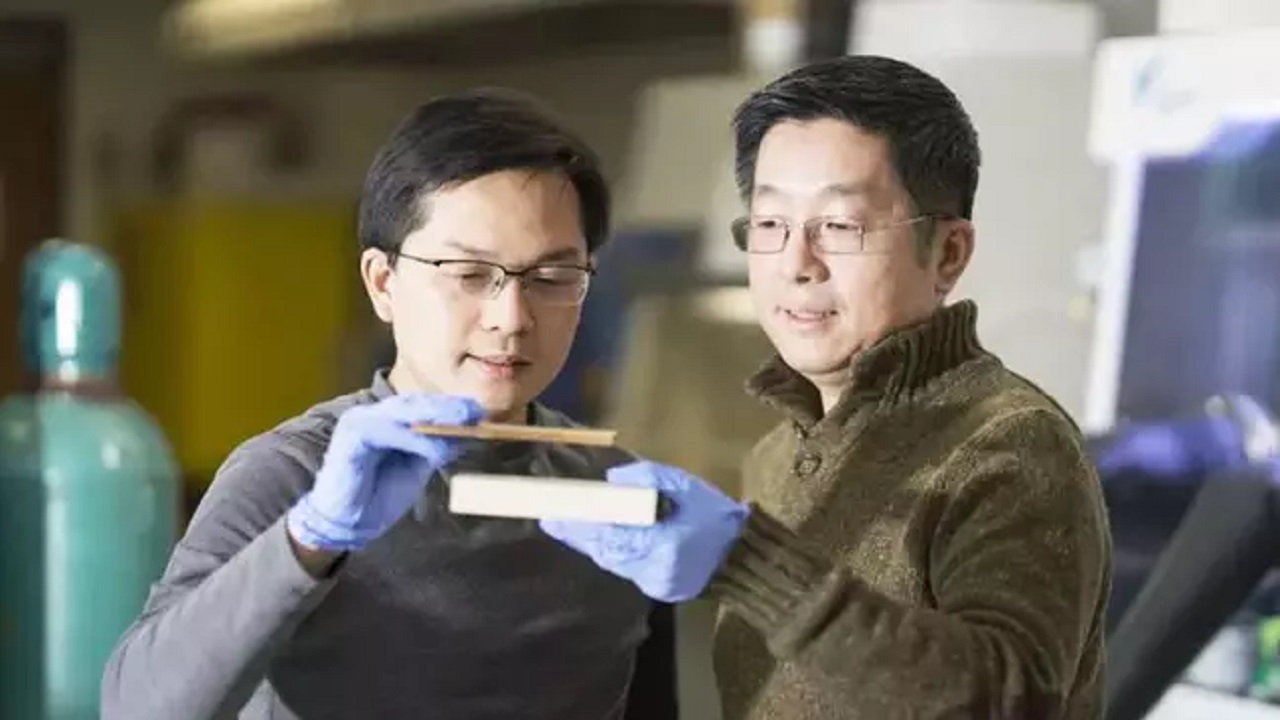
U.S. Engineers Developed A Super Strong Wood That Can Easily Replace Steels And Even Titanium Alloys. Besides Being 10 Times Stronger, The Product Is Also 6 Times Lighter.
Engineers from the University of Maryland in the United States developed a method to transform a regular wood into one that is up to 10 times stronger, resulting in a natural product that can be more resilient than steel and even many titanium alloys.
Super Strong Wood Developed By Engineers Can Stop A Bullet
The wood is treated with a very basic technique that involves two stages, resulting in a super strong wood, equivalent to titanium alloys, which are generally not found in nature. A crucial point of this developed wood is that, although it is much stronger than steel, it is still 6 times lighter.
It requires 10 times more energy to break this product compared to an original natural product before treatment. In technical terms, it has 10 times more toughness, the resistance to mechanical stress. Furthermore, the wood in sheets can be bent and shaped at the beginning of the process.
-
In California, 1,300 retired Honda and Nissan batteries avoid going to waste and become a giant 25 MWh power plant, revealing how electric cars can continue powering the grid even after leaving the streets.

-
Chinese rocket Kinetica-1 places more than 100 satellites in orbit in 14 flights, carries 15 tons of payload, and leads China’s commercial space market.

-
Chinese robot with artificial intelligence independently welds offshore oil platforms, supports 30 tons, cuts 70-millimeter steel, and has a projected lifespan of 20 years.
-
The most endangered marine mammal on the planet receives a 3D “digital copy” after scientists analyze a rare vaquita skeleton collected in 1966 and reveal details that almost no one could see with the naked eye.





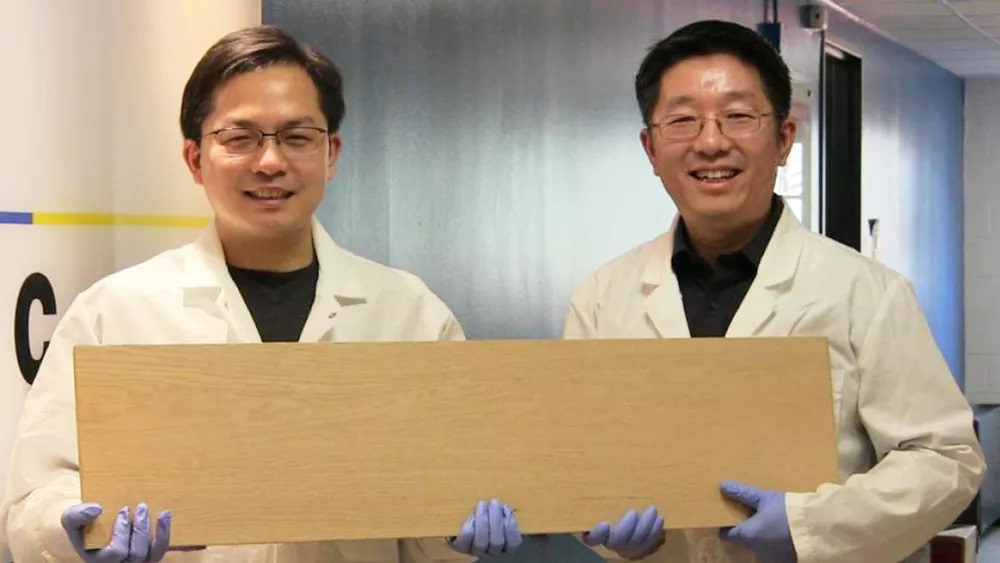
According to Professor Liangbing Hu, this new method of treating the wood makes it 12 times stronger than regular wood and 10 times harder, thus competing with steel or even titanium alloys, as it is as strong and durable as those materials. The product can also be compared to carbon fiber, only much cheaper.
In tests of the new invention, projectiles resembling firearm bullets were fired at it. The projectile passed through the natural wood easily but got lodged in the super-strong wood, meaning this new technology is completely bulletproof.
Possible Uses For The New Wood Developed By Engineers
Besides being a great substitute for steel and titanium alloys, the super strong wood developed by the engineers could also relieve the pressure for the cultivation and extraction of more durable and exotic woods.
Hu states that soft woods, such as balsa or pine, which grow more easily and are more environmentally friendly, could replace the slower, denser forests, like teak, in furniture or buildings. This type of wood could also be used in cars, buildings, airplanes, or any other application where steel is used.
Other Experiments With Enhanced Wood
Engineers from the Indian Institute of Technology Delhi, in India, developed a new technology last year capable of replacing glass and plastic in the civil engineering and automotive sectors.
Transparent wood can be used in manufacturing car windshields, packaging, and electrical equipment. According to researchers, this innovative material reduces impacts on the environment due to its renewable and biodegradable properties, in addition to being more economical and much stronger than glass and plastic, mitigating the energy cost for its production.
For the lead author of the study and professor of chemical engineering, Prodyut Dhar, transparent wood as a sustainable material can effectively replace plastic and pollutant-based glasses harmful to the environment. Products such as polypropylene, polyvinyl chloride, acrylic, and polyethylene can be substituted.
The product first emerged in 1992 by German scientist Siegfried Fink and can be obtained by removing the lignin content, which is present in natural wood, replacing it with plastic materials. This substance is an organic biopolymer widely used in the production of non-toxic, biodegradable plant fabrics.






Be the first to react!