






 Portuguese
  Spanish
  5 min of reading
  0 comments


The story of Lijjat Papad shows how a homemade recipe turned into women’s income, organized production, a recognized brand, and a cooperative with presence in various states of India
Seven women, neighbors, united in 1959, in Mumbai, India, started with little money and hand-rolled dough to sell papad, a thin and crispy food widely consumed in the country.
The information was published by WIPO, the UN’s specialized agency in intellectual property. The origin of Lijjat Papad began with 80 rupees, used to buy ingredients, and an initial production of only four packets of papad.
The case became known because it emerged from a simple kitchen and gained scale without abandoning manual production. The story involves women’s income, a cooperative, work done at home, and a collective model that spanned decades in India.
-
A geometry book written 2,300 years ago taught Lincoln to be a lawyer, Einstein to think in physics, and Russell to understand logic, and no MBA in the world has managed to replicate this feat.

-
Absent father may lose child support request against children and still be liable for emotional abandonment
-
Woman loses house in devastating fire and now sees 35 people rebuilding her home with over 350 tires, bottles, and cans in a sustainable project designed to withstand fire.

-
At 80 years old, Mr. Vicente opens a vendorless stall every day at 7 a.m. in the countryside of Minas Gerais, leaves, and expects customers to pay on their own for what they take, and the system has been working for 7 years.




The start with 80 rupees shows how the women’s cooperative was born from a simple decision in Mumbai
Lijjat Papad was born in the south of Mumbai, formerly Bombay, the capital of the state of Maharashtra. Initially, there were seven neighboring women who already knew how to prepare papad, a common food in Indian homes.
They decided to produce and sell the papads to a local merchant. For this, they borrowed 80 rupees and bought the necessary ingredients to make the dough.
The first production had only four packets. The number seems small, but it helps to understand the size of the leap made by the cooperative afterward.
The strongest point of the story is that there was no modern factory, large investment, or ready business structure. There was practical knowledge, manual labor, and the will to transform a domestic skill into a source of income.
Papad is a thin and crispy disc that emerged from the domestic kitchen and became a large-scale product
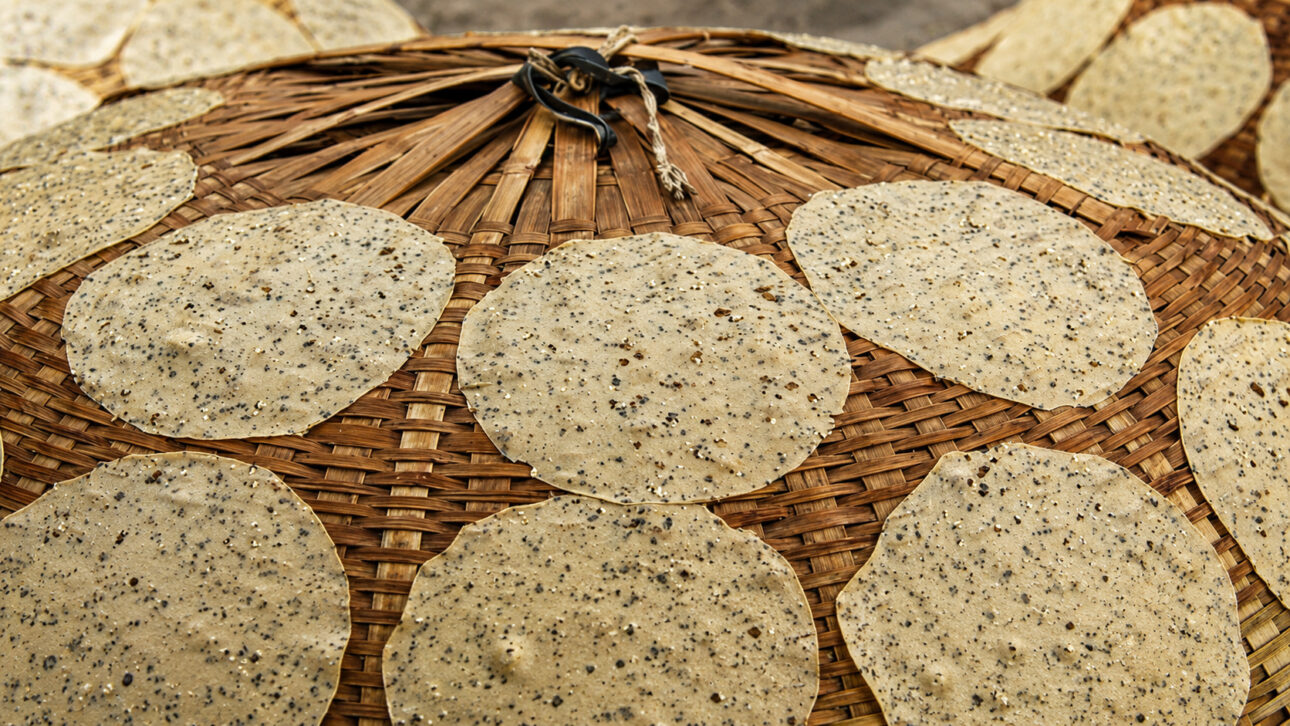
Papad resembles a very thin and crispy disc. It is usually served as a side dish, appetizer, or snack, often alongside dishes with vegetables, spices, chopped onion, or sauces.
In the traditional form, the dough is kneaded and rolled out by hand. Then, the disc is dried and can be fried or heated before being served.
This type of preparation was part of the knowledge passed down within families. Many women learned the technique at home, from mothers, grandmothers, and other women in the community.
Lijjat Papad used precisely this simple and ancient knowledge. Instead of treating domestic work as something invisible, the cooperative transformed this practice into organized production, with routine, quality, and sales.
Production grew while keeping the dough rolled out by hand in the members’ homes
With the increase in demand, the cooperative needed to better organize the work. The dough began to be prepared and taken to the members’ homes, where it was rolled out, cooked, and dried.
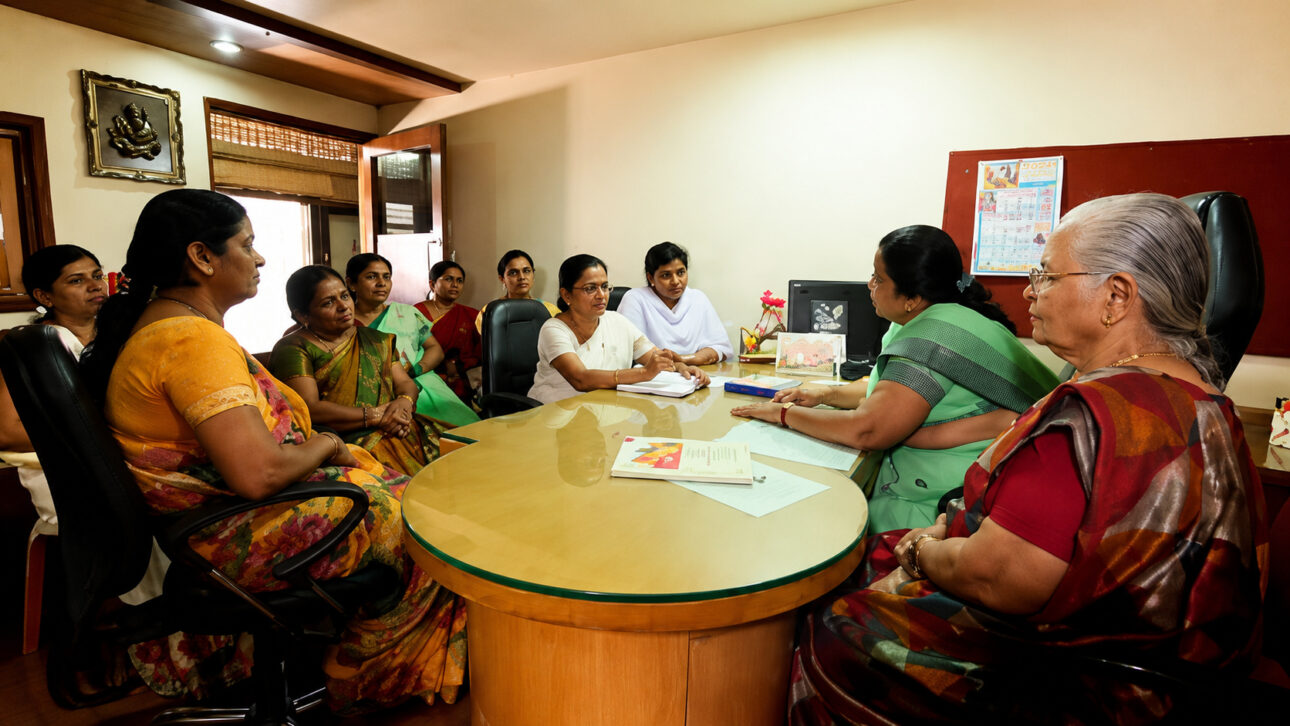
The next day, the papads returned for weighing, packaging, and sale. This model allowed women to continue working from home without losing the connection to collective production.
The growth also required care with standards and quality. Papads below standard were not sold, which helped protect customer trust.
WIPO, the UN’s specialized agency in intellectual property, detailed that the cooperative adopted professional practices, minimum production standards, self-sufficiency, and equality among the members.
The women’s cooperative model treated each member as part of the business
Lijjat Papad did not grow like a typical company run by a few people. The organization built a cooperative logic, where women participated in the work and were treated as part of the business.
Each member was seen as a sister within the cooperative. This form of organization reinforced the idea of equality, participation, and shared responsibility.
This detail is important to avoid romanticizing poverty. The story is not just about women with little money overcoming difficulties through individual effort.
What made a difference was the combination of collective work, a well-known product, discipline in production, quality control, and a model that recognized the economic role of women.
The homemade recipe reached over 40,000 members and 62 branches
The cooperative grew beyond the first kitchen. Lijjat Papad reached over 40,000 members, 62 branches, and presence in 17 states of India.
The expansion shows how a small activity could turn into a production network. The food remained linked to manual work but began to circulate through a larger structure of packaging, distribution, and sales.
In 1966, the organization was registered as a society. This step helped formalize the cooperative’s operations and marked a more structured phase in its history.
By 2013, Lijjat Papad already had clearer divisions of labor, with dough processing units, packaging teams, and distribution sectors to deliver boxes to vendors.
Brand, packaging, and quality helped the Indian papad reach other markets
The cooperative also grew because it took care of the brand. Lijjat Papad started using well-known images on the packaging, such as the boy Babla and a rabbit, elements that helped consumers recognize the products.
This attention to visual identity was important to differentiate the cooperative’s papads in a competitive market. It’s like when packaging becomes an immediate sign of trust in the market.
In 2013, between 30% and 35% of Lijjat’s papads were exported to markets outside India, including Asia, the European Union, the Middle East, and North America.
The cooperative had also reached nearly 90% of the Indian papad market. Additionally, it expanded its operations to other products, such as spices, flour, chapatti, soaps, and detergents.
Why this story still draws attention when talking about women’s income
The story of Lijjat Papad draws attention because it shows that a simple activity can gain strength when there is organization. The product was common, but the way of working gave another dimension to the production.
The case also helps to look at women’s income in a more practical way. Many women already mastered useful skills but needed structure to sell, maintain quality, and participate in the results.
The cooperative did not start with a grand promise. It started with seven neighbors, 80 rupees, and four packets of papad.
Decades later, the example shows that popular businesses can also be born from homemade recipes, as long as there is method, trust, and collective organization.
Lijjat Papad has spanned decades because it turned a simple food into a network of women’s work. The story remains strong by uniting kitchen, manual production, brand, distribution, and collective participation.
More than selling papad, the cooperative showed that work done at home can gain economic value when it ceases to be invisible and becomes part of an organized model.
Do you believe that homemade recipes and knowledge passed down from generation to generation could also become strong cooperatives in Brazil, generating income without erasing the history of those who produce?






Be the first to react!